Counting practice Easy Word Problems Worksheets for Ages 3-6
3 filtered results
-
From - To
Introduce your little learners to the world of numbers with our "Counting Practice Easy Word Problems Worksheets" designed specifically for ages 3-6. These fun, engaging activities help children develop essential math skills, such as counting, addition, and number recognition through simple, relatable word problems. Each worksheet combines captivating illustrations with easy-to-understand scenarios that make learning both enjoyable and educational. Perfect for parents and teachers alike, these worksheets are a fantastic resource to build a strong mathematical foundation in young children, fostering confidence and a love for numbers that will last a lifetime. Download now and watch your child’s skills blossom!
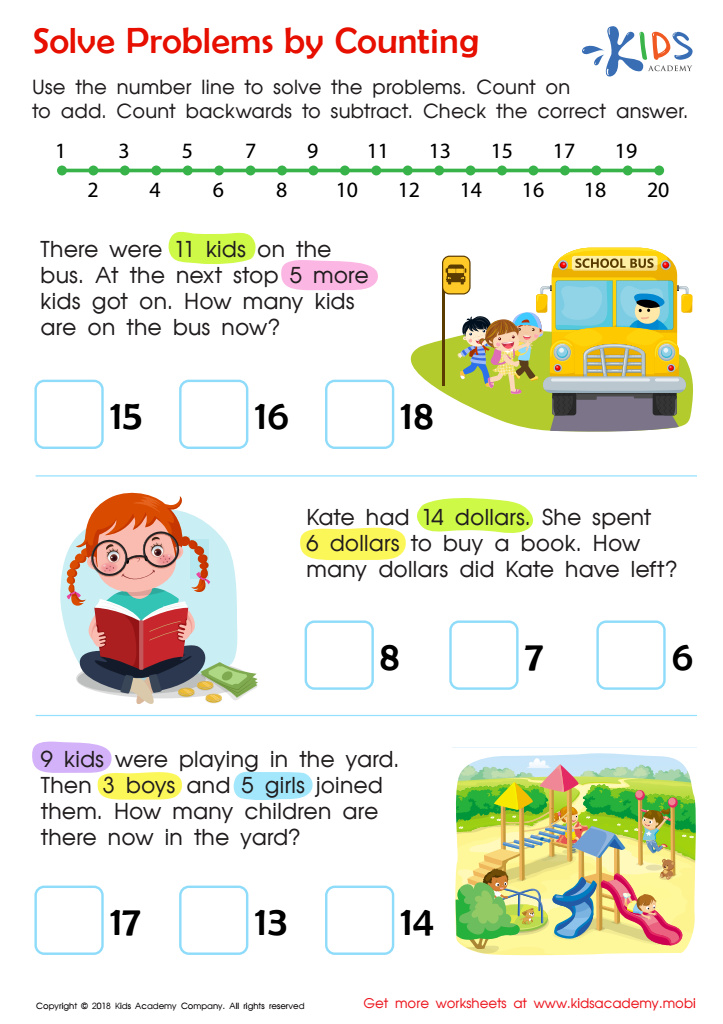
Solve Problems by Counting Worksheet
 Assign to My Students
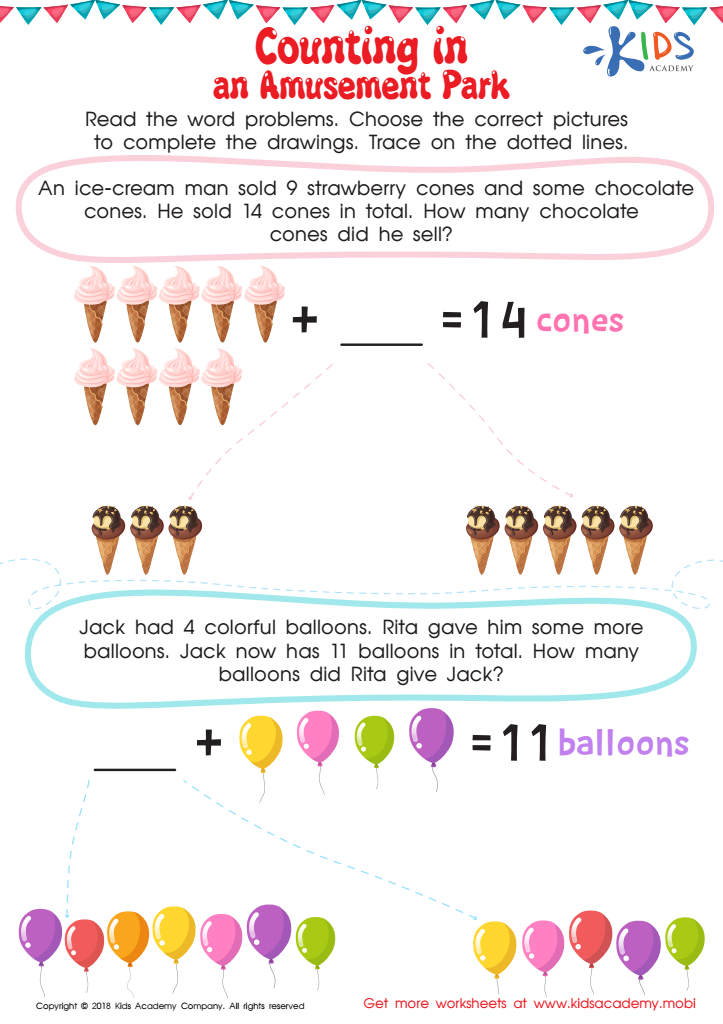
Counting in an Amusement Park Worksheet
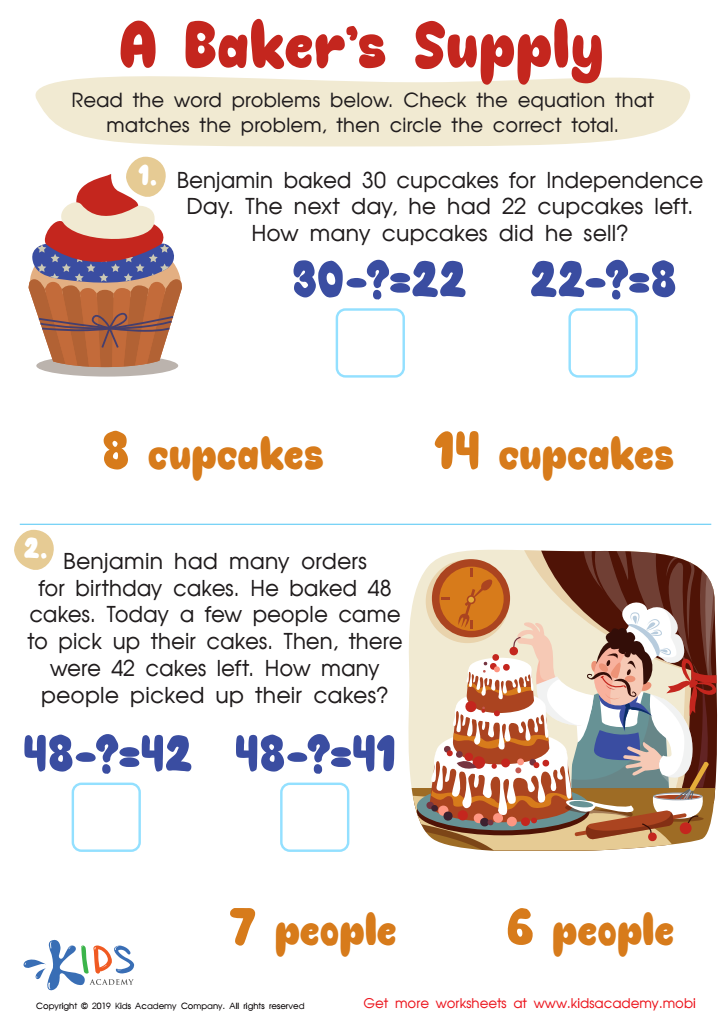
A Baker's Supply Worksheet








Counting practice and easy word problems are fundamental activities for children ages 3-6, as they lay the groundwork for essential cognitive and mathematical skills. During these formative years, young minds are exceptionally receptive to learning through structured yet simple tasks. Engaging in counting exercises reinforces number recognition, sequencing, and the concept of quantity, providing children with a solid numerical foundation that is crucial for their ongoing educational journey.
Easy word problems introduce basic arithmetic operations within a context that familiarizes children with everyday situations, making math both relatable and practical. By solving these problems, children develop critical thinking and problem-solving abilities, which are key competencies in all areas of learning.
Moreover, these activities enhance fine motor skills and hand-eye coordination when children use physical objects to count, and they strengthen language skills as kids follow verbal instructions or discuss problem scenarios. These interactions also foster a positive association with math, which can mitigate future math anxiety.
For parents and teachers, prioritizing counting practice and easy word problems ensures the development of well-rounded, resilient children who not only grasp early math concepts but also cultivate a lifelong confidence and enthusiasm for learning. This foundational competence promises smoother transitions to more advanced mathematical challenges in later grades.








