Fine Motor Skills Easy World Around Us Worksheets for Ages 3-6
3 filtered results
Difficulty Level
Grade
Age
-
From - To
Subject
Activity
Standards
Discover our "Fine Motor Skills Easy Worksheets: World Around Us" designed for children ages 3-6. These engaging worksheets promote essential fine motor skills development through fun and interactive activities related to the environment around your child. Each worksheet is thoughtfully crafted to enhance hand-eye coordination, dexterity, and control, laying a strong foundation for future learning. Kids can enjoy engaging tasks like tracing, coloring, and cutting while exploring topics about their surroundings. Perfect for early educators and parents, these worksheets make learning exciting and accessible. Help your child build confidence and readiness for school with our delightful fine motor skills resources!
Favorites
With answer key
Interactive

 Assign to My Students
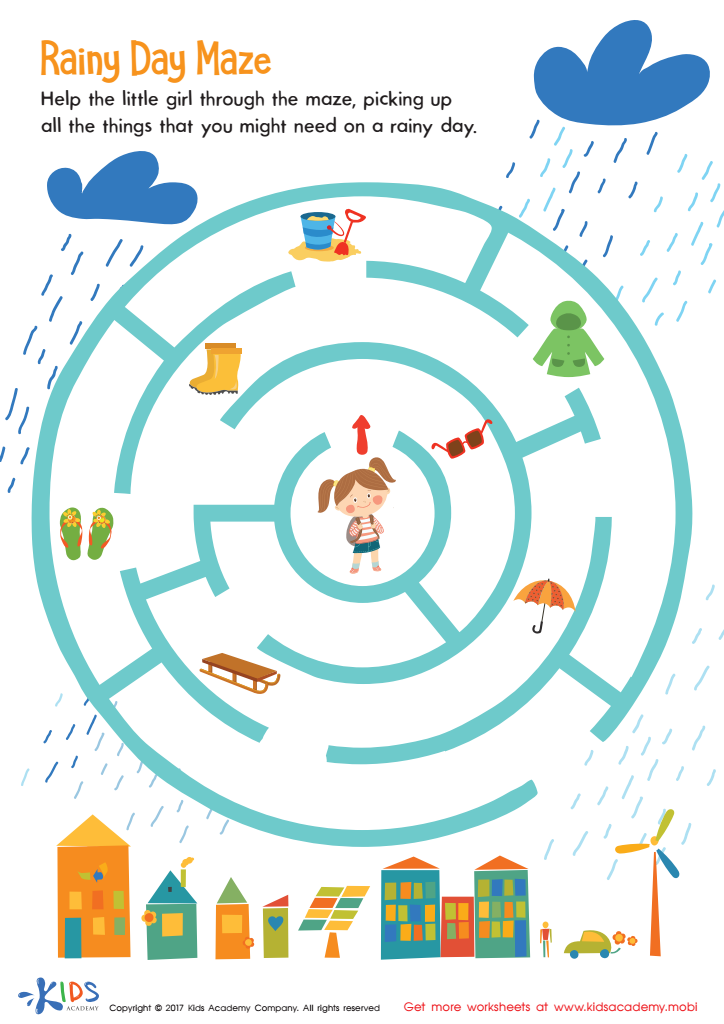
Rainy Day Maze Worksheet
Help your child use critical and problem solving skills to choose the right items! With this fun rainy day worksheet, they'll have a blast helping the character in the maze while learning about weather. Let’s get started!
Rainy Day Maze Worksheet
Worksheet
Join Kids Academy for Free
Who is primarily going to use this learning content?








Fine motor skills, the small movements of hands and fingers, are essential for children aged 3-6 as they lay the groundwork for many daily activities and academic tasks. Parents and teachers should prioritize these skills because they influence a child's ability to perform crucial tasks like tying shoelaces, holding writing tools, cutting with scissors, and manipulating small objects. Mastery of fine motor skills not only promotes independence but also builds confidence in young learners.
Additionally, fine motor development is intricately connected to cognitive growth. Engaging in activities such as drawing, building with blocks, or threading beads enhances hand-eye coordination and concentration, setting the stage for later complexities in subjects like writing and math.
Moreover, nurturing these skills during early childhood is vital for social interactions; it allows children to participate in collaborative activities, fostering teamwork and communication. Through engaging and playful environments, adults can facilitate the development of fine motor skills, making learning enjoyable.
Ultimately, supporting fine motor skill development benefits children's holistic growth, leading to improved academic success, self-esteem, and social capability, all integral components of a well-rounded education. Prioritizing these skills equips young learners with the tools they need for a successful and enriching life.