Money management skills Easy Addition & Subtraction Worksheets for Ages 3-7
3 filtered results
-
From - To
Develop foundational money management skills for young learners with our engaging Easy Addition & Subtraction Worksheets designed for ages 3-7! These printable worksheets combine exciting math exercises with practical money scenarios, helping children learn to count, add, and subtract using real-life contexts. With vibrant illustrations and simple concepts, kids will enjoy mastering essential skills like recognizing coins, making change, and budgeting. Ideal for classroom use or at-home learning, our resources promote critical thinking and problem-solving while making math fun. Empower your child’s financial literacy journey today with these interactive worksheets, setting them on a path to confident money management!
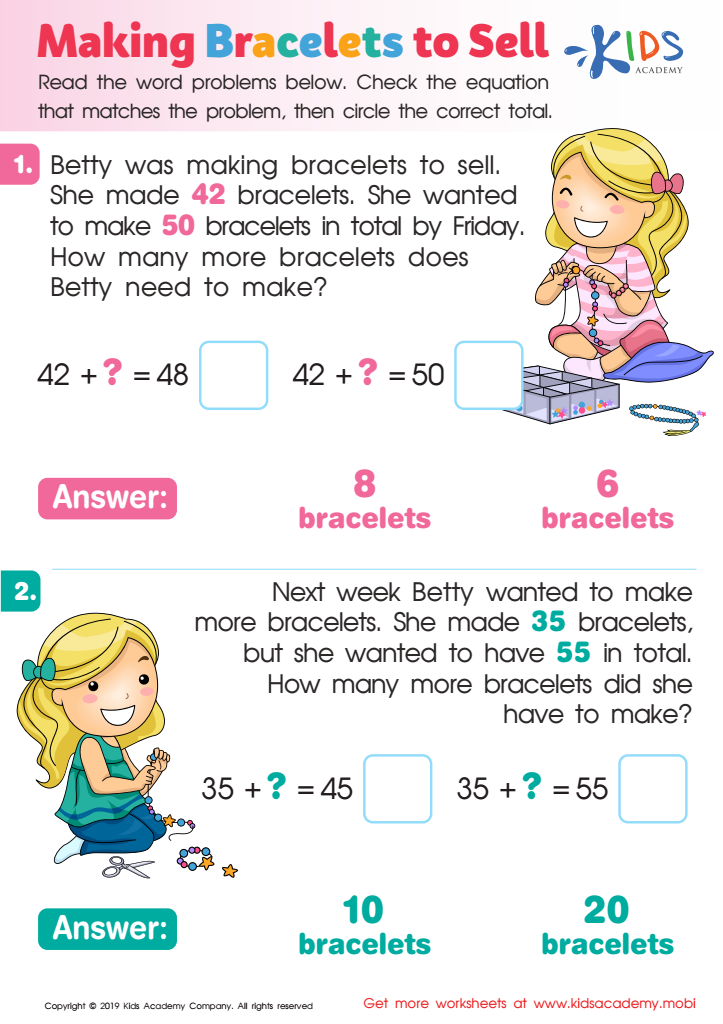
Making Bracelets to Sell Worksheet
 Assign to My Students
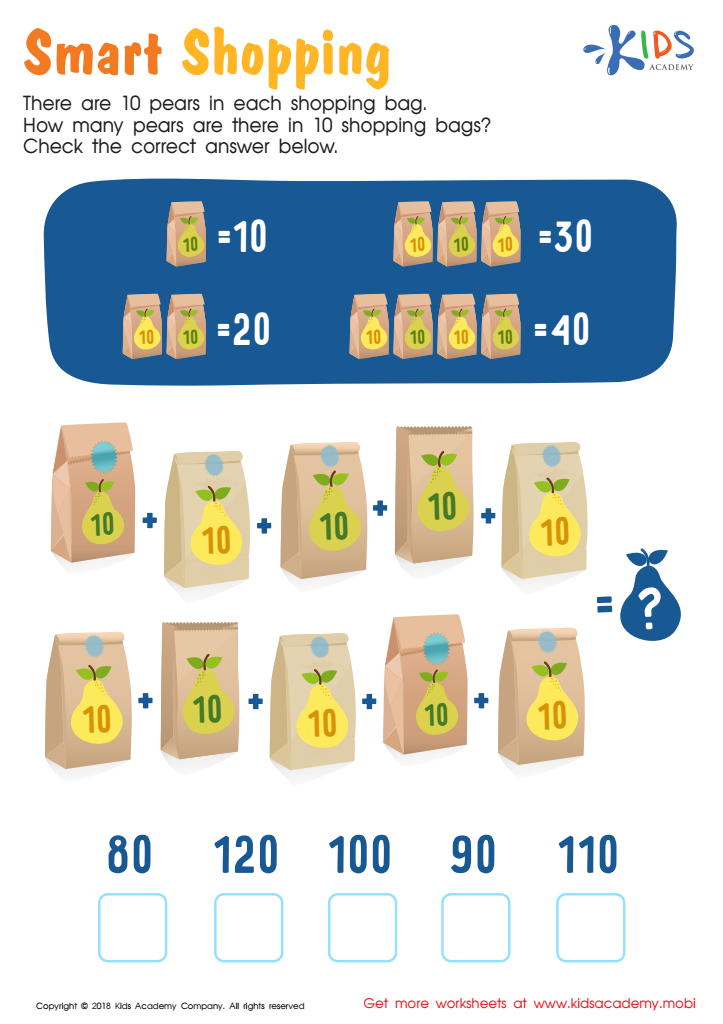
Smart Shopping: Trade Tens for a Hundred Worksheet
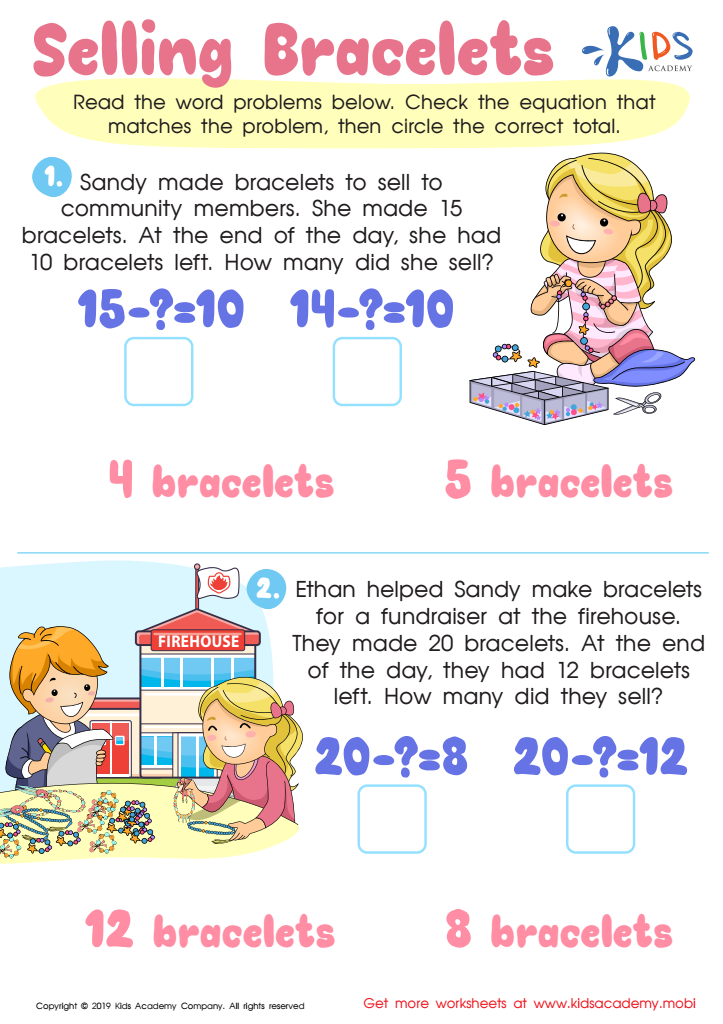
Selling the Bracelets Worksheet








Parents and teachers should prioritize money management skills alongside basic addition and subtraction for children ages 3-7 for several important reasons. First, early financial literacy lays the groundwork for developing responsible financial behaviors later in life. By learning about money—its value, its uses, and basic arithmetic operations involving it—children gain a practical understanding of how to manage allowances, savings, and spending.
Easy addition and subtraction are essential for everyday situations involving money. For example, children can learn to add up the cost of items during a shopping trip or subtract their savings from their purchases to understand the concept of budgeting. This helps them make informed decisions, fostering a sense of responsibility and ownership over their actions.
Additionally, incorporating money management into education enhances cognitive skills. Young learners engage in problem-solving and critical thinking, supporting broader mathematical development. Moreover, discussions about money can spark conversations about priorities, needs versus wants, and delayed gratification—life lessons crucial for personal and financial success.
Ultimately, teaching money management using basic math empowers children with essential life skills, preparing them for a future where they can navigate financial challenges with confidence and make informed choices. This investment in early education pays dividends throughout their lives.








