Understanding sequencing Easy Math Worksheets for Ages 3-7
3 filtered results
-
From - To
Help your child master the essential skill of sequencing with our Understanding Sequencing Easy Math Worksheets! Perfect for ages 3-7, these engaging and visually appealing printables are designed to make learning fun and interactive. Kids will enjoy identifying patterns, ordering events, and recognizing sequences through a variety of hands-on activities. These worksheets not only enhance mathematical abilities but also boost critical thinking and problem-solving skills. Download now to give your child a head start in math while encouraging a love for learning. Visit Kids Academy for more resources and support on your child's educational journey!
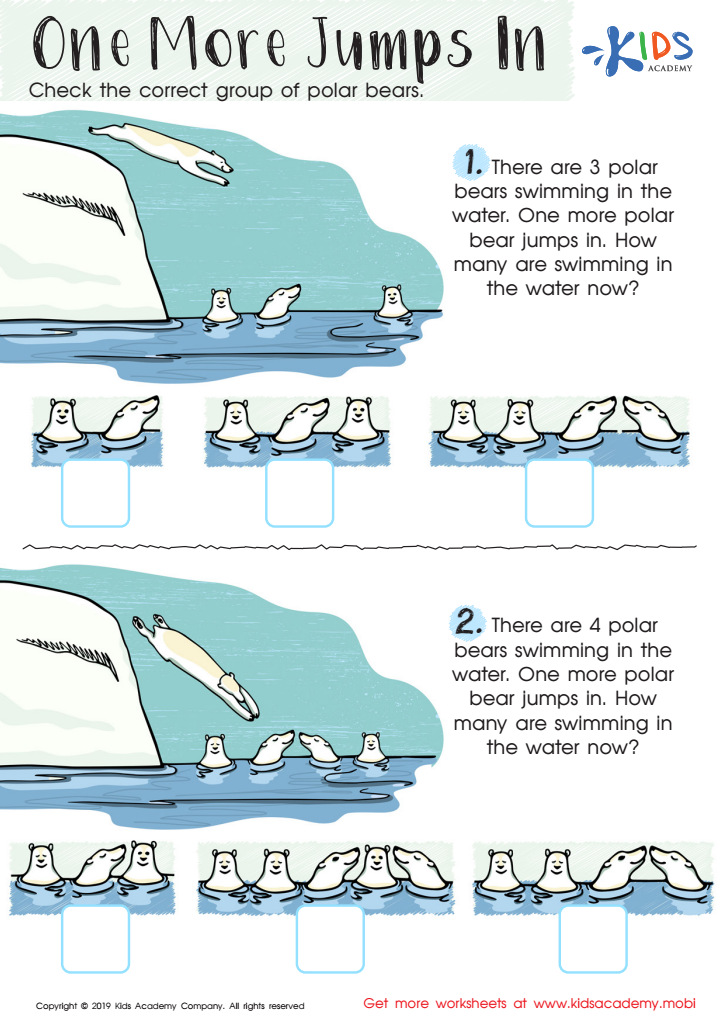
One More Jumps In Worksheet
 Assign to My Students
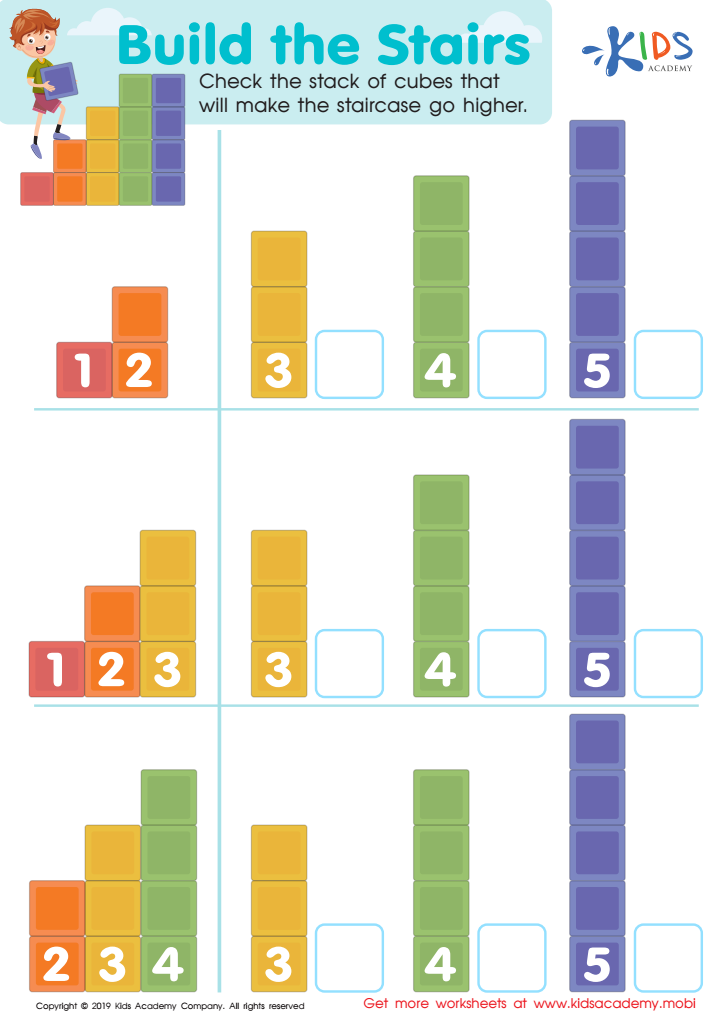
Build the Stairs Worksheet
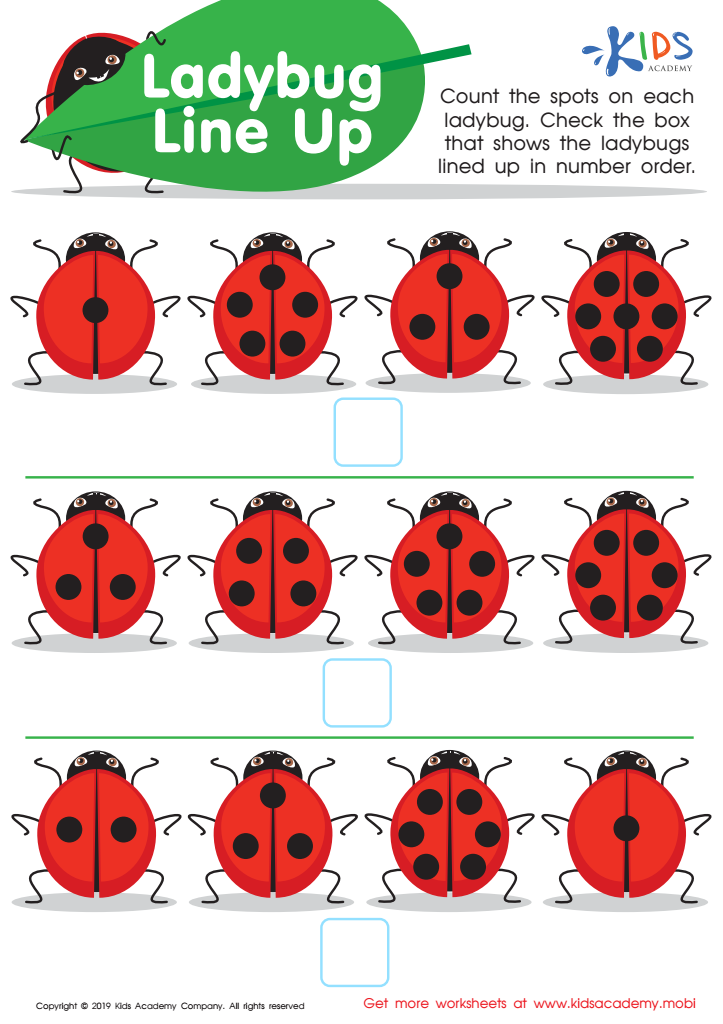
Ladybug Line Up Worksheet








Understanding sequencing is a fundamental skill in early math education for children aged 3-7, which lays the groundwork for more complex mathematical concepts and daily activities. Parents and teachers should care about teaching sequencing because it promotes critical thinking and problem-solving skills. When children learn to sequence, they practice recognizing patterns and organizing thoughts logically. This provides a basis for understanding numbers, addition, subtraction, and word problems.
Additionally, sequencing aids cognitive development by improving memory and attention span. Children learn to follow steps, such as counting in order or understanding the days of the week. This skill is not restricted to math alone; it permeates other areas like reading comprehension, storytelling, and daily routines. For example, knowing that events in a story follow an order helps children grasp narratives better, while understanding sequencing in routines, like dressing or brushing teeth, fosters independence and self-care.
Moreover, by emphasizing sequences, children cultivate a sense of prediction and anticipation. They get better at estimating outcomes, making logical transitions, and connecting information meaningfully.
Overall, attention to sequencing at this age not only enriches mathematical prowess but fortifies various vital life and academic abilities. Parents and teachers play a crucial role in nurturing this key aspect of early childhood development.








