Interpreting data Easy Measurement Worksheets for Ages 3-7
3 filtered results
-
From - To
Enhance your young child's learning experience with our easy measurement worksheets designed for ages 3-7. These engaging and interactive worksheets focus on interpreting data, making math concepts accessible and fun. By exploring various activities, children will gain essential skills in understanding and analyzing simple data sets through visuals and hands-on exercises. Our worksheets encourage critical thinking and problem-solving while seamlessly integrating play with learning. Perfect for parents and teachers, these resources support early childhood education by fostering a love for math in a constructive and enjoyable way. Start building your child's confidence in interpreting data today!
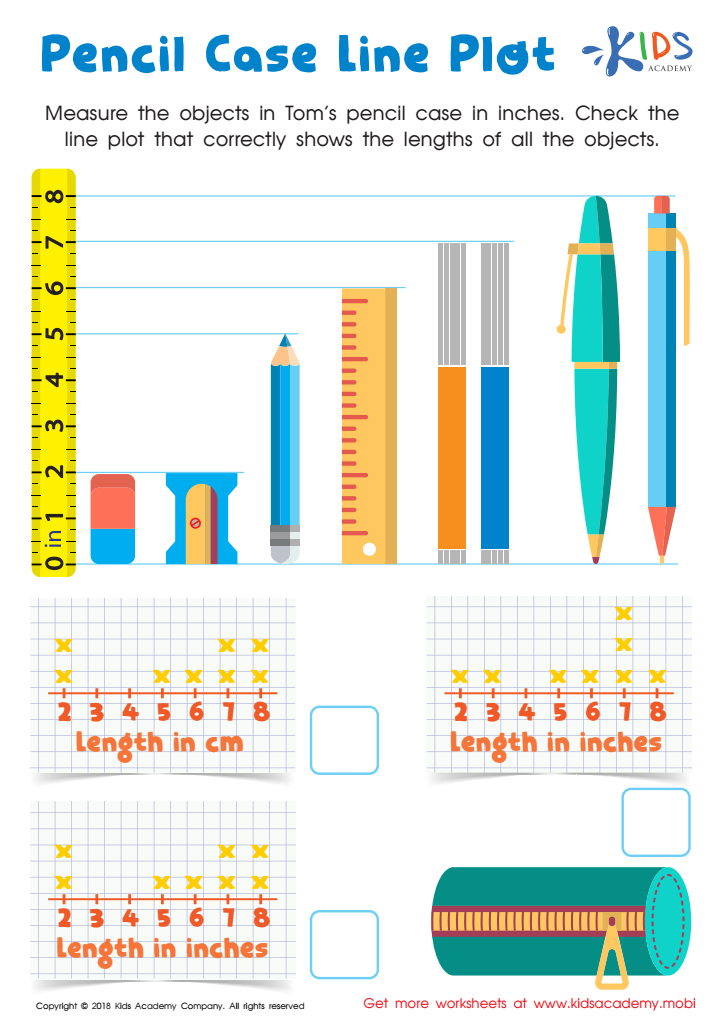
Pencil Case Line Plot Worksheet
 Assign to My Students
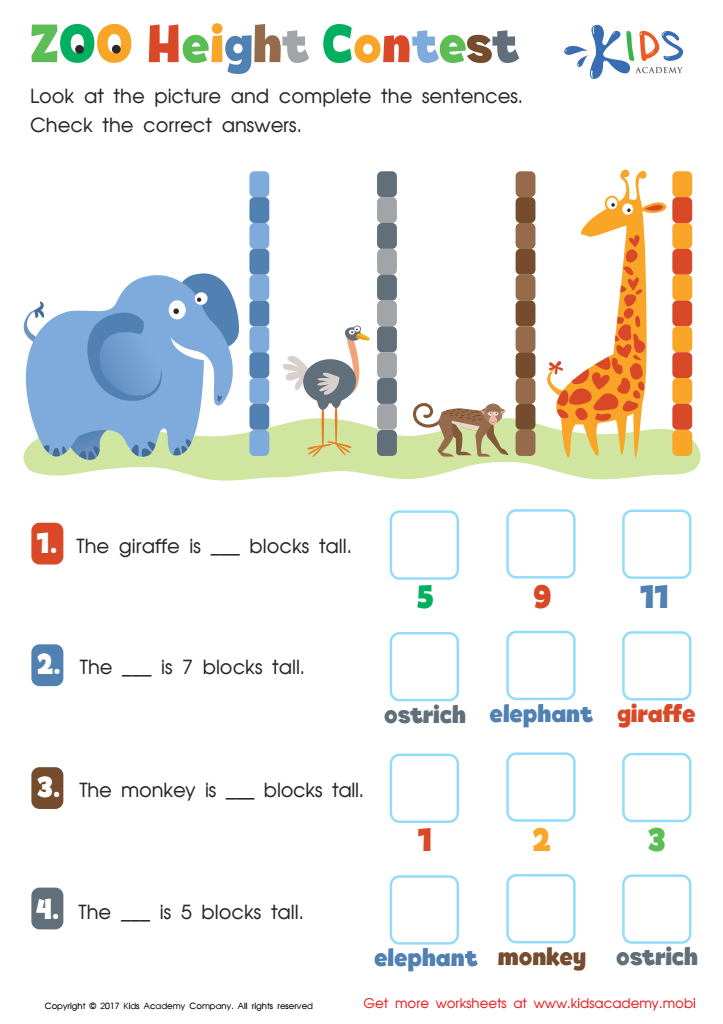
Zoo Height Contest Worksheet
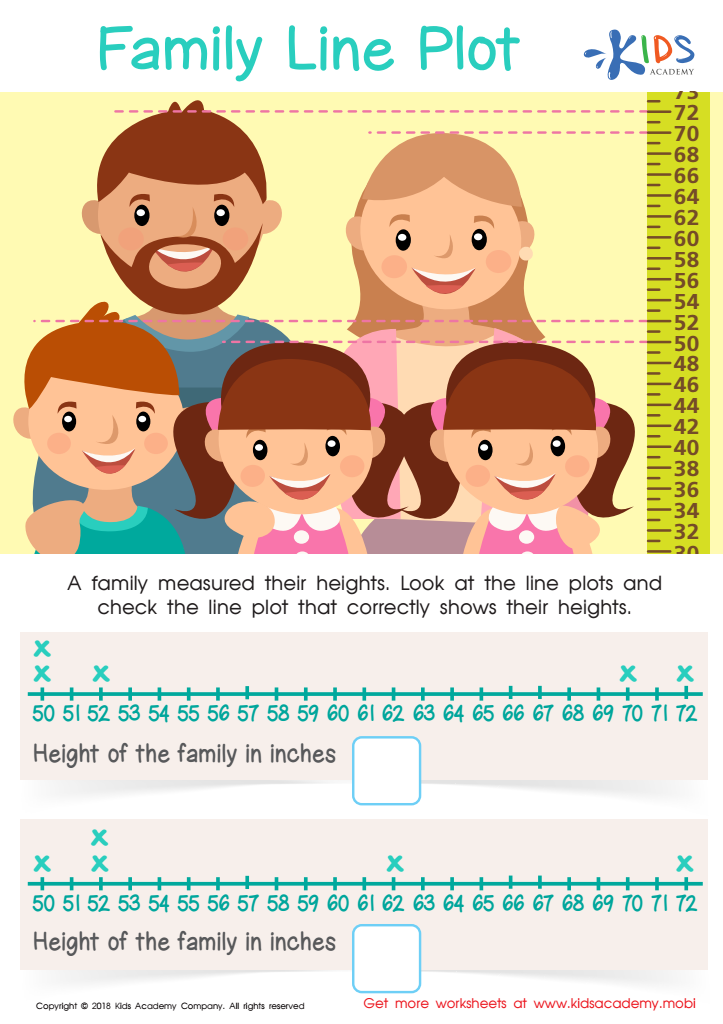
Family Line Plot Worksheet








Parents and teachers should prioritize interpreting data related to easy measurement for children aged 3-7 for several compelling reasons. First, understanding basic measurement concepts—such as length, weight, and volume—can significantly enhance children's cognitive development. Measurement activities provide foundational skills in math and science, fostering critical thinking and problem-solving abilities early in life.
Second, interpreting data from measurement activities allows educators and parents to track a child's progress and identify areas where additional support may be needed. By analyzing how children perceive and interact with measurements, caregivers can tailor learning experiences to meet individual needs, promoting a growth mindset.
Additionally, measurement skills can enhance language development as children learn to describe and compare dimensions, thus enriching vocabulary and communication prowess. Engaging in hands-on measurement tasks creates real-world connections that make learning enjoyable and relevant.
Finally, establishing a strong foundation in measurement concepts early on prepares children for more complex mathematical concepts in later grades. By appreciating and understanding the significance of interpreting measurement data, caregivers can actively contribute to a child's lifelong love of learning and assess their readiness for future academic challenges.








