Number Recognition Easy Word Problems Worksheets for Ages 3-7
9 filtered results
-
From - To
Welcome to our engaging Number Recognition Easy Word Problems Worksheets, specially designed for kids aged 3-7! These worksheets combine fun and learning, helping young learners develop essential number recognition skills through relatable, easy-to-understand word problems. Each activity encourages critical thinking and problem-solving while promoting early math proficiency. Children will love tackling scenarios that involve counting everyday objects, enhancing their understanding of numbers in the real world. Our colorful, visually appealing resources are perfect for both classroom and home learning. Get ready to make math enjoyable while building a strong foundation in number recognition for your little ones today!
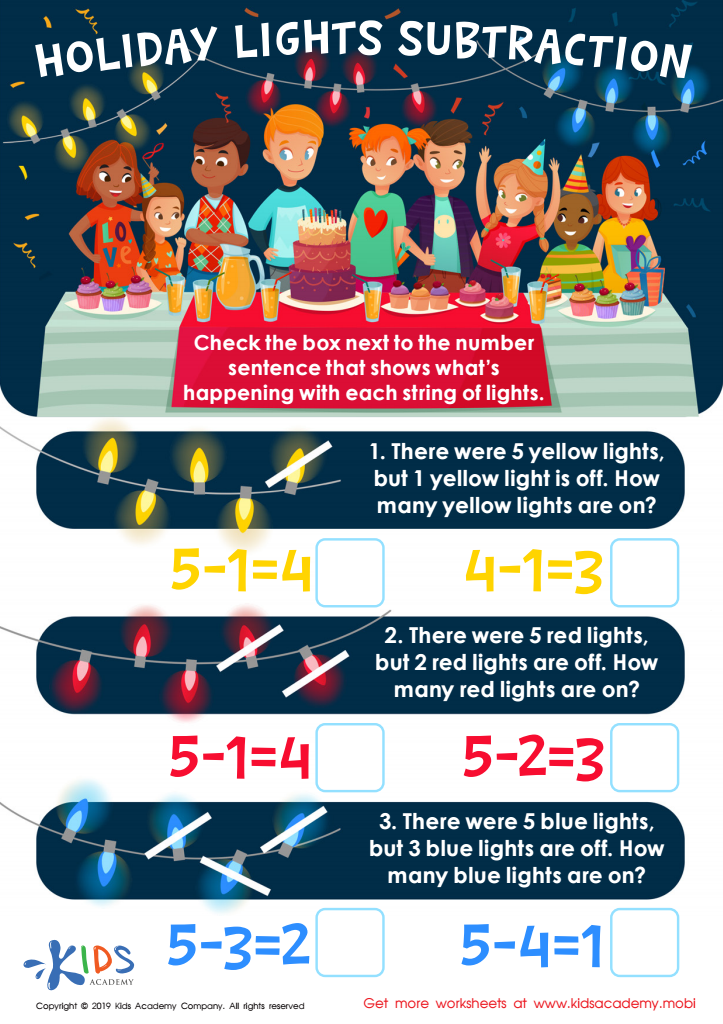
Holiday Lights Subtraction Worksheet
 Assign to My Students
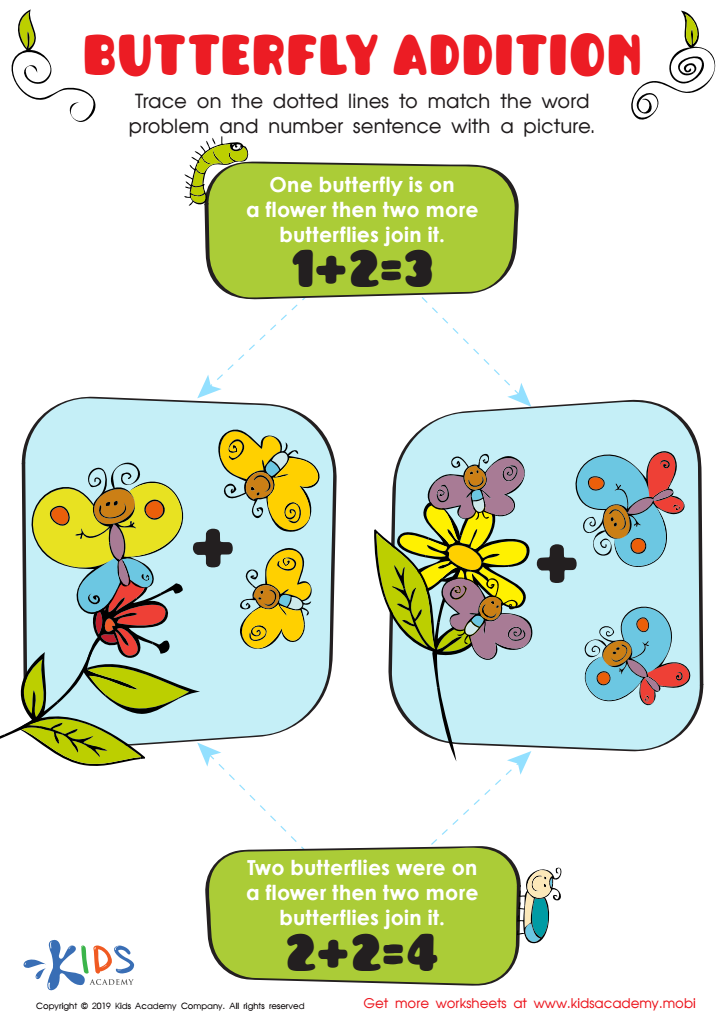
Butterfly Addition Worksheet
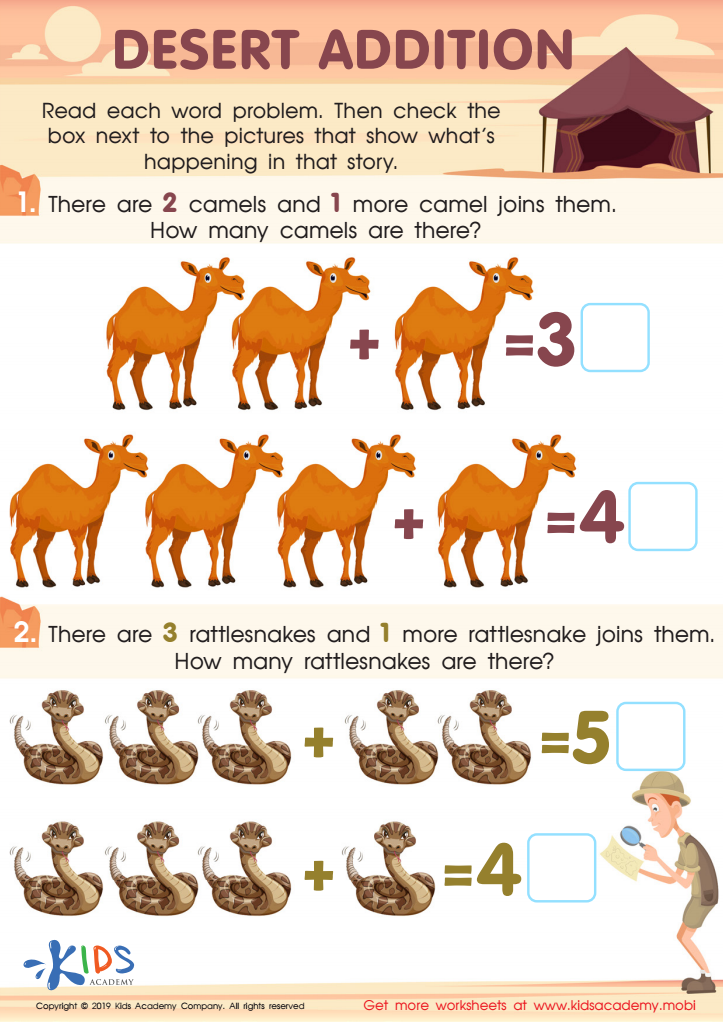
Desert Addition Worksheet
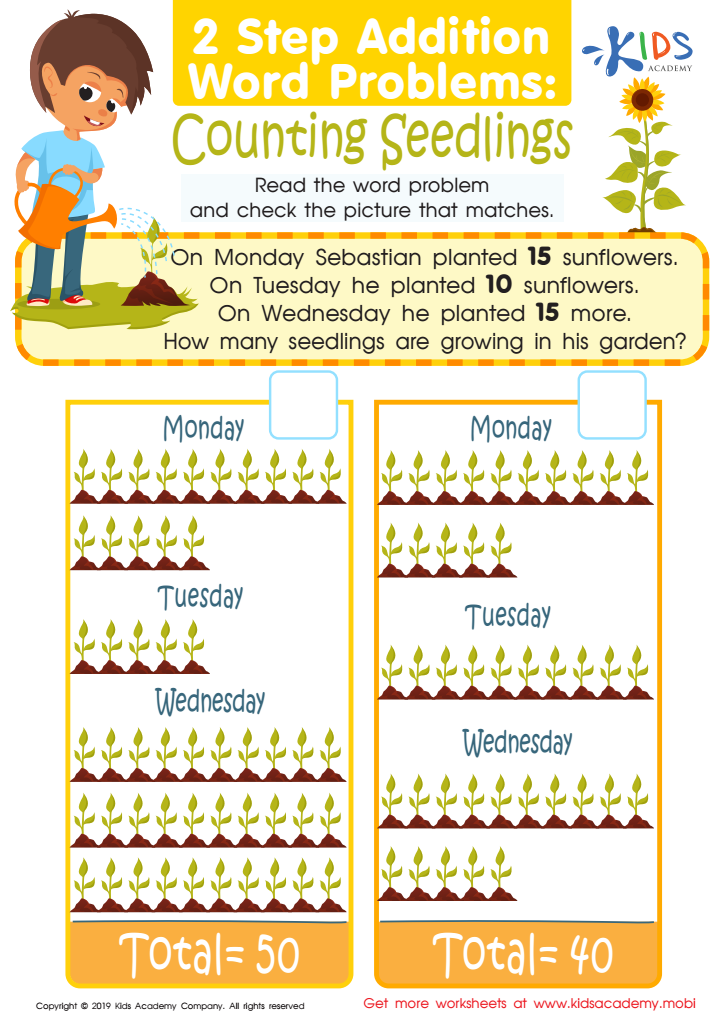
Counting Seedlings Worksheet
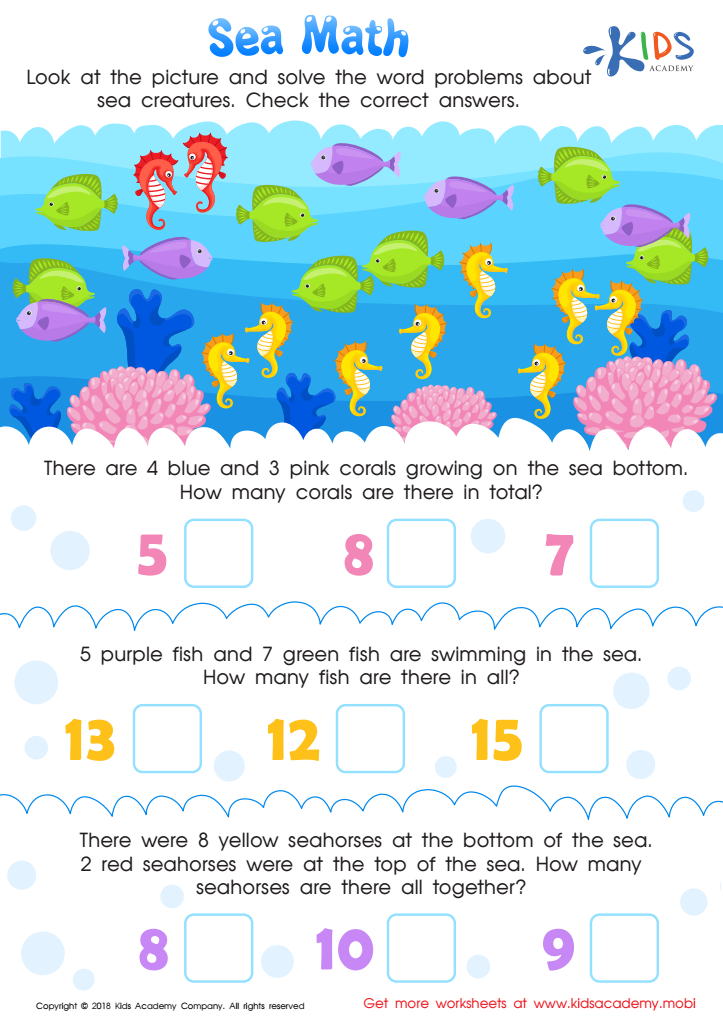
Sea Math Worksheet
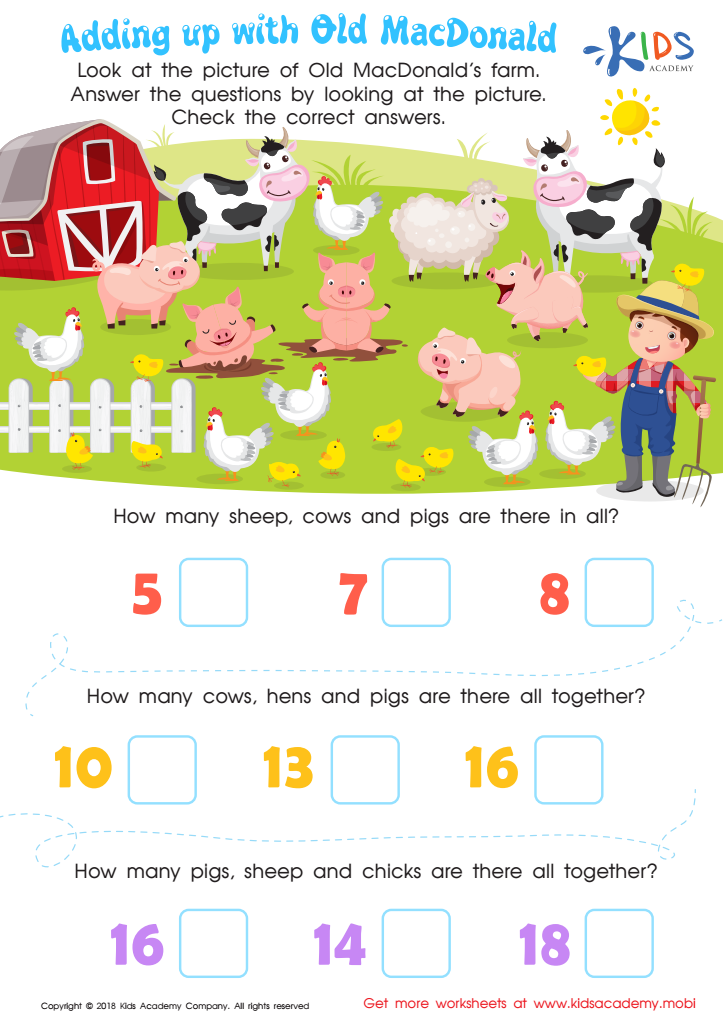
Adding Up with Old MacDonald Worksheet
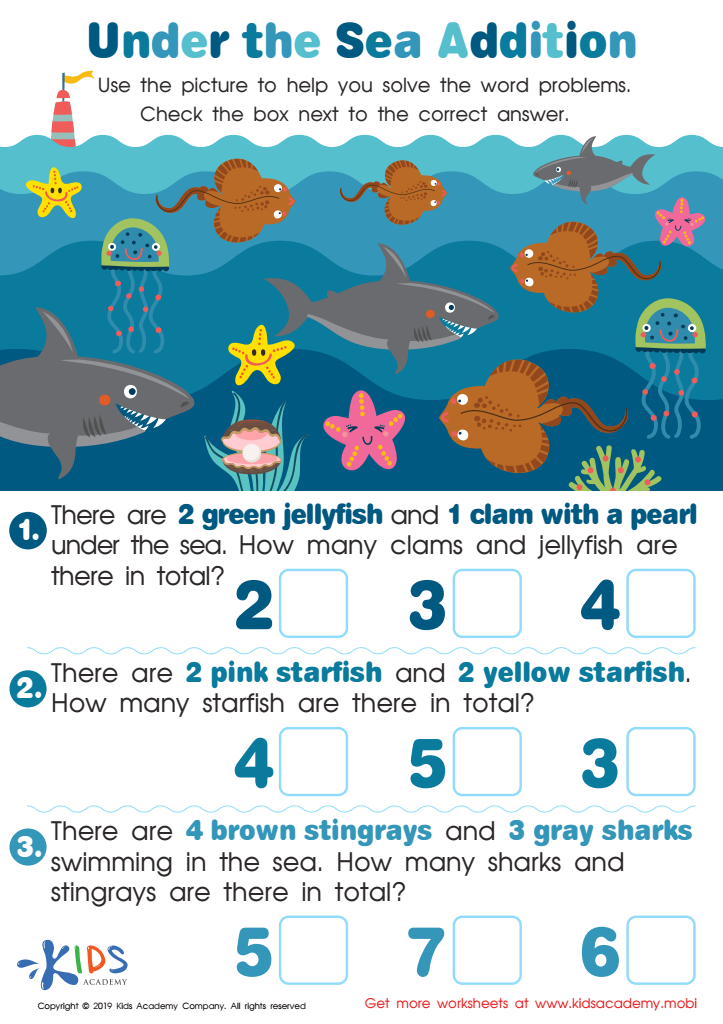
Under the Sea Addition Worksheet
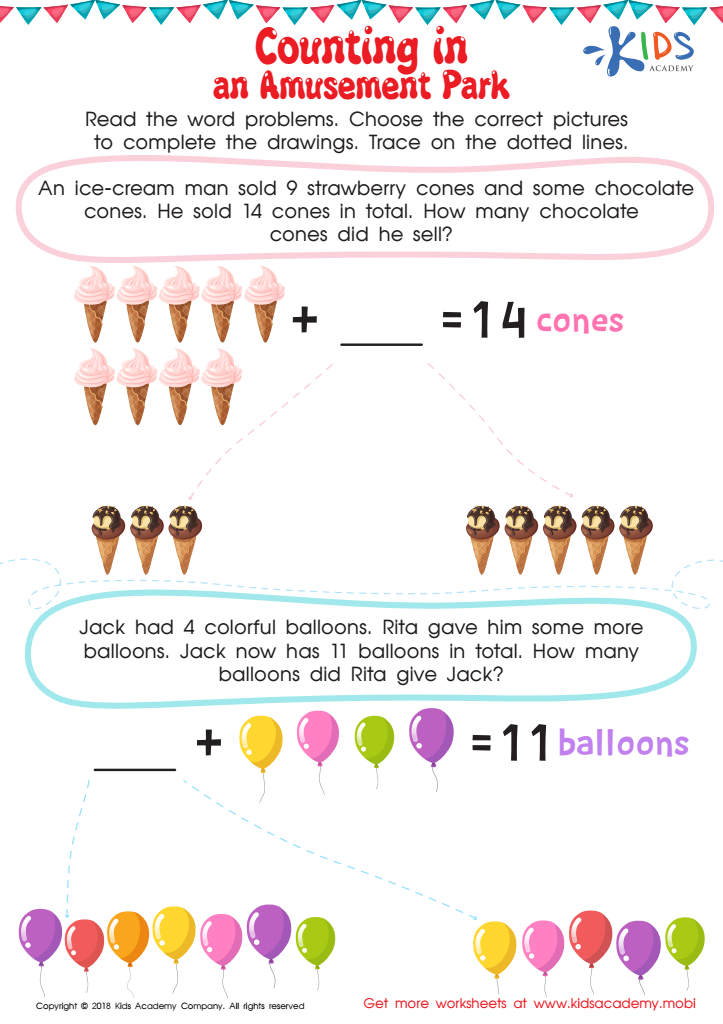
Counting in an Amusement Park Worksheet
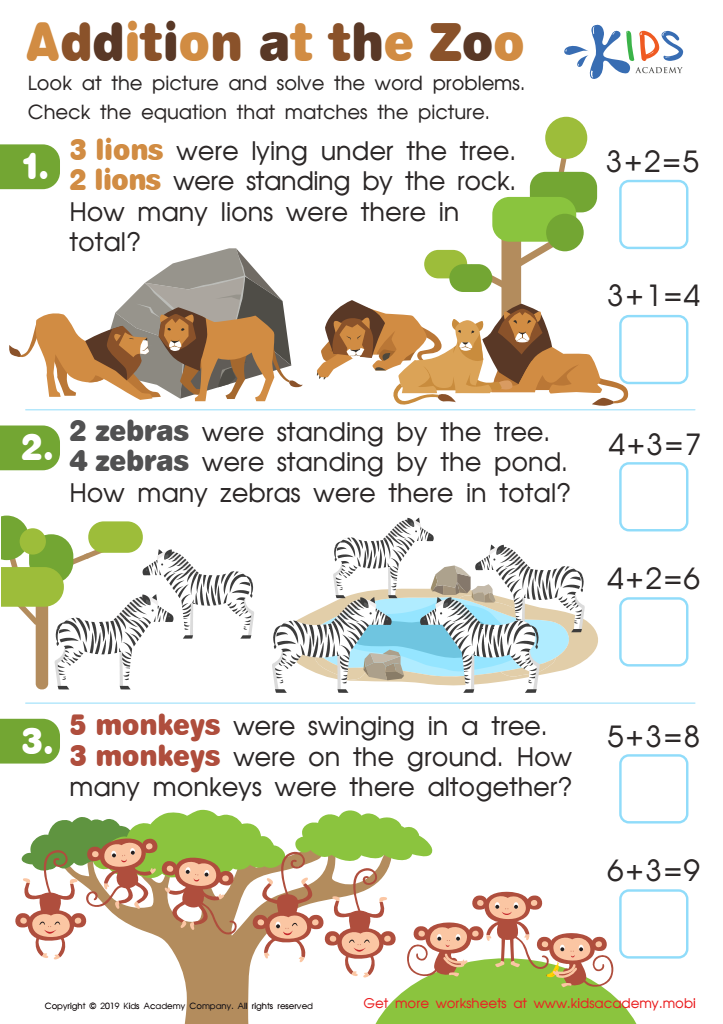
Addition at the Zoo Worksheet








Number recognition and basic word problems play a crucial role in the early mathematical development of children aged 3-7. As foundational skills in mathematics, they lay the groundwork for future academic success and cognitive growth. Parents and teachers should be concerned because early mastery of number recognition enhances a child's ability to understand and engage with the world around them. Recognizing numbers helps children in daily activities such as counting objects, managing their time, and understanding quantity, which fosters confidence in their abilities.
Moreover, easy word problems stimulate critical thinking and problem-solving skills. They encourage children to interpret real-life situations mathematically, promoting a practical application of numbers that is both engaging and educational. When parents and teachers actively involve kids in these learning activities, children tend to develop a positive attitude toward mathematics.
By focusing on number recognition and simple word problems, adults can help nurture curiosity and instill a love for learning in young children. This early intervention is essential in preventing math anxiety later on, leading to more successful outcomes as children progress to more complex concepts in school. Therefore, this practice not only supports academic readiness but also cultivates lifelong skills that benefit children well beyond the classroom.








