Understanding citizenship Easy Social Studies Worksheets for Ages 3-7
3 filtered results
Difficulty Level
Grade
Age
-
From - To
Subject
Activity
Standards
Introduce your young learners to the concept of citizenship with our engaging and easy social studies worksheets designed specifically for ages 3-7. These colorful and interactive worksheets promote understanding of important civic concepts, helping kids grasp the values of community, responsibility, and respect for others. Ideal for early grade classrooms and homeschooling environments, our resources encourage students to explore their roles as citizens through fun activities, discussions, and illustrations. Foster a sense of belonging and encourage empathy with age-appropriate lessons that make learning about citizenship enjoyable and impactful. Start shaping responsible future citizens today with our easy-to-use worksheets!
Favorites
With answer key
Interactive
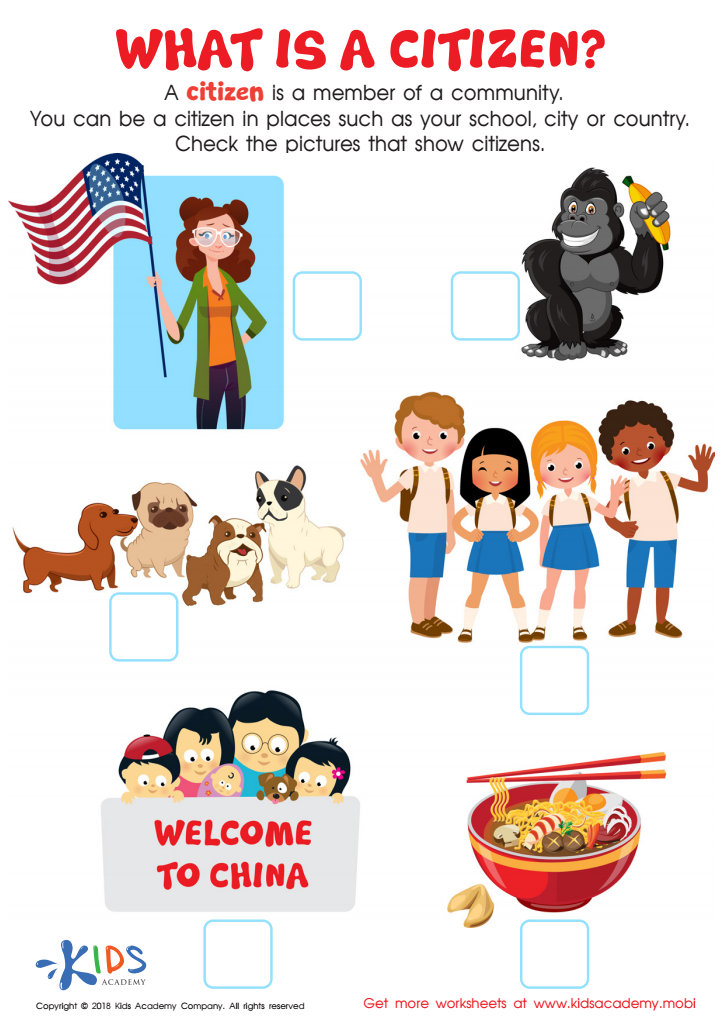
What is a Citizen? Worksheet
Do your students know who a citizen is? Use this worksheet to teach them: a citizen is a member of a community, such as your school, city or country. Look at the pictures in the pdf with your students. Ask them to identify who or what is in the pictures, and help them check which are citizens.
 Assign to My Students
What is a Citizen? Worksheet
Worksheet
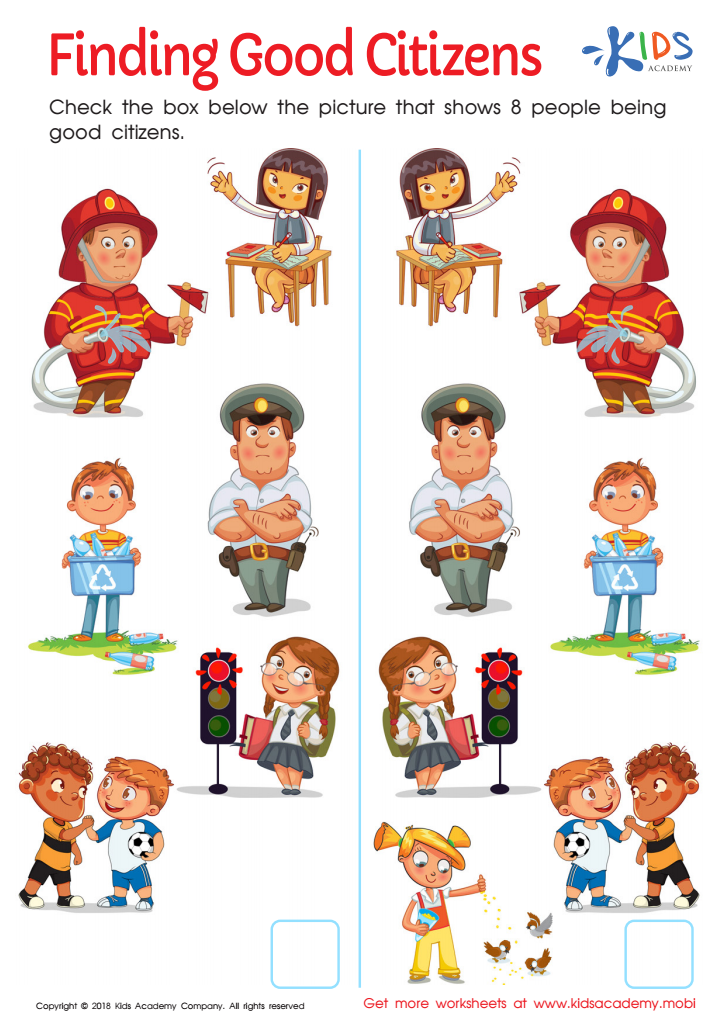
Finding Good Citizens Worksheet
Teach your students what it takes to be a responsible citizen in their community. Test their knowledge by having them identify good citizen acts in pictures. Ask them to check the box showing 8 people being good citizens. Challenge their comprehension and make sure they understand the importance of being a good citizen.
Finding Good Citizens Worksheet
Worksheet
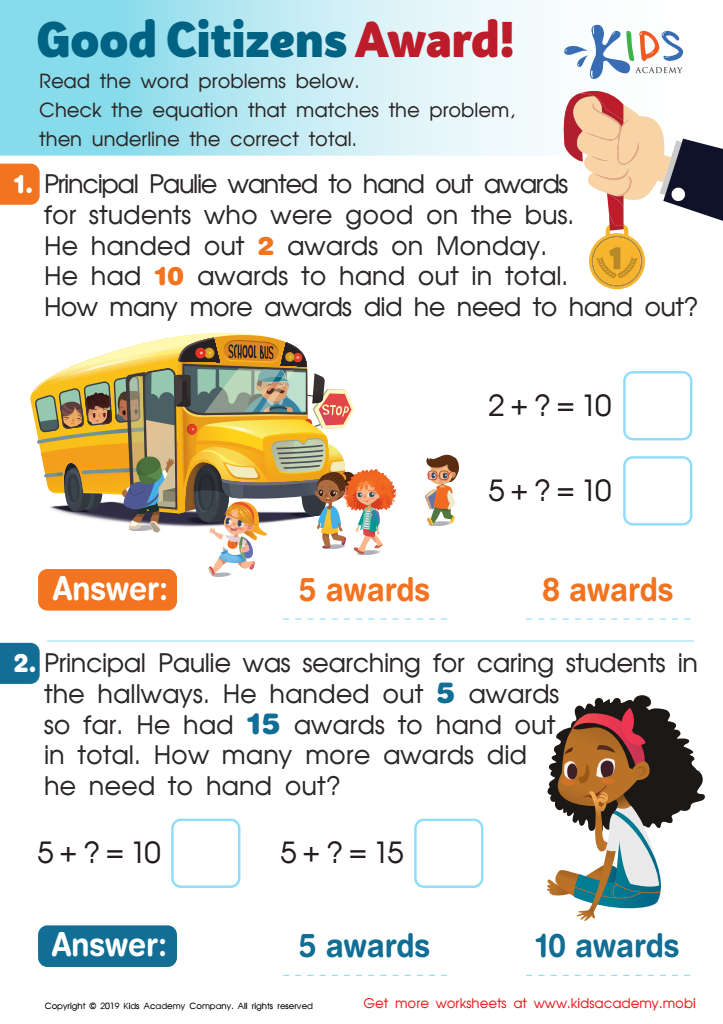
Good Citizens Award! Worksheet
A citizen is a person who resides in a certain area and is granted legal rights and privileges. Becoming a citizen can be achieved in various ways, most commonly through birth or marriage. Good citizens honor their nation's laws and act responsibly. Ask your students to share examples of good citizenship. Have them read the word problem and choose the equation that yields the right answer, then underline it.
Good Citizens Award! Worksheet
Worksheet
Learning Skills
Join Kids Academy for Free
Who is primarily going to use this learning content?




.jpg)



Understanding citizenship is essential for young children as it lays the foundation for responsible and active participation in their communities. For parents and teachers of children aged 3-7, integrating concepts of citizenship into social studies is crucial for several reasons.
First, these early years are formative; children absorb values, attitudes, and behaviors that shape their understanding of societal roles. Teaching citizenship at this age encourages them to develop empathy, respect, and an appreciation for diversity, fostering inclusive mindsets.
Second, citizenship education helps children learn about their rights and responsibilities. When they grasp the basics of being part of a community, they become more aware of how their actions affect others and the importance of contributing positively, whether through sharing or cooperating in group activities.
Furthermore, engaging with citizenship topics makes social studies more relatable and enjoyable for young learners. Utilizing stories, games, and interactive discussions helps them connect effectively with the material.
Ultimately, by prioritizing understanding citizenship, parents and teachers equip children with essential life skills, promoting informed, engaged generations that value democracy and social cohesion. This approach not only enhances individual growth but also strengthens community bonds, creating future citizens who are proactive and community-minded.