Handwriting practice Easy Letter Recognition Worksheets for Ages 3-9
3 filtered results
Difficulty Level
Grade
Age
-
From - To
Subject
Activity
Standards
Help your child develop essential handwriting skills with our Easy Letter Recognition Worksheets designed for ages 3-9! These engaging practice sheets combine letter recognition with fun handwriting exercises, perfect for young learners. Our worksheets provide a playful approach to familiarizing your child with the alphabet through tracing, coloring, and interactive activities. By reinforcing the shape and sound of each letter, your little one will gain confidence and improve their fine motor skills. Ideal for home learning or classroom activities, these resources make handwriting practice enjoyable and effective. Empower your child’s literacy journey today with our exciting available worksheets!
Favorites
With answer key
Interactive
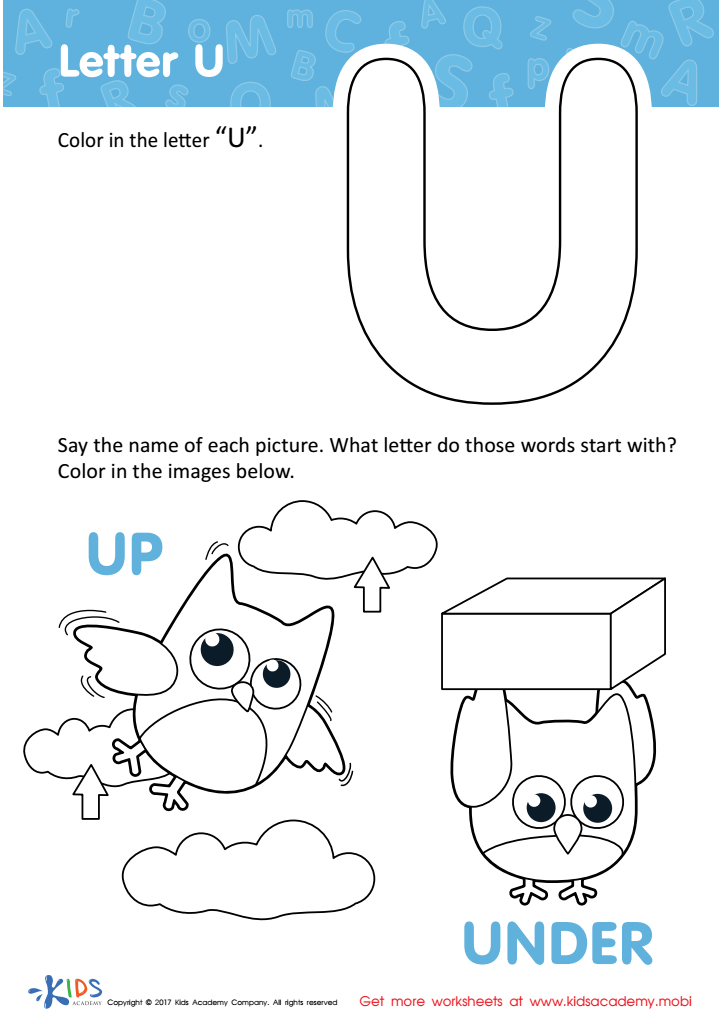
Letter U Coloring Sheet
This letter "U" coloring page helps your child learn two things at once - the letter "U" and positional words! An adorable owl character aids in understanding up and under. In a few strokes of a crayon, your child can master these concepts.
Download (PDF)
 Assign to My Students
Assign to My Students
Letter U Coloring Sheet
Worksheet
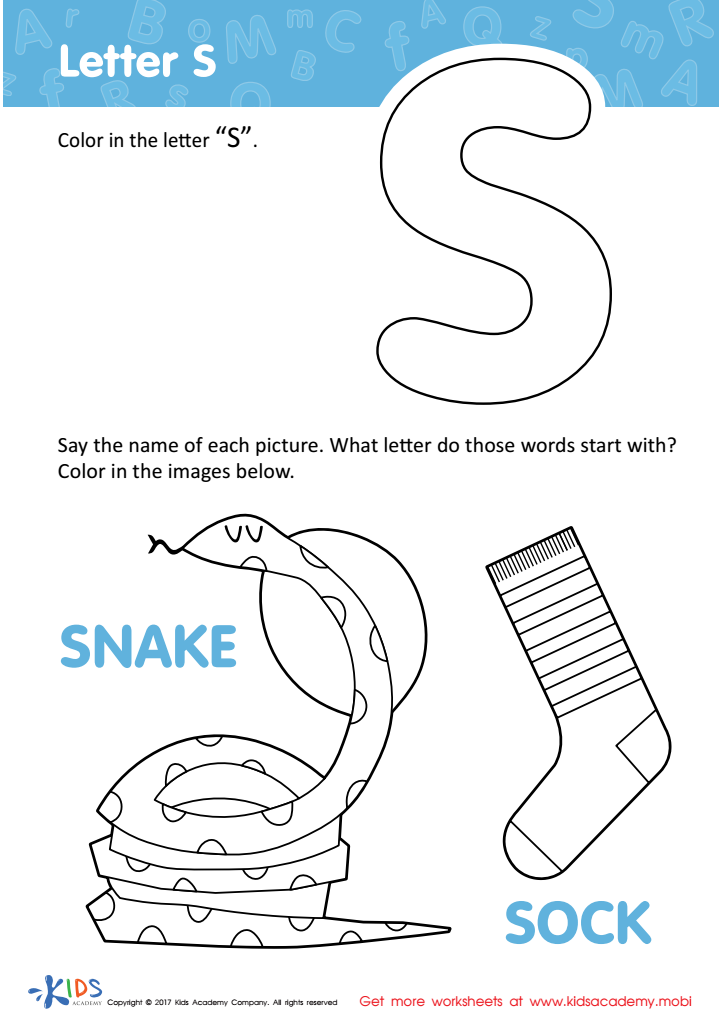
Letter S Coloring Sheet
Help your child practice recognizing the letter "S" and the sound it makes with this fun coloring page. It features a slippery snake, smelly sock and more! Give them extra practice by coming up with more "S" sounds and words.
Download (PDF)
Assign to My Students
Assign to My Students
Letter S Coloring Sheet
Worksheet
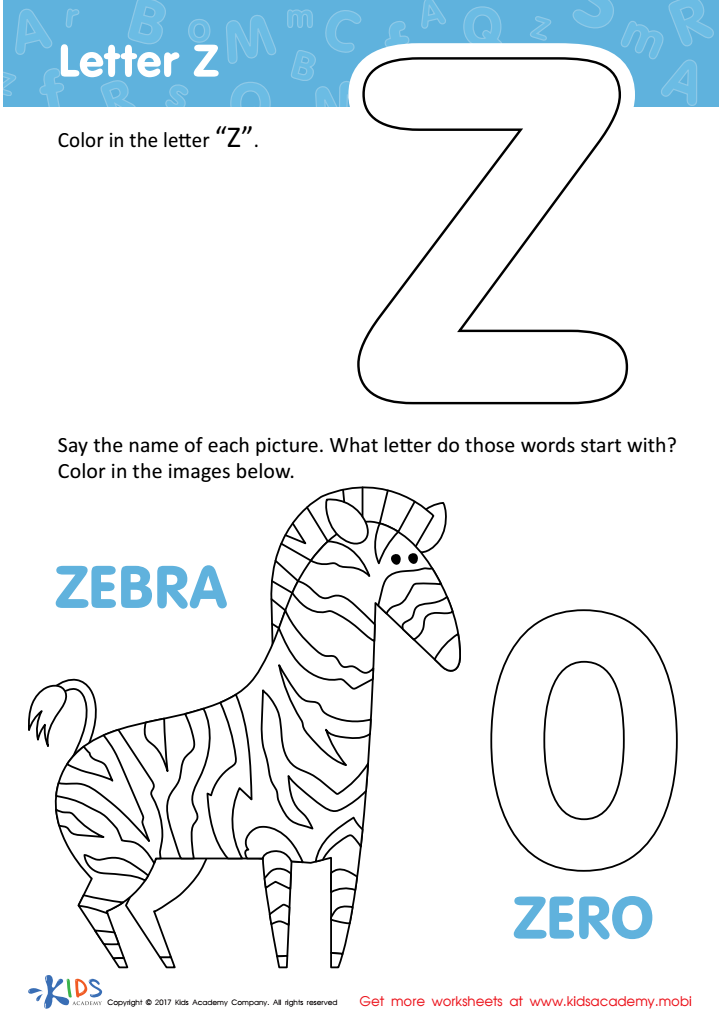
Letter Z Coloring Sheet
This coloring page featuring the letter "Z" is perfect for your child to practice letter recognition! Help them learn the unique sound it makes as they color. It'll be a fun and easy activity they won't have trouble with!
Download (PDF)
Assign to My Students
Assign to My Students
Letter Z Coloring Sheet
Worksheet
Join Kids Academy for Free
Who is primarily going to use this learning content?








Handwriting practice, particularly for young children aged 3-9, is crucial for their overall development and academic success. At this formative age, developing strong handwriting skills contributes to fine motor coordination, which lays the groundwork for various physical tasks beyond writing. Moreover, engaging in handwriting practice aids in letter recognition, enhancing a child's early literacy skills.
Early exposure to proper letter formation helps children internalize how letters look and sound, facilitating stronger reading and writing foundations. As children learn to distinguish between letters, they also enhance their phonemic awareness, critical for phonics and spelling lessons later. Practicing handwriting allows children to express thoughts more clearly and confidently as they progress in their education.
For parents and teachers, nurturing these skills can significantly influence a child's willingness to write and share ideas. It fosters academic enjoyment and can lead to improved performance in school assessments. Furthermore, incorporating handwriting practice into daily routines can strengthen the child-parent or teacher-student bond, making learning a shared and enjoyable experience. Overall, investing time in handwriting and letter recognition during the early years is an essential step in preparing children for future academic challenges and lifelong learning.