Pattern recognition Easy Numbers Worksheets for Ages 3-9
3 filtered results
-
From - To
Enhance your child's early math skills with our Pattern Recognition Easy Numbers Worksheets for Ages 3-9. These engaging worksheets are designed to develop kids’ abilities to recognize patterns, a fundamental math skill, through fun and easy exercises. Perfect for preschoolers and early elementary children, our worksheets provide a variety of activities that help kids learn numbers, understand sequence and improve cognitive functions. From simple number patterns to complex sequences, these printable materials ensure a comprehensive learning experience. Foster a love for math in young learners with our expertly crafted pattern recognition worksheets! Ideal for both classroom and at-home practice.
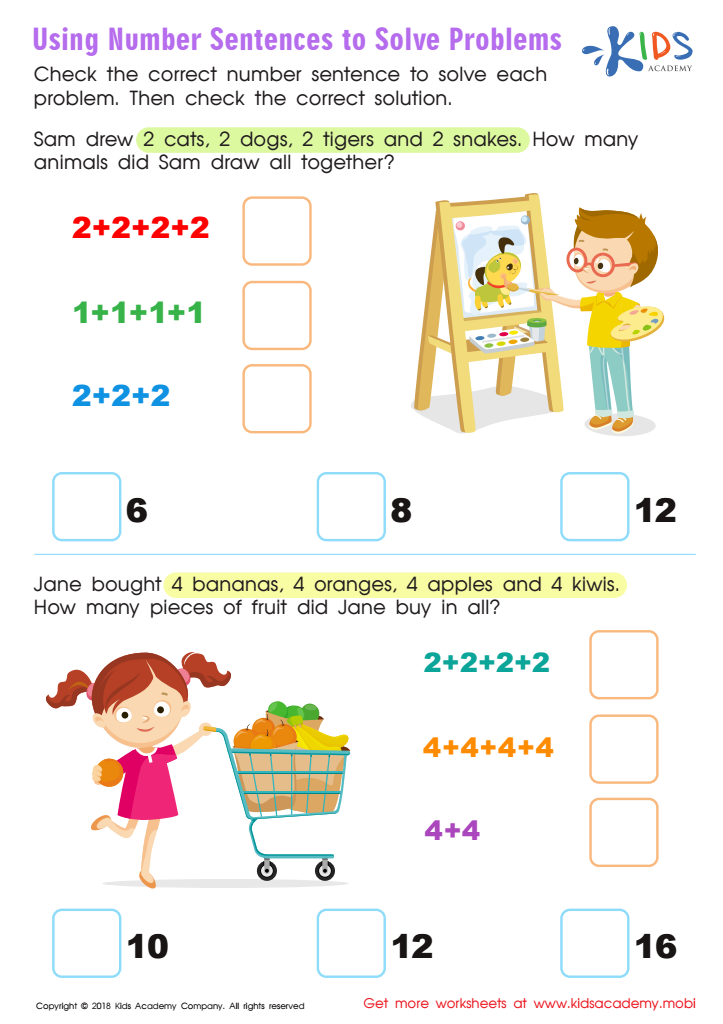
Using Number Sentences to Solve Problems Worksheet
 Assign to My Students
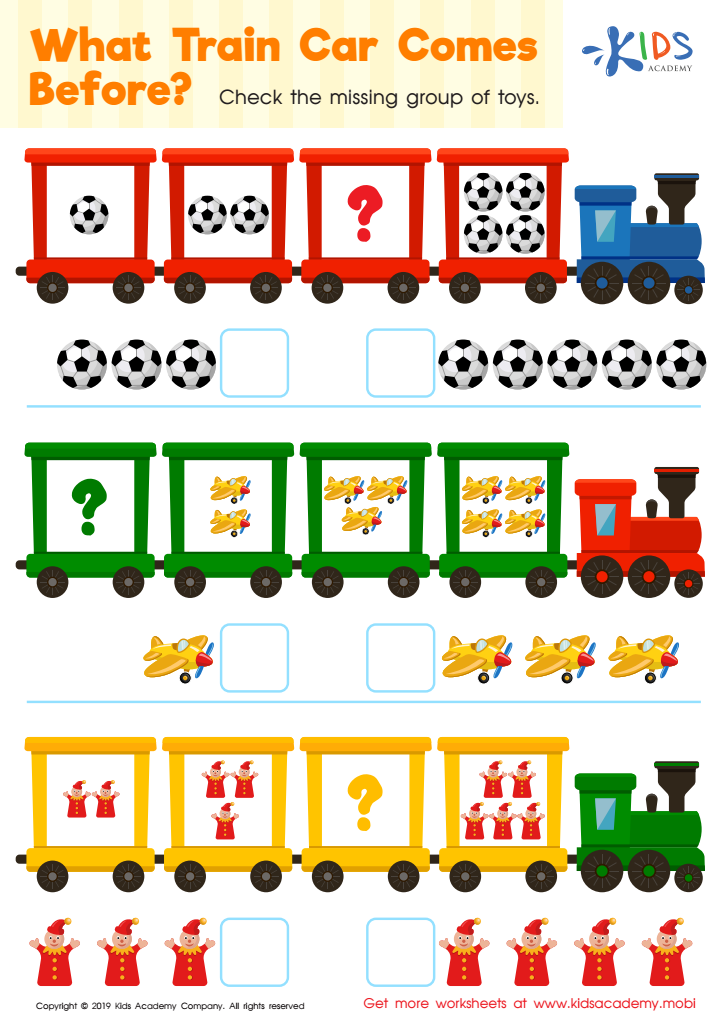
What Train Car Comes Before? Worksheet
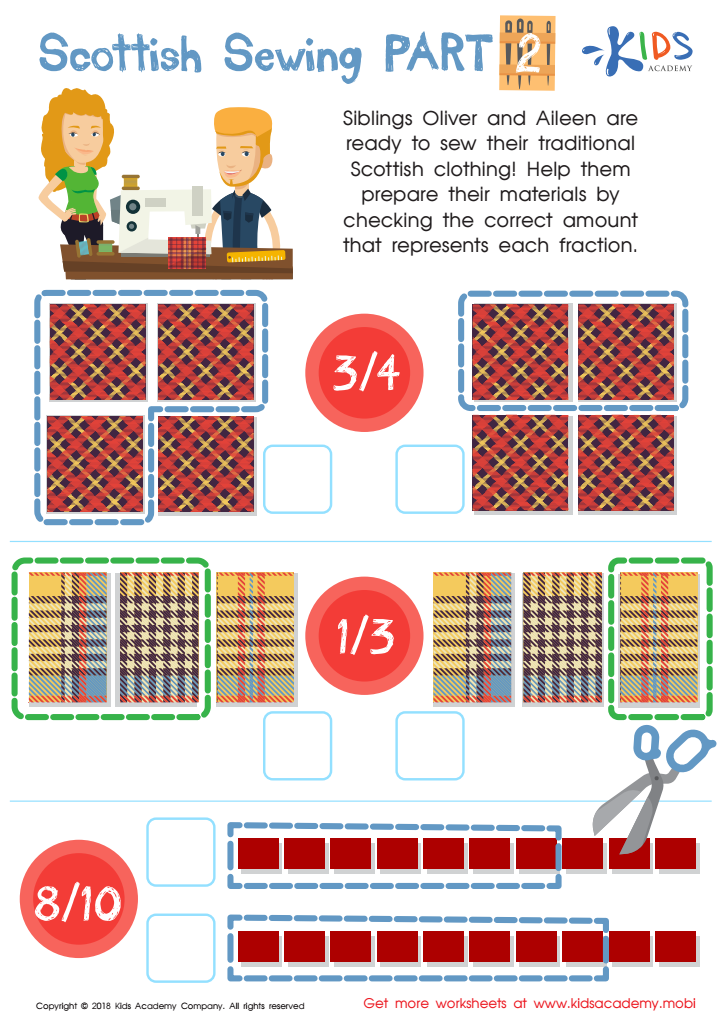
Scottish Sewing Part 2 Worksheet








Pattern recognition is a foundational skill in mathematical thinking, critical for children aged 3-9. Parents and teachers should prioritize this skill for several compelling reasons. First, recognizing patterns helps children make sense of the world around them by identifying consistency and predictability in various contexts, from nature to daily routines.
Educationally, early pattern recognition plays a vital role in developing arithmetic skills. When children identify and extend patterns, they practice counting, sequencing, and predicting—the basic building blocks of more complex math concepts such as addition, subtraction, and multiplication. For instance, understanding number patterns can help kids grasp concepts like skip-counting or the nature of odd and even numbers.
Cognitively, engaging with patterns enhances memory, attention to detail, and problem-solving skills. This 'spatial-temporal reasoning' not only facilitates academic success in mathematics but also translates into other subjects—like reading and science—where recognizing sequences and structures is beneficial.
Emotionally and socially, mastering patterns can boost a child's confidence and willingness to engage with challenging tasks, fostering a growth mindset. Activities aligned with pattern recognition are also interactive and enjoyable, making learning fun and effective.
Thus, emphasizing pattern recognition sets the stage for lifelong learning and thinking skills, making it an essential focus in early childhood education.








