Sorting skills Easy Numbers Worksheets for Ages 3-9
3 filtered results
-
From - To
Enhance your child’s educational journey with our "Sorting Skills Easy Numbers Worksheets" designed for ages 3-9. These engaging worksheets provide a fun approach to developing critical sorting skills through numbers and visual patterns. As children learn to categorize and organize, they strengthen their foundational math concepts while boosting their cognitive abilities. Each worksheet is crafted with vibrant illustrations and easy-to-follow instructions, making learning enjoyable and effective. Ideal for home or classroom use, our resources promote hands-on practice in a playful environment. Discover the joy of learning with our comprehensive, interactive sorting activities that prepare young minds for future success in mathematics!
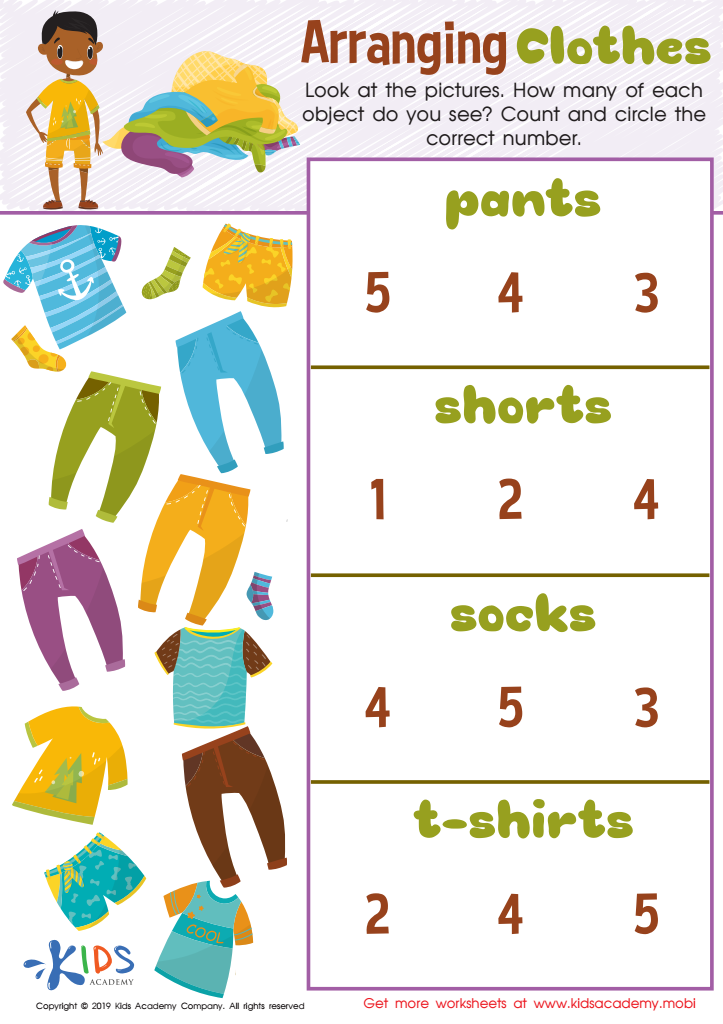
Arranging Clothes Worksheet
 Assign to My Students
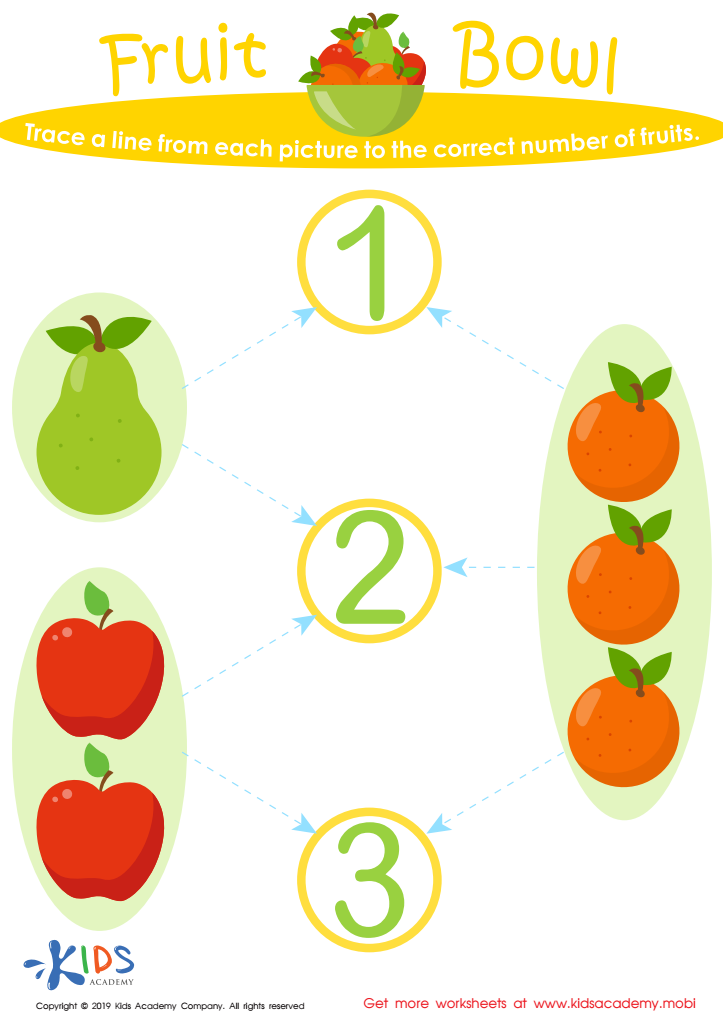
Fruit Bowl Worksheet
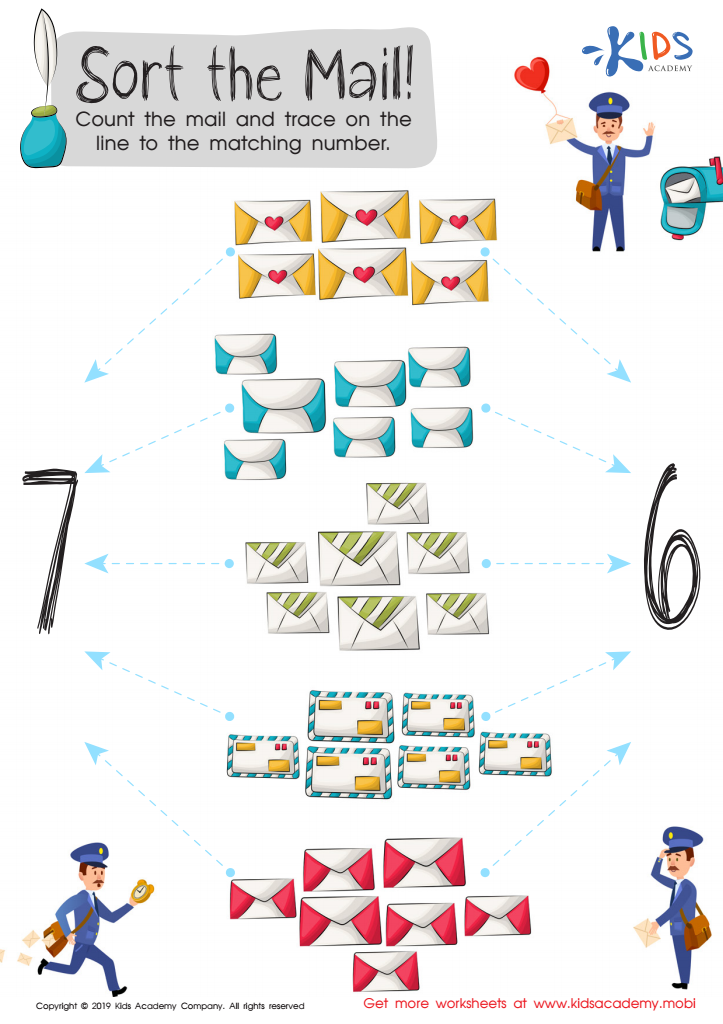
Sort the Mail Worksheet








Sorting skills are foundational in early childhood education and important for children aged 3-9. These skills involve categorizing and organizing items based on shared characteristics, such as size, shape, color, or type. Parents and teachers should prioritize sorting activities because they lay the groundwork for critical thinking and problem-solving abilities.
As children sort objects, they learn to recognize patterns, make comparisons, and understand relationships among different items. This cognitive development is crucial for later mathematical understanding, including concepts such as classification, quantity, and numerical relationships.
Additionally, sorting activities enhance fine motor skills, as children manipulate objects, improving their dexterity and hand-eye coordination. Socially, when children engage in group sorting activities, they learn to communicate, share ideas, and collaborate with peers, building essential social skills.
Moreover, sorting can make learning engaging and interactive, allowing for the integration of play with learning objectives. Through sorting games, children develop confidence and autonomy as they make decisions about the organization of materials. In summary, investing time in sorting skills provides young learners with critical tools necessary for their academic success and everyday problem-solving. Parents and teachers can facilitate this learning journey and enhance overall development in young children.








