Subtraction practice Easy Addition and Subtraction Word Problems Worksheets for 3-Year-Olds
12 filtered results
-
From - To
Introduce your little learners to the foundational concepts of subtraction with our engaging Easy Addition and Subtraction Word Problems Worksheets, specifically designed for 3-year-olds. These fun, interactive worksheets feature colorful illustrations and simple scenarios that make subtraction relatable and easy to grasp. Each problem encourages kids to practice their counting skills while fostering their problem-solving abilities. Watch as they develop a solid understanding of basic subtraction through playful activities that promote critical thinking and cognitive growth. Ideal for early math enthusiasts, these worksheets provide a joyful, hands-on learning experience to establish a love for numbers and a strong mathematical foundation.
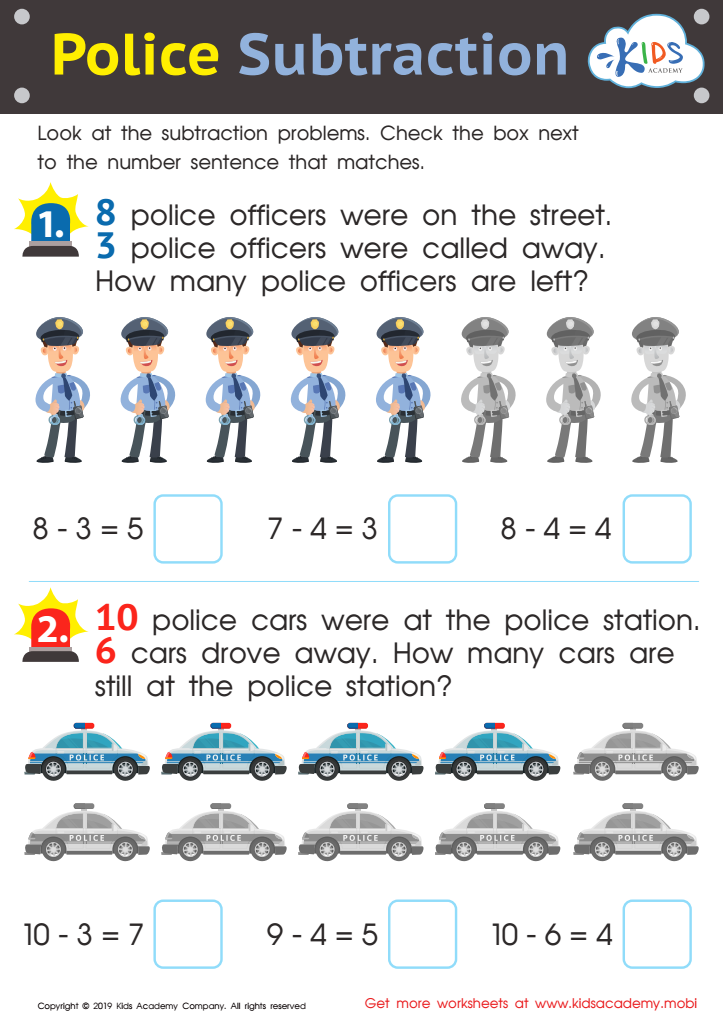
Police Subtraction Worksheet
 Assign to My Students
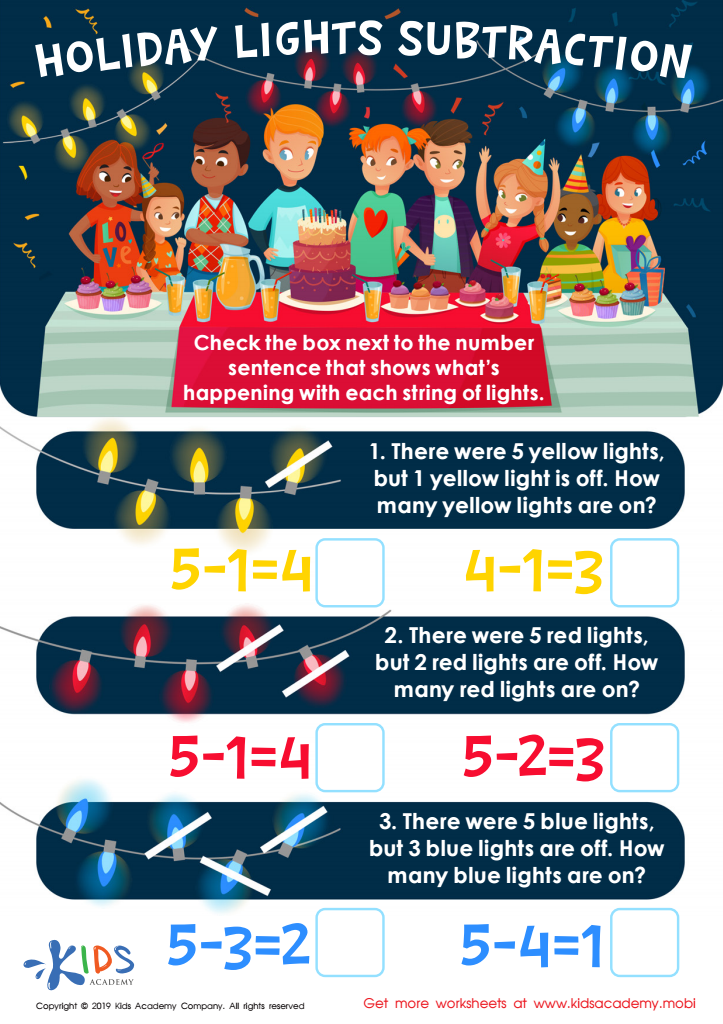
Holiday Lights Subtraction Worksheet
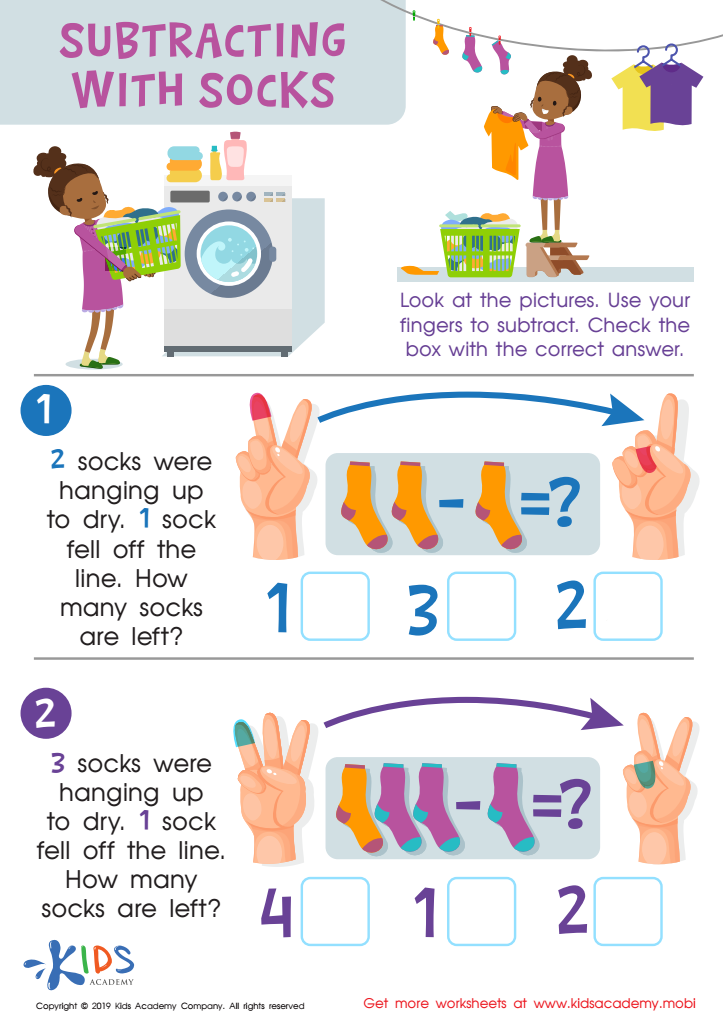
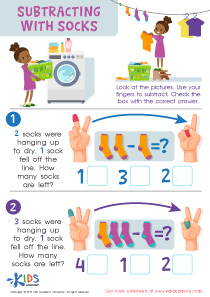
Subtracting Socks Worksheet
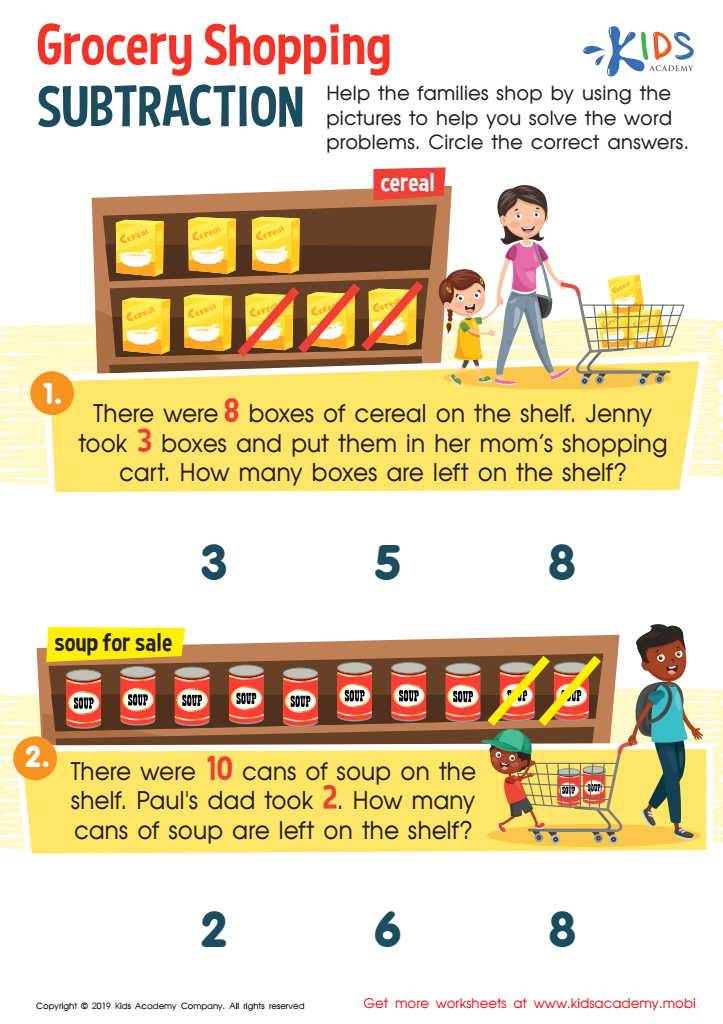
Grocery Shopping Subtraction Worksheet
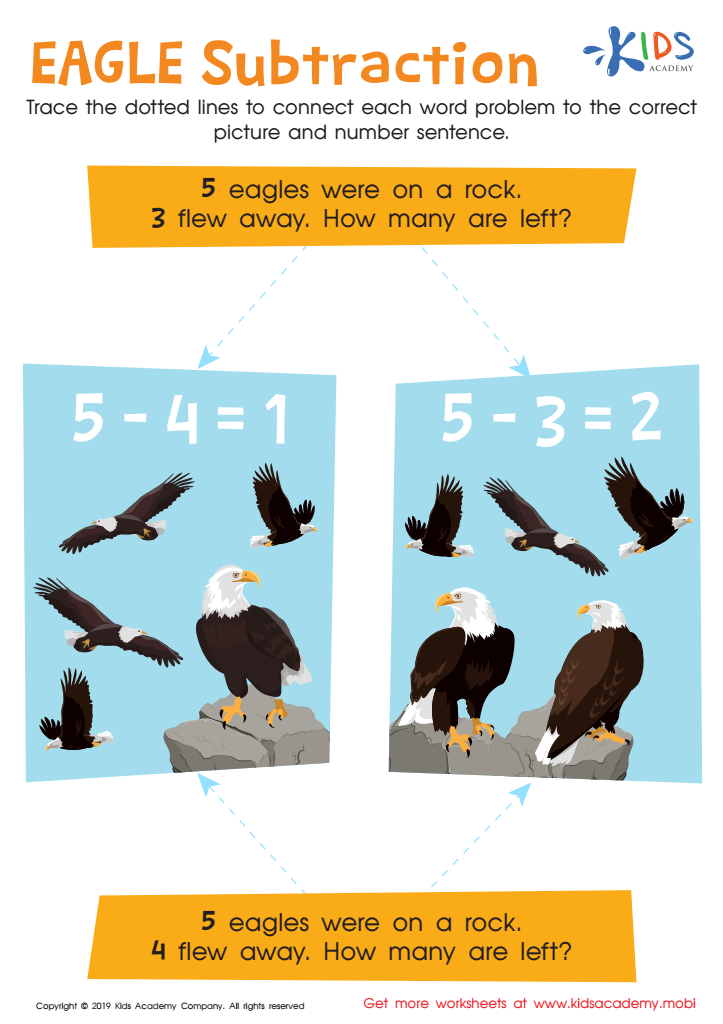
Eagle Subtraction Worksheet
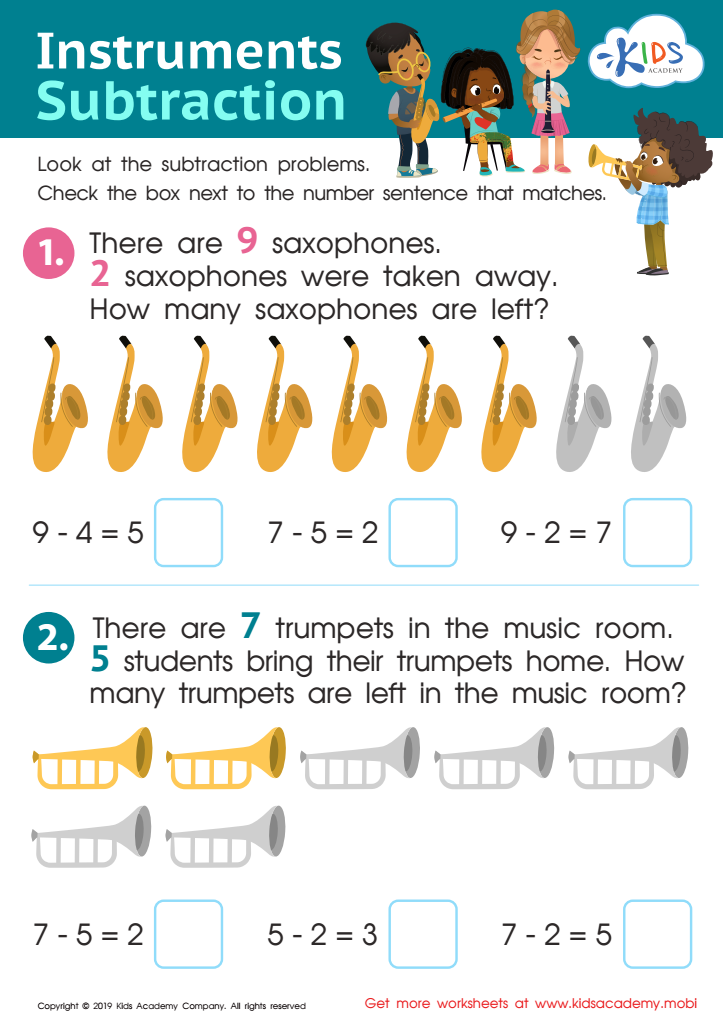
Instrument Subtraction Worksheet
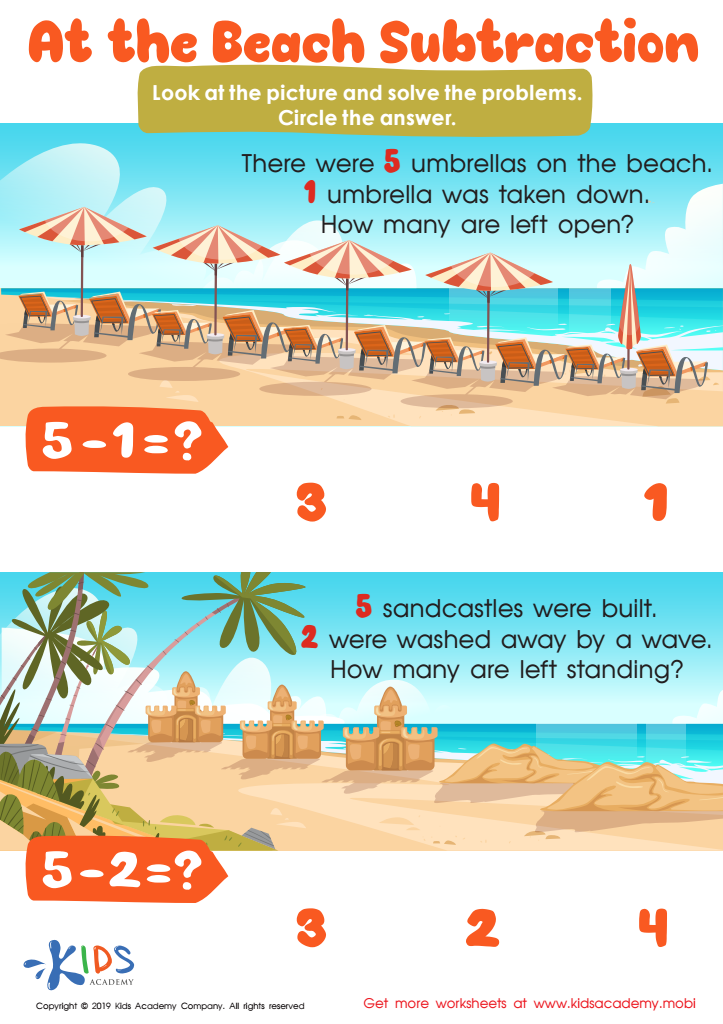
At the Beach Subtraction Worksheet
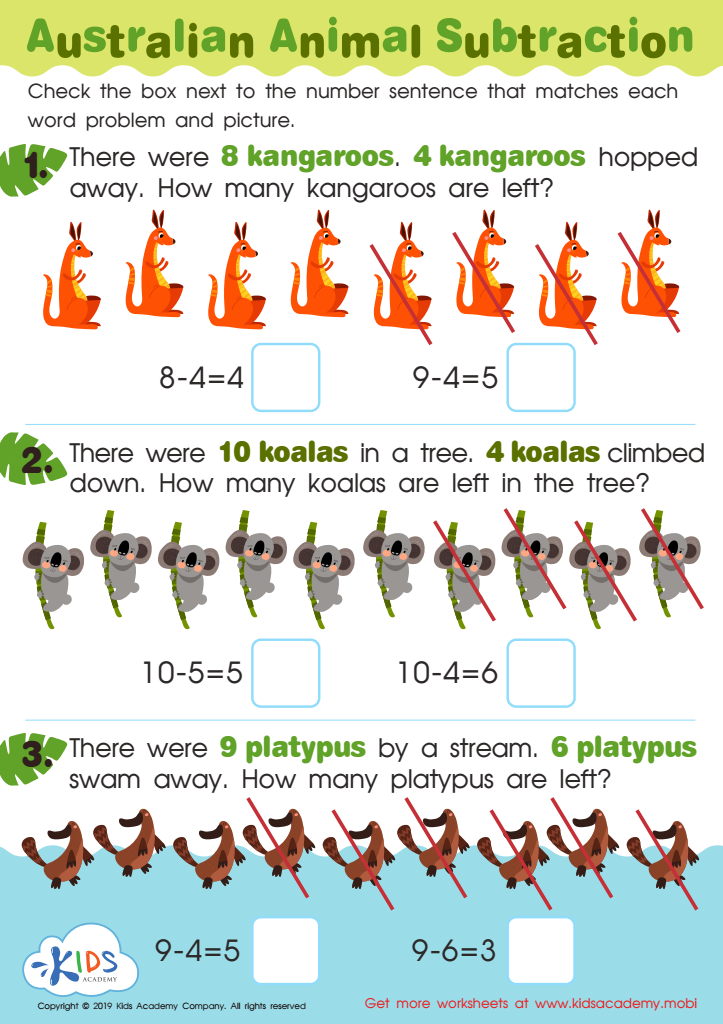
Australian Animal Subtraction Worksheet
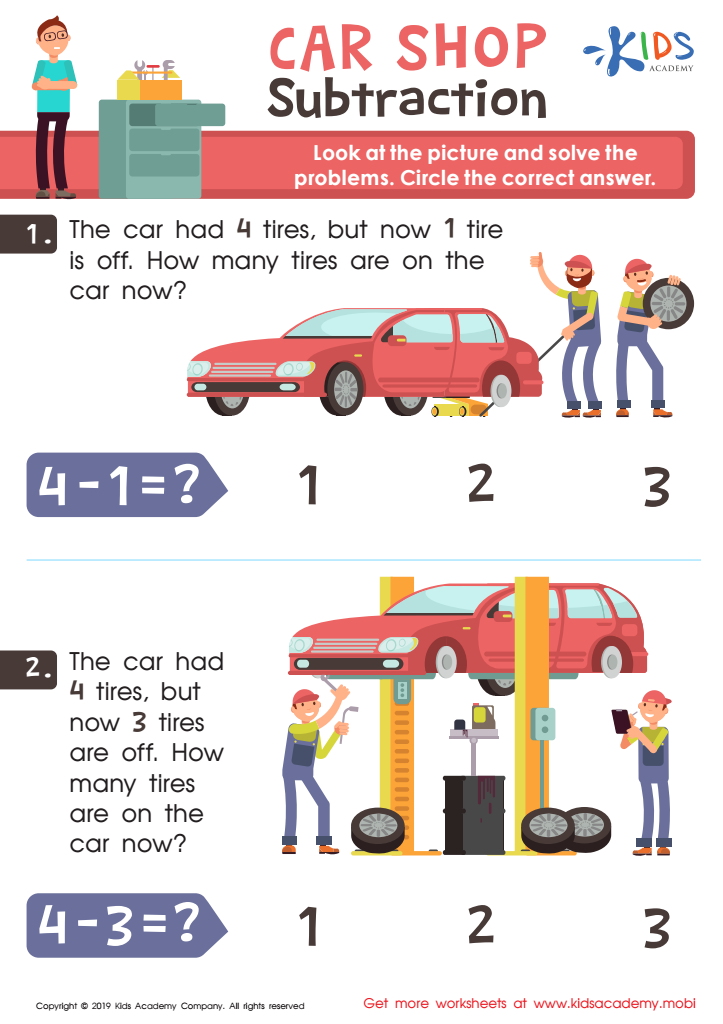
Car Shop Subtraction Worksheet
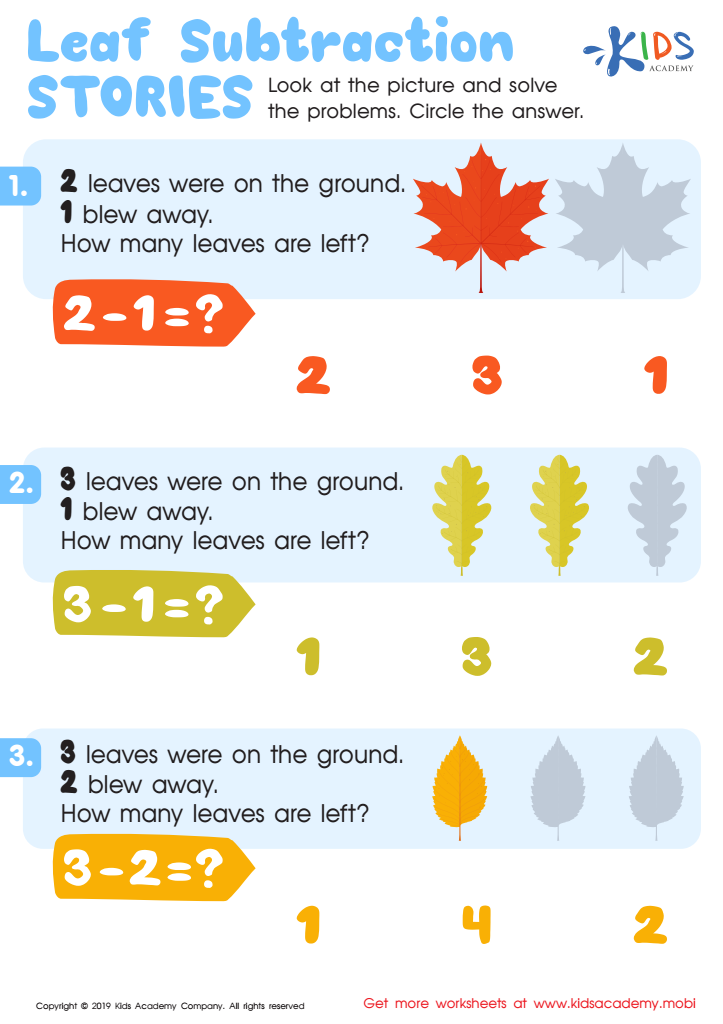
Leaf Subtraction Stories Worksheet
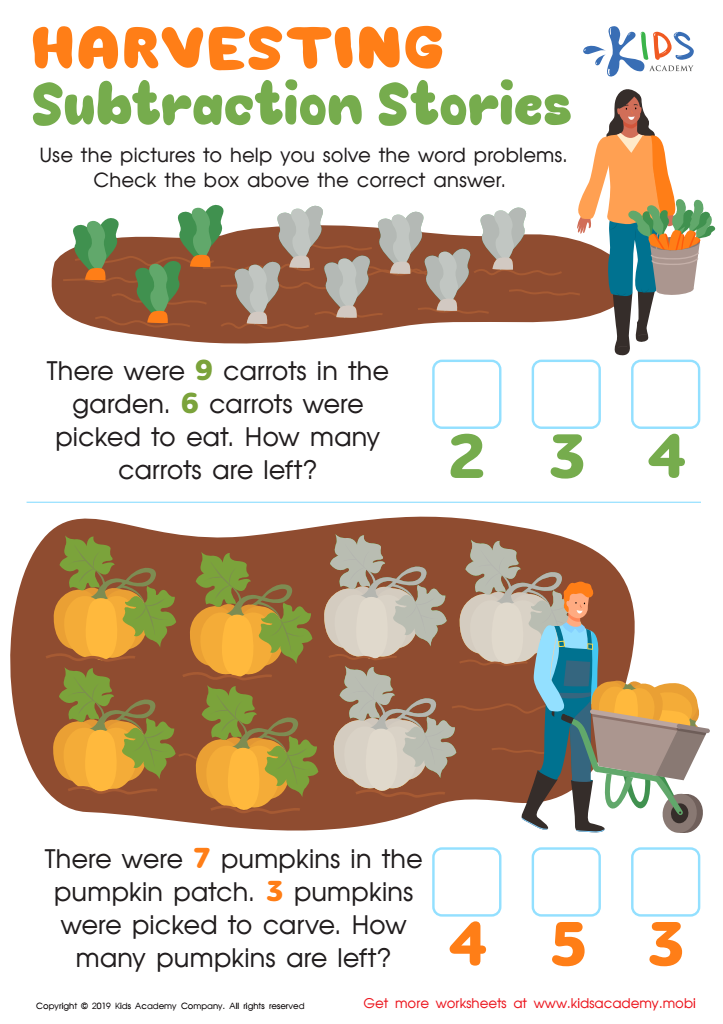
Harvesting Subtraction Stories Worksheet
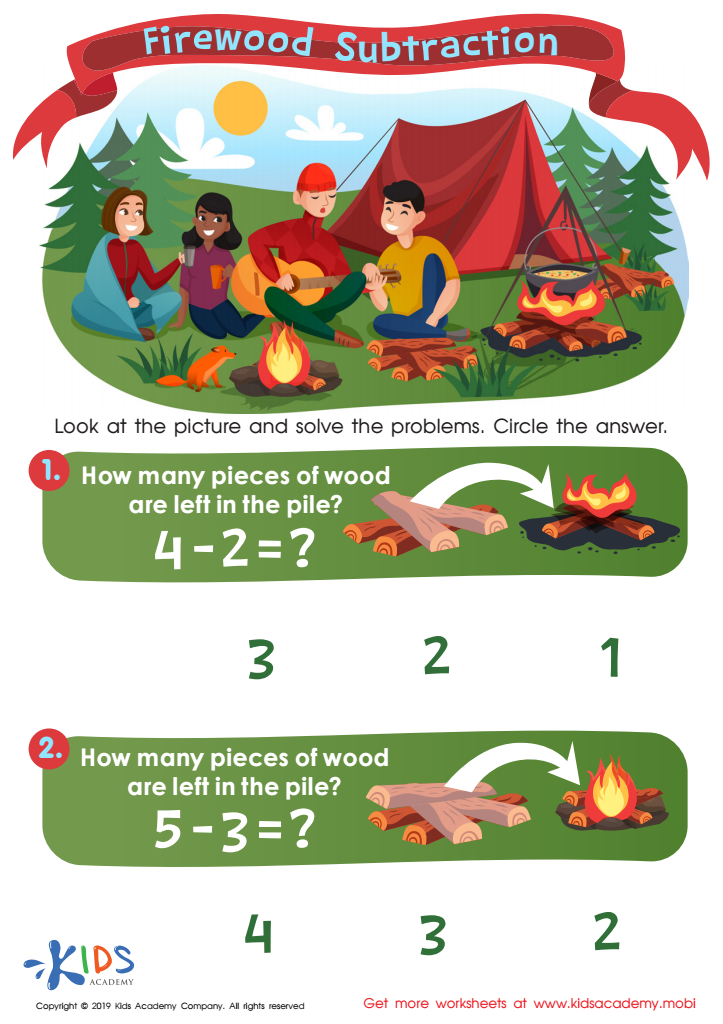
Firewood Subtraction Worksheet








Parents and teachers should prioritize subtraction practice, along with easy addition and subtraction word problems, for 3-year-olds for several important reasons. First, early exposure to numerical concepts lays a strong foundation for mathematical understanding and problem-solving skills. Engaging young children in these activities nurtures their cognitive development, as they begin to grasp the relationship between numbers and everyday situations.
Subtraction practice helps children develop critical thinking skills by encouraging them to visualize and manipulate numbers. Through fun and relatable word problems, children can connect mathematics to real-life scenarios, making the learning experience more engaging and effective. This approach fosters a positive attitude towards math, reducing anxiety in later years when concepts become more complex.
Furthermore, mastering basic subtraction and addition builds confidence in young learners. As children practice these skills, they learn perseverance and develop a sense of achievement, reinforcing their intrinsic motivation to learn. Ultimately, supporting early math skills equips children with essential tools they will use throughout their educational journey, preparing them for success not only in mathematics but in various aspects of life. By prioritizing these foundational skills, parents and teachers contribute to the holistic development of young learners.