Visual Learning Easy Addition & Subtraction Worksheets for 3-Year-Olds
4 filtered results
-
From - To
Introduce your 3-year-old to the exciting world of math with our Visual Learning Easy Addition & Subtraction Worksheets! These engaging and colorful worksheets are designed to help young learners understand basic addition and subtraction concepts through fun, visually stimulating activities. Perfectly tailored for preschoolers, the worksheets incorporate playful imagery and simple exercises, making learning effortless and enjoyable. By combining visual aids with hands-on practice, our worksheets promote cognitive development, enhance problem-solving skills, and build a solid math foundation. Bring math to life for your little one and inspire a lifelong love for learning with Kids Academy today!
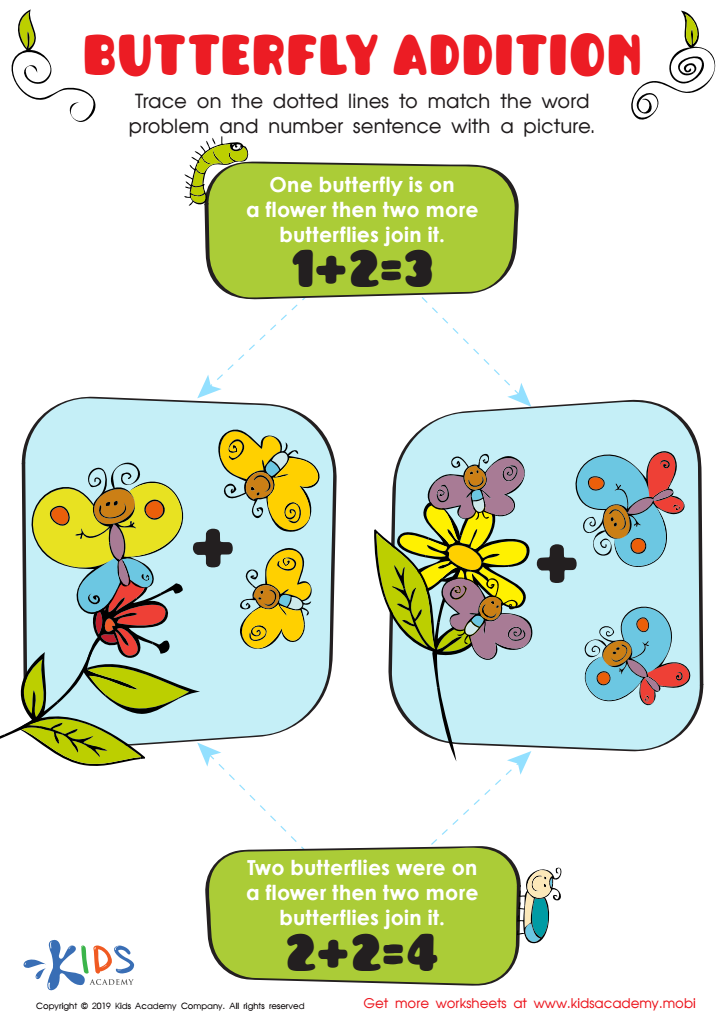
Butterfly Addition Worksheet
 Assign to My Students
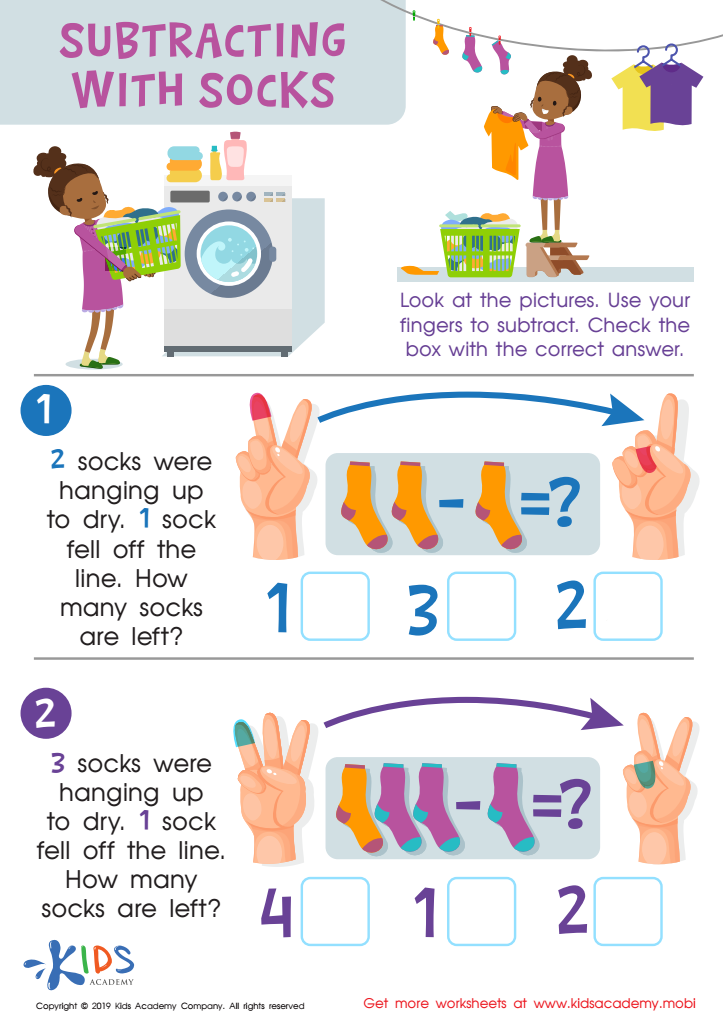
Subtracting Socks Worksheet
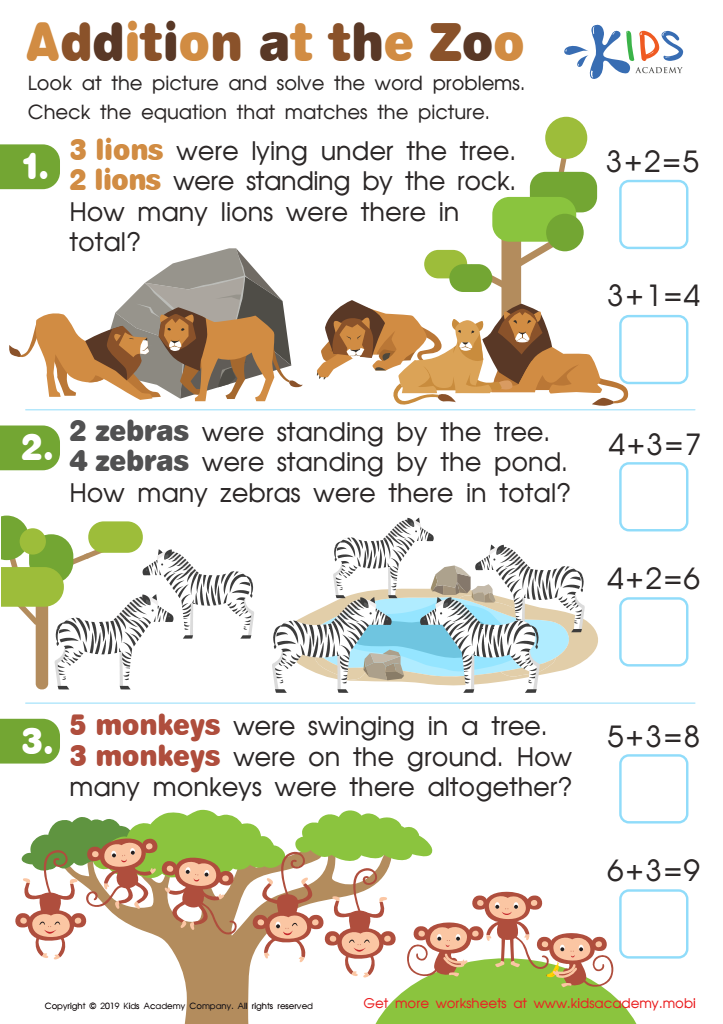
Addition at the Zoo Worksheet
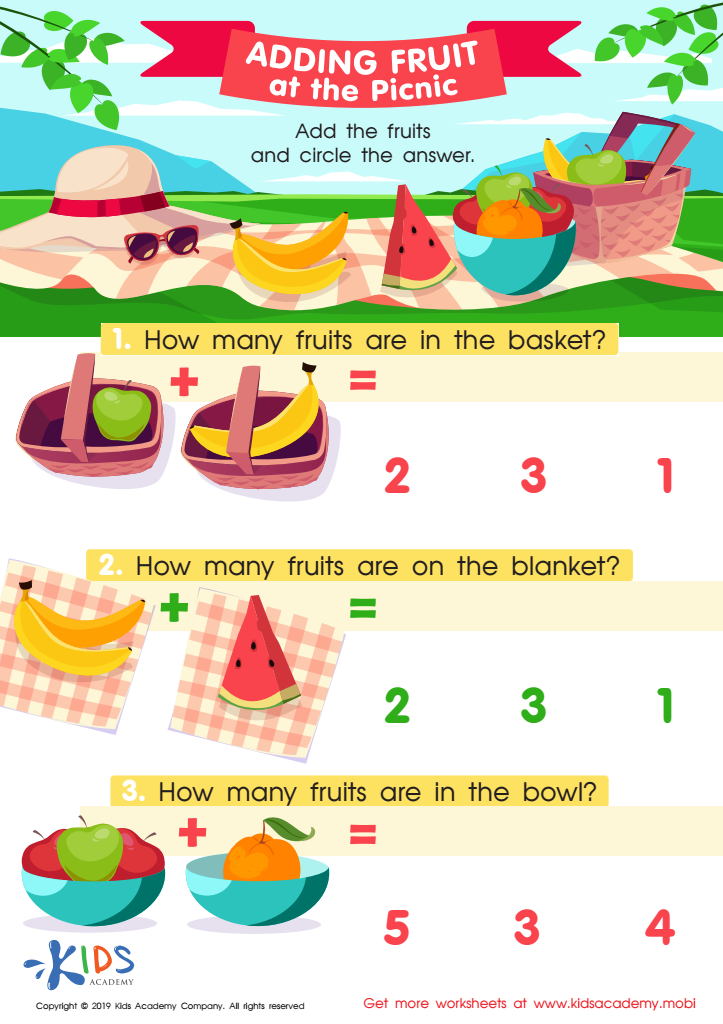
Adding Fruit at the Picnic Worksheet








Parents and teachers should care about Visual Learning Easy Addition & Subtraction for 3-year-olds because it provides an essential foundation for mathematical skills through engaging and interactive methods that accommodate their developmental stages. At this age, children are naturally curious and absorb new concepts quickly when they are presented in a visually stimulating and hands-on manner. Visual aids such as colorful counting blocks, picture cards, and fun animations can turn abstract concepts into tangible learning experiences that are easier for young minds to grasp.
Engaging 3-year-olds in visual learning aids for basic addition and subtraction introduces them to essential numerical concepts and promotes early cognitive development. This approach enhances their ability to understand and internalize mathematical relationships, boosting their confidence and reducing anxiety related to math as they grow. Moreover, early exposure ensures that children develop strong problem-solving skills, logical thinking, and the ability to make connections between objects and numbers, which are crucial for later academic success.
Additionally, visual learning fosters a love for learning by making math fun and interactive. It encourages curiosity, patience, and motivation to explore more advanced concepts in the future. Prioritizing this method in early education sets a solid mathematical foundation and supports overall cognitive growth, ensuring that children are well-prepared for future educational challenges.








