Number comparison Easy Numbers Worksheets for 3-Year-Olds
3 filtered results
-
From - To
Introducing "Number Comparison Easy Numbers Worksheets for 3-Year-Olds" from Kids Academy. Designed specifically for young learners, these worksheets provide a fun and interactive way to develop early math skills. By engaging in number comparison activities, children practice recognizing differences in quantity, set the foundation for arithmetic understanding, and hone their counting abilities. Colorful illustrations and simple exercises capture toddlers' attention, making learning enjoyable and educational. Perfect for home or classroom use, these printables help establish critical thinking and problem-solving skills, ensuring a solid mathematical start for your preschooler. Download now and start comparing!
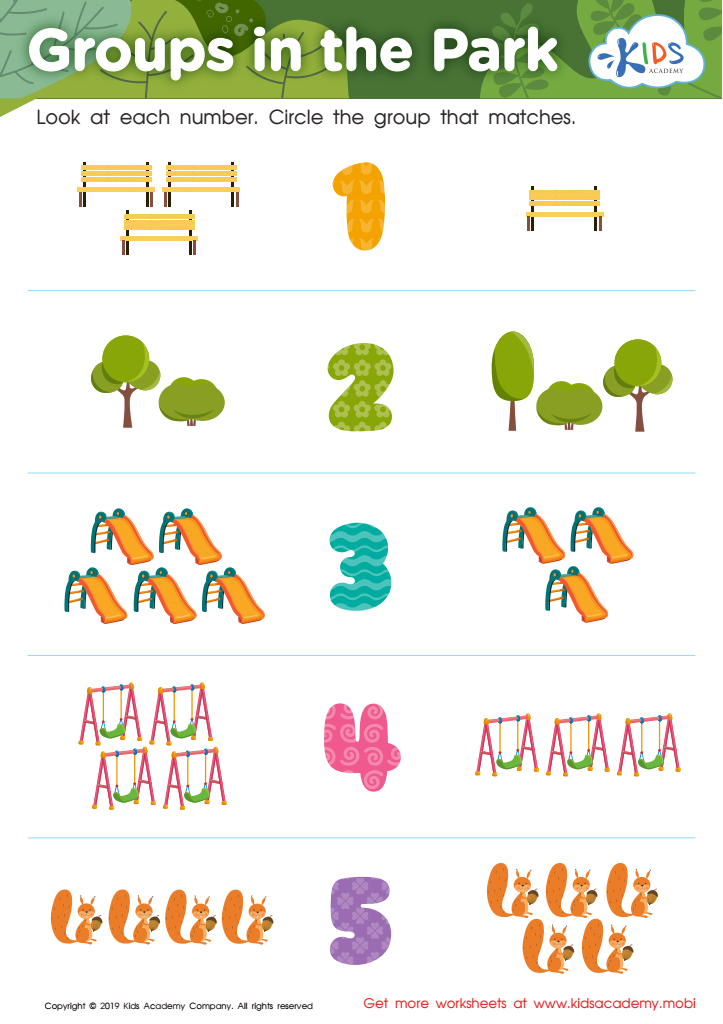
Groups in the Park Worksheet
 Assign to My Students
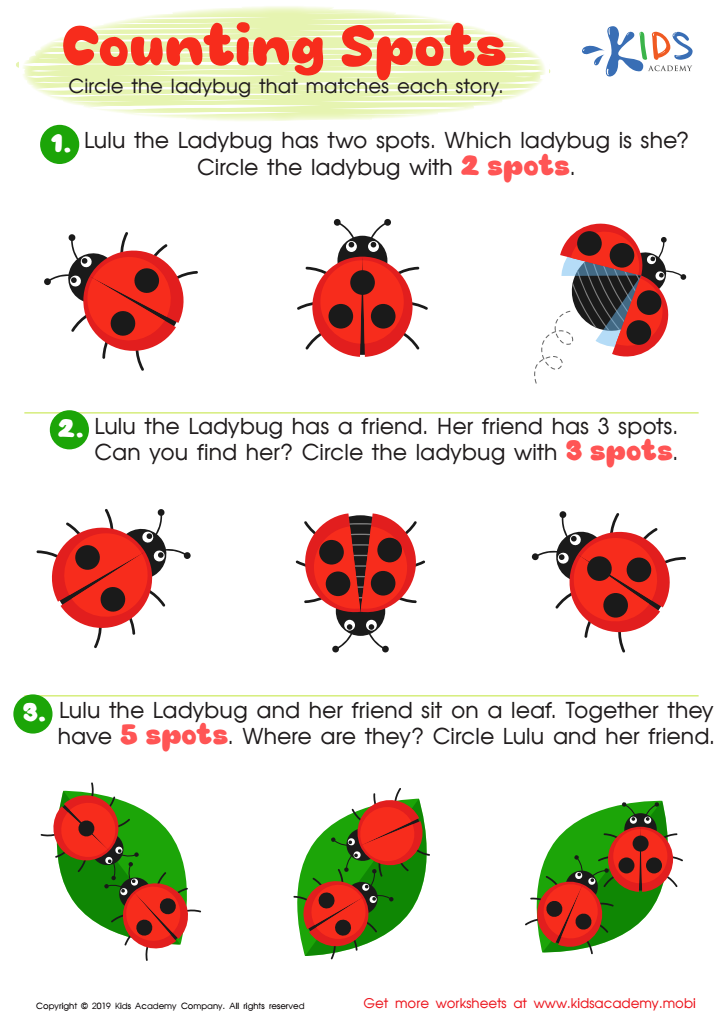
Counting Spots Worksheet
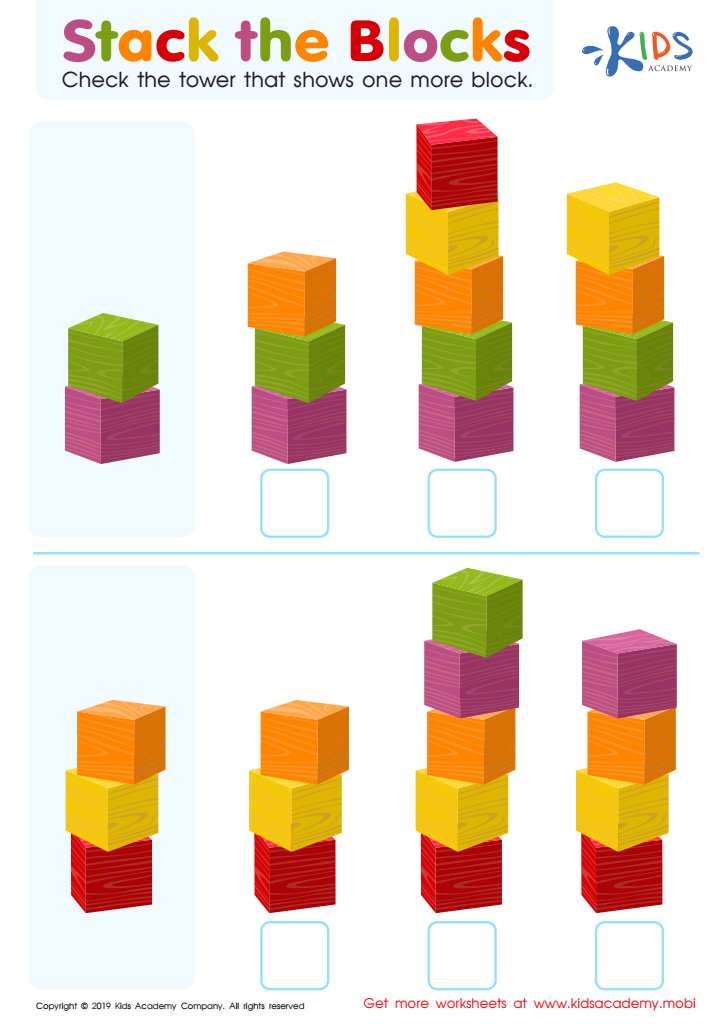
Stack the Blocks Worksheet







Understanding number comparison at an early age is crucial for a child's cognitive development. For 3-year-olds, grasping the concept of comparing quantities lays a foundation for essential math skills they will build on in later years. When children learn to compare numbers, they enhance their understanding of numeric values, fostering a sense of order and organization. This ability helps them recognize patterns, make predictions, and engage in logical reasoning.
Incorporating number comparison in early childhood education also boosts vocabulary and language skills. Terms such as "more than," "less than," and "equal to" become part of the child's everyday conversations, enriching their communication abilities.
For teachers, fostering these skills supports a more structured learning progression, ensuring that each child achieves key developmental milestones. It also helps identify students who may need extra support, providing intervention opportunities early on.
For parents, engaging in number comparison activities strengthens the parent-child bond while making learning fun and interactive. Simple activities like comparing the number of apples versus oranges in a fruit bowl can transform a regular day into an educational experience.
Overall, caring about number comparison at this stage cultivates a positive attitude toward mathematics, underscoring its relevance and laying a positive foundation for future educational success.








