Counting practice Easy Word Problems Worksheets for 3-Year-Olds
3 filtered results
-
From - To
Discover our engaging Counting Practice Easy Word Problems Worksheets designed specifically for 3-year-olds! These worksheets make learning fun and interactive as young learners explore basic counting through relatable and simple word problems. Each exercise encourages critical thinking and enhances number recognition, allowing children to develop foundational math skills in a playful way. Perfect for parents and educators, these resources are tailored to captivate little minds, fostering a love for math early on. Dive into the world of numbers with our colorful worksheets that encourage kids to count, solve, and shape their mathematical journey! Start building confidence in counting today!
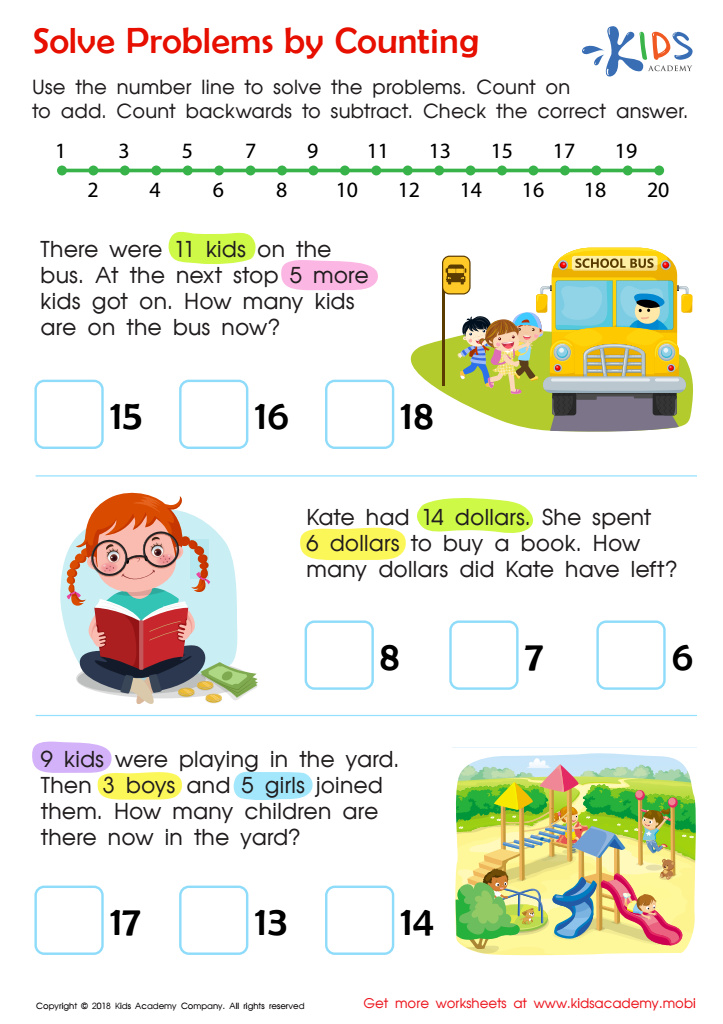
Solve Problems by Counting Worksheet
 Assign to My Students
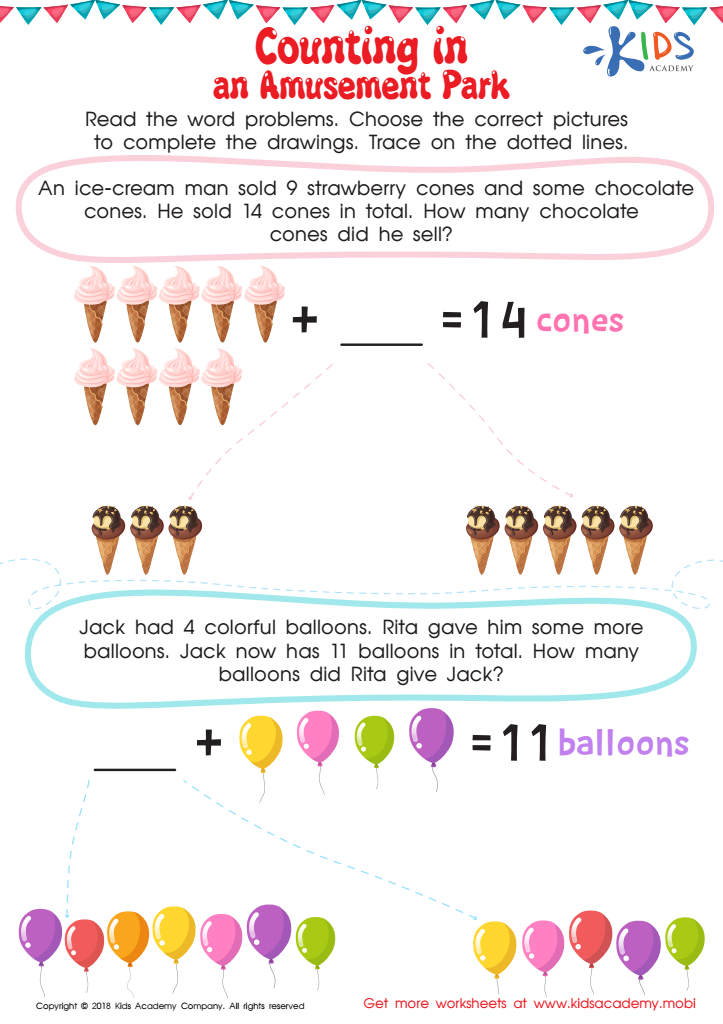
Counting in an Amusement Park Worksheet
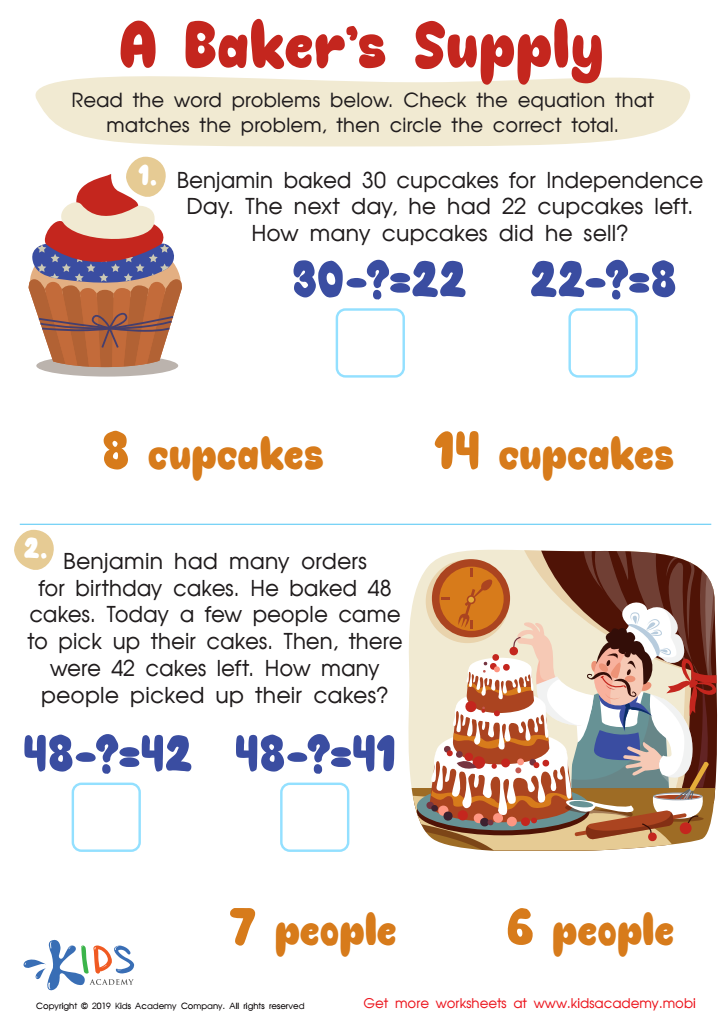
A Baker's Supply Worksheet








Counting practice and easy word problems for 3-year-olds play a crucial role in early childhood education, and both parents and teachers should prioritize them for several reasons. Firstly, these activities nurture foundational math skills at an age when children's brains are developing rapidly. Early exposure to counting and problem-solving fosters number sense and familiarity with mathematical concepts, laying a solid groundwork for future learning.
Engaging in counting activities enhances cognitive development and promotes critical thinking skills. When children encounter easy word problems, they learn to make connections between numbers and real-life situations. This understanding is not only essential for math but also encourages logical reasoning.
Moreover, incorporating counting practice into everyday activities makes learning interactive and fun, bridging the gap between education and play. Parents and teachers can use everyday scenarios—like counting fruits during snack time or sorting toys—to reinforce these skills, making math feel relevant.
Additionally, early counting practice builds confidence. As children find success in solving simple problems, they develop a positive attitude toward math, which can prevent math anxiety later in life. Overall, advocating for counting practice enhances emotional and intellectual development, providing children with essential tools for academic success.








