Addition Practice Easy Math Worksheets for Ages 4-6 - Page 2
26 filtered results
-
From - To
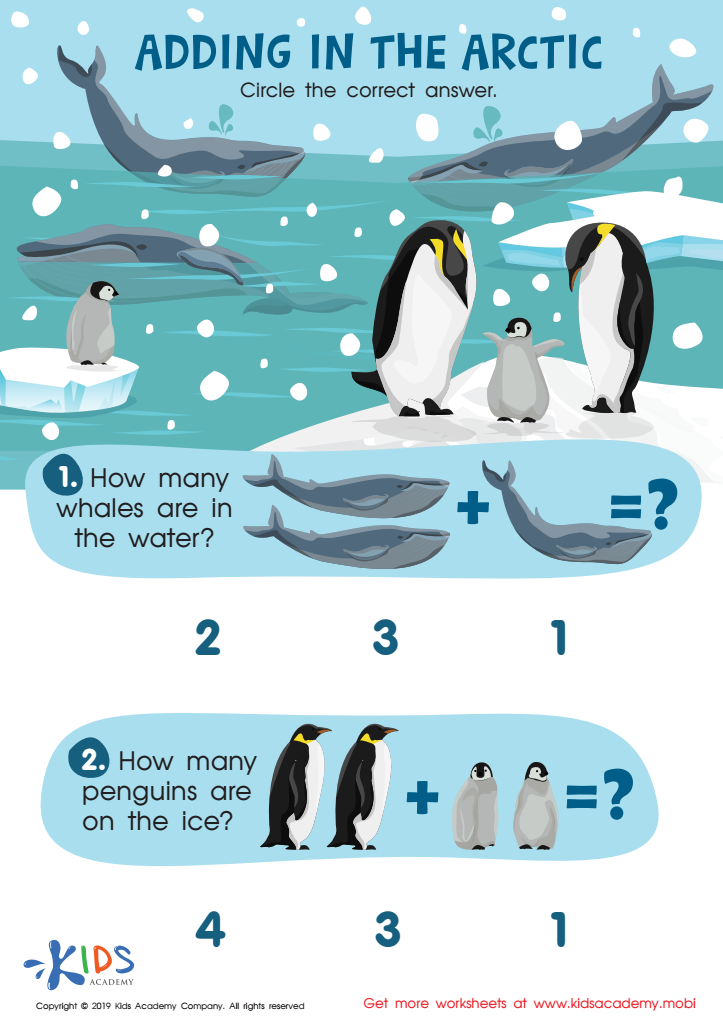
Adding in the Arctic Worksheet
 Assign to My Students
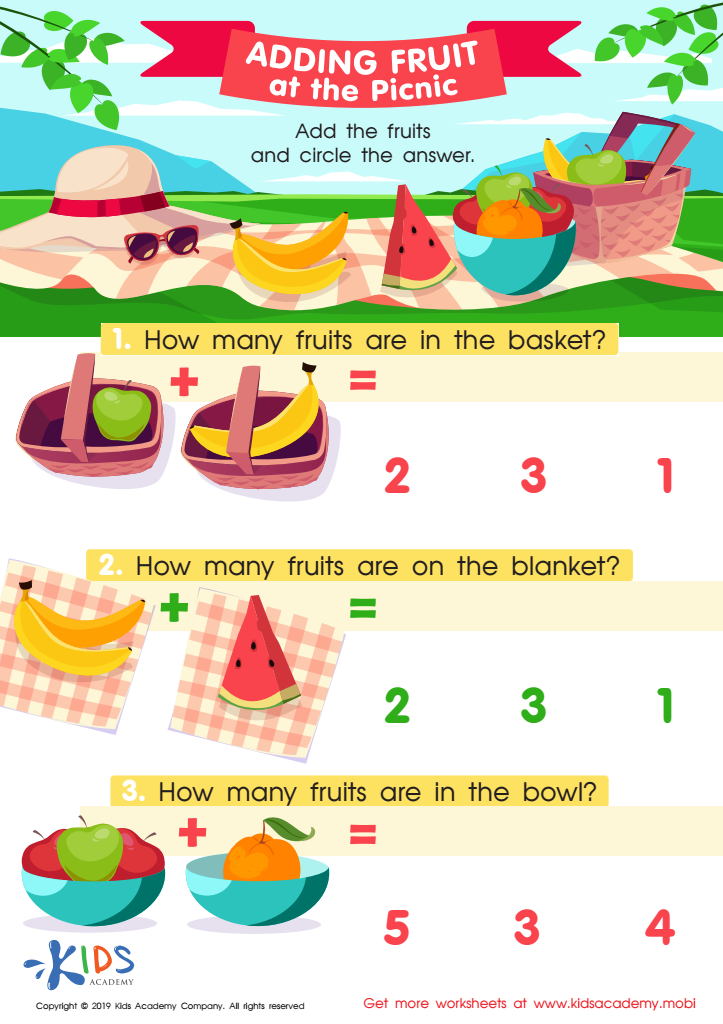
Adding Fruit at the Picnic Worksheet







.jpg)
Parents and teachers should prioritize addition practice for children ages 4-6 because foundational math skills lay the groundwork for future academic success. Mastery of basic addition helps cultivate numerical literacy, an essential component not just in math but in day-to-day problem-solving and logical thinking. Young children are naturally curious and absorb new information quickly; introducing addition at this stage makes use of their developmental propensity for learning.
Early success in math fosters a positive attitude towards the subject, helping children feel confident and capable. This confidence can lead to increased motivation in learning more complex mathematical concepts later. Additionally, practicing addition enhances focus, concentration, and memory, skills that are transferable to all areas of education.
From a developmental perspective, addition practice for young children helps fine-tune their fine motor skills as they write numbers and develop hand-eye coordination. Group activities that include addition can bolster social skills, encourage teamwork, and build communication abilities, as children explain their thought processes or solutions.
In summary, prioritizing easy addition practice not only equips children with essential early math skills but also supports broader cognitive development, social skills, and a positive educational mindset, forming a crucial foundation for lifelong learning.








