Addition skills Easy Word Problems Worksheets for Ages 4-6
3 filtered results
-
From - To
Enhance your child's math abilities with our "Addition Skills Easy Word Problems Worksheets for Ages 4-6." These carefully designed worksheets provide an engaging way for young learners to tackle simple addition through fun and relatable word problems. Tailored for children aged 4 to 6, each worksheet builds foundational skills by encouraging critical thinking and solving real-life scenarios. Our colorful and interactive worksheets help make learning enjoyable, boosting your child's confidence in math. Perfect for at-home practice, these worksheets are a delightful tool to support your child's journey toward mastering addition. Download now and watch their math skills grow!
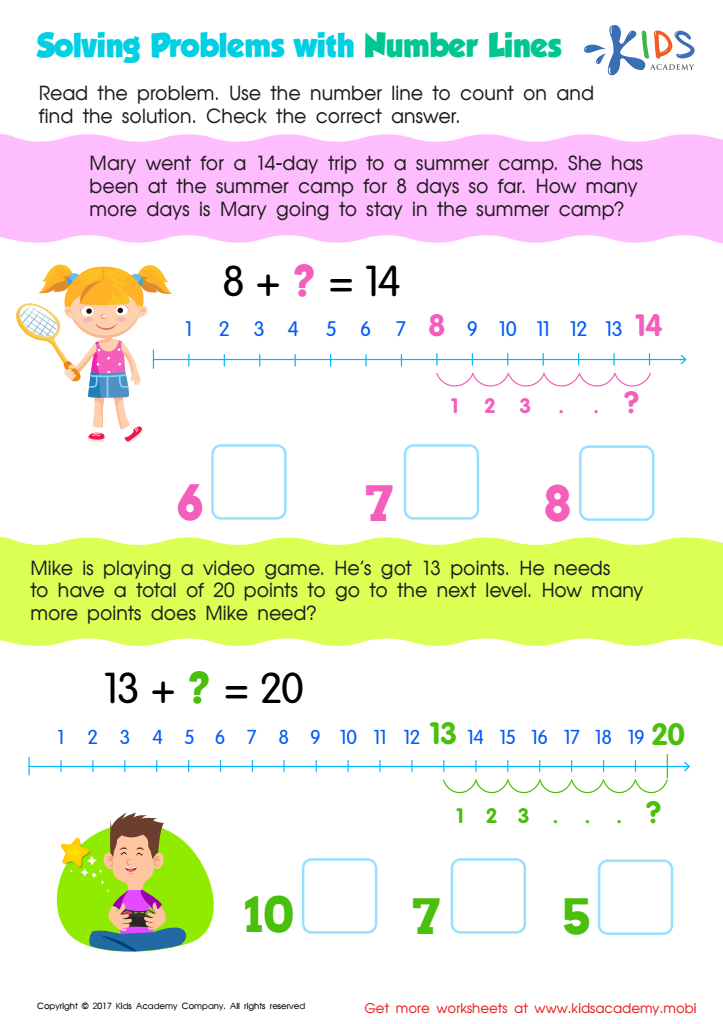
Solving Problems: Number Lines Worksheet
 Assign to My Students
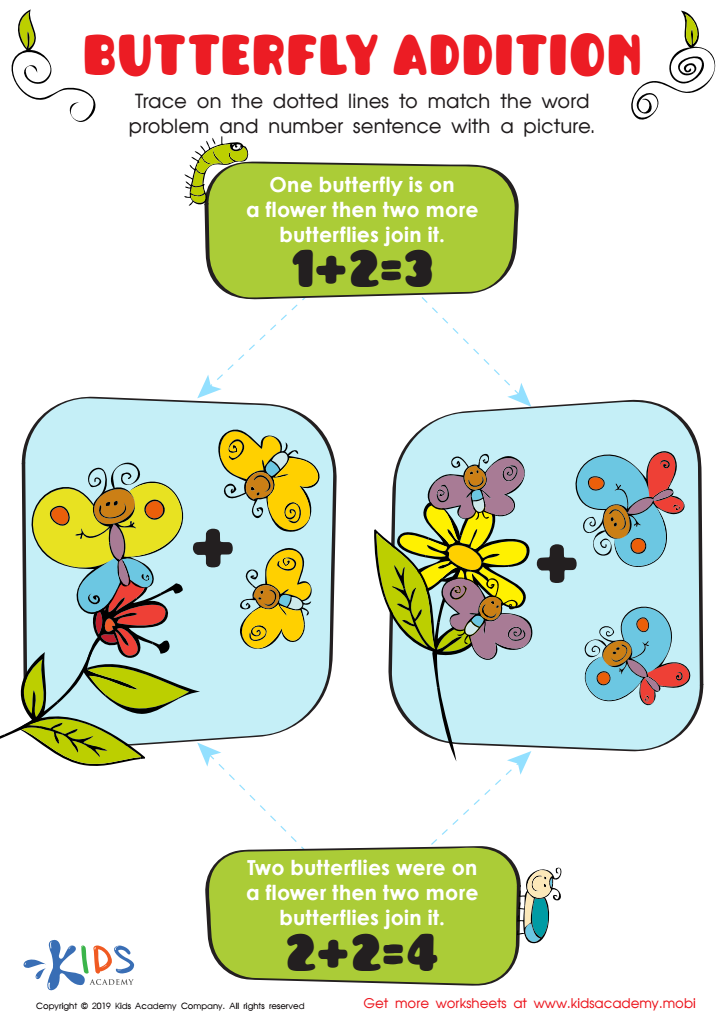
Butterfly Addition Worksheet
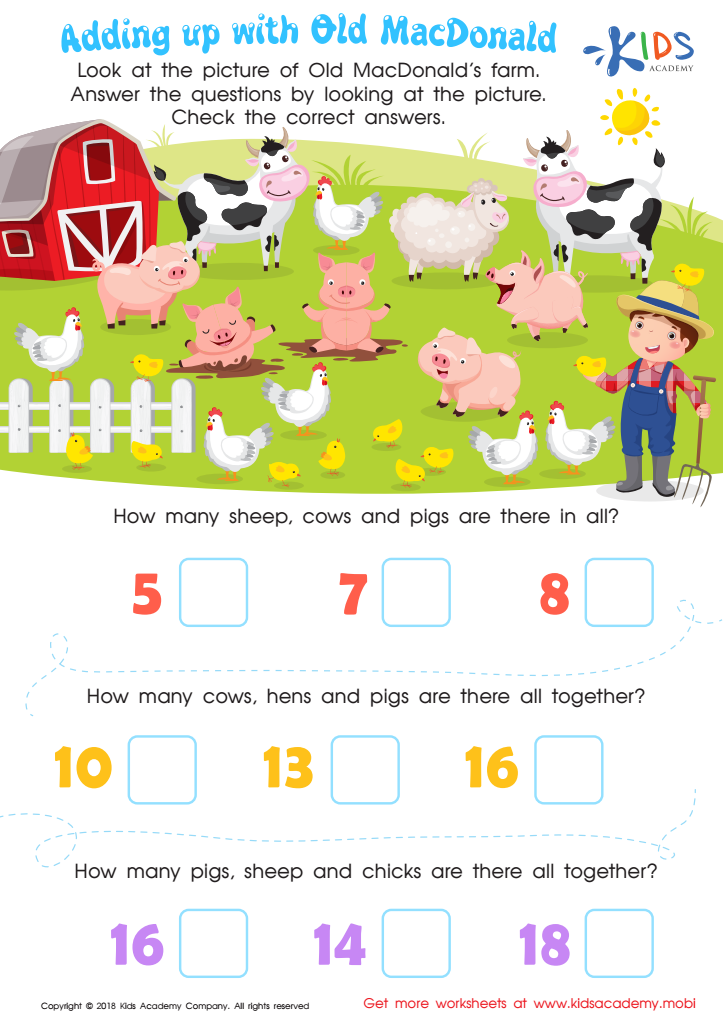
Adding Up with Old MacDonald Worksheet








Parents and teachers should place importance on addition skills and easy word problems for children ages 4-6 because they lay the foundational groundwork for mathematical understanding. At this young age, children's brains are highly adaptable and primed for learning. Engaging them in simple addition and word problems helps boost their cognitive development and number sense. This early exposure strengthens their ability to link mathematical concepts to real-world situations, fostering critical thinking.
Furthermore, mastering addition and word problems in a stress-free manner can boost children’s confidence in their abilities. When children realize they can solve problems, it encourages a positive attitude toward learning and builds perseverance. These skills are not just about numbers; they enhance problem-solving abilities, logical thinking, and reasoning, which are crucial for future academic success.
Integrating addition into everyday situations makes learning relevant and fun. For instance, asking how many apples are in the basket if two more are added enables children to understand practical uses of addition. This contextual learning resonates with young minds and aids in long-term retention.
Ultimately, strong foundational skills in addition and problem-solving give children a head start in mathematics, laying the pathway for more complex concepts in later education stages, making these early experiences crucial.








