Sound Association Easy Alphabet Worksheets for Ages 4-7
5 filtered results
-
From - To
Discover our engaging Sound Association Easy Alphabet Worksheets, designed specifically for children ages 4-7! These worksheets are perfect for helping young learners connect letters with their associated sounds, a vital skill for early reading and language development. Each printable activity features colorful illustrations and fun exercises that make learning enjoyable. Kids will practice identifying sounds, matching them with corresponding letters, and enhancing their phonemic awareness. Our worksheets are easy to follow, promote creativity, and support essential cognitive skills. Ideal for both classroom use and at-home learning, these resources ensure a solid foundation in literacy for your little ones. Join the fun today!
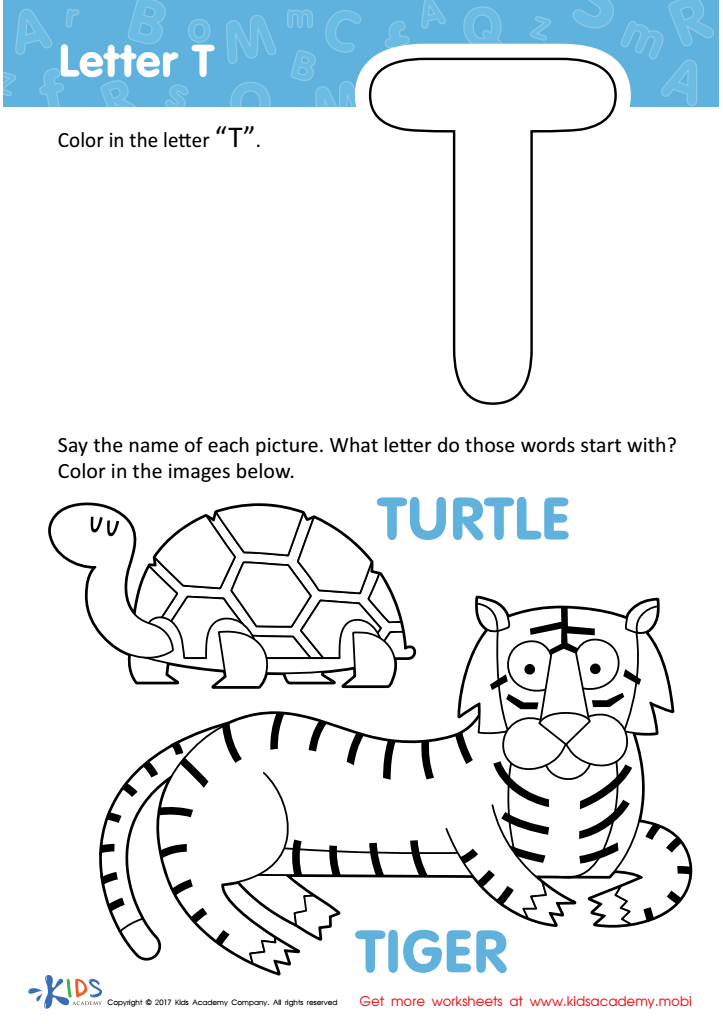
Letter T Coloring Sheet
 Assign to My Students
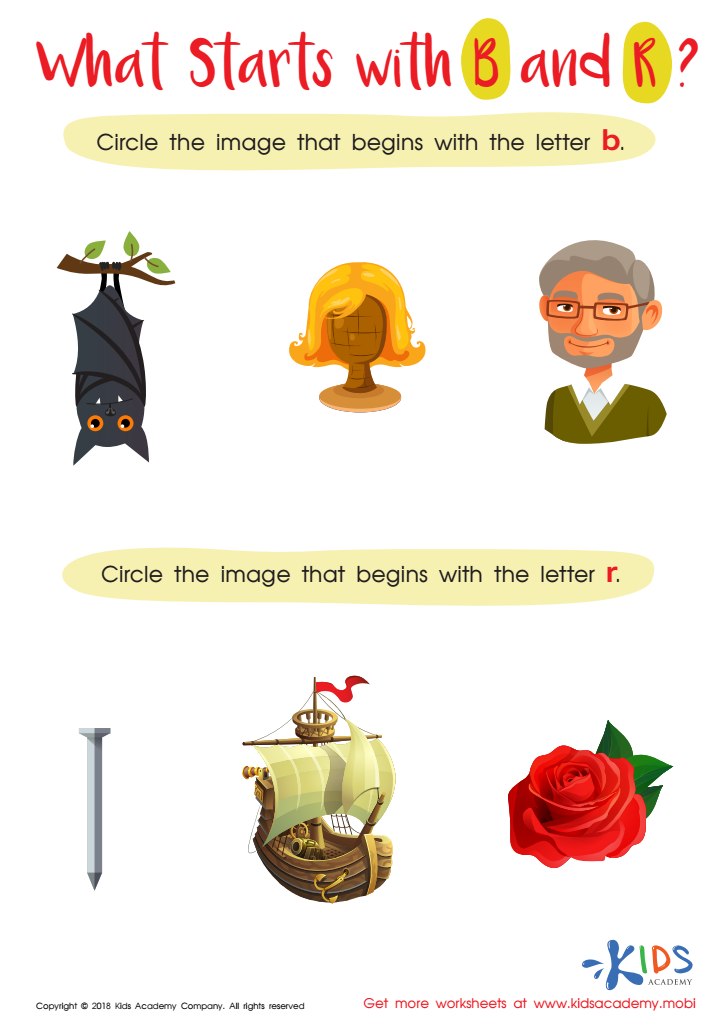
What Starts with B and R? Worksheet
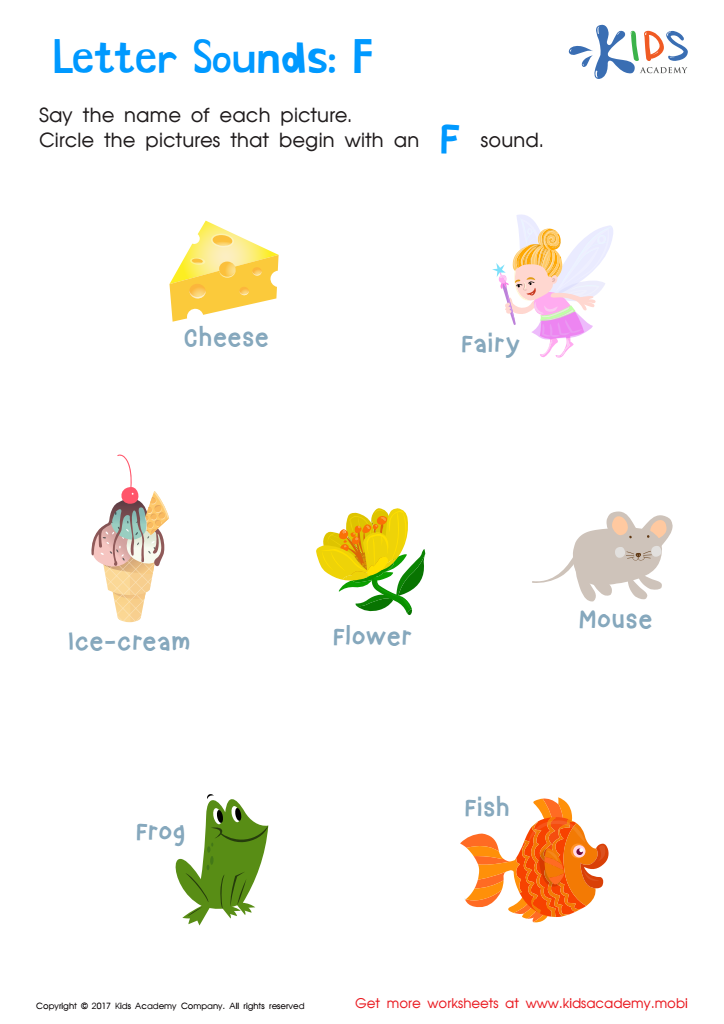
Letter F Sounds Worksheet
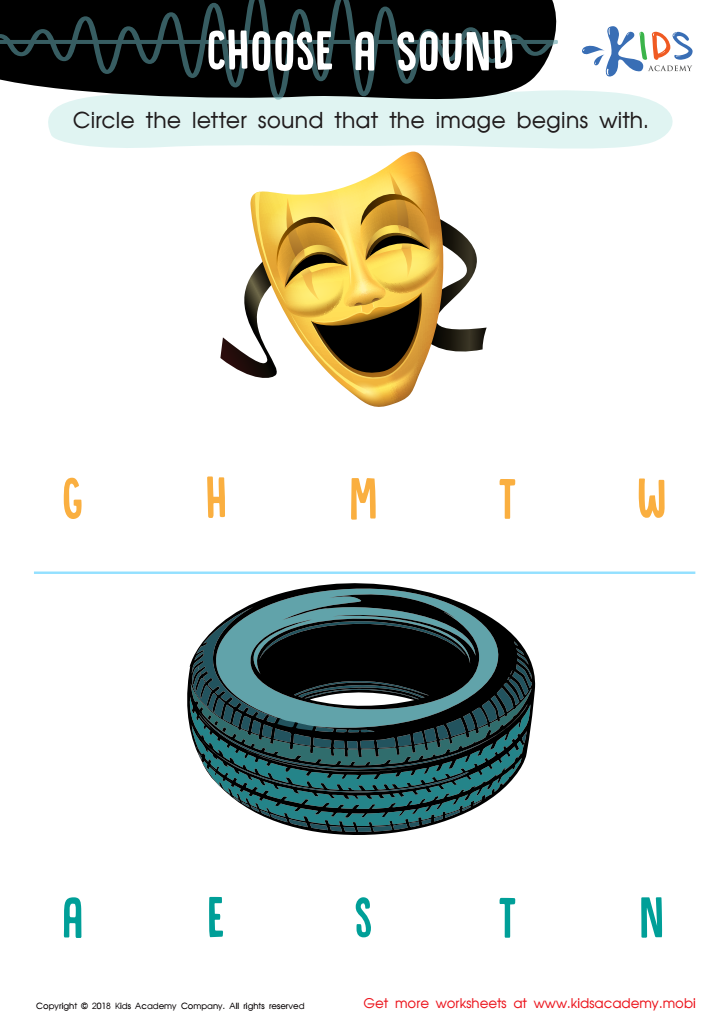
Choose a Sound Worksheet
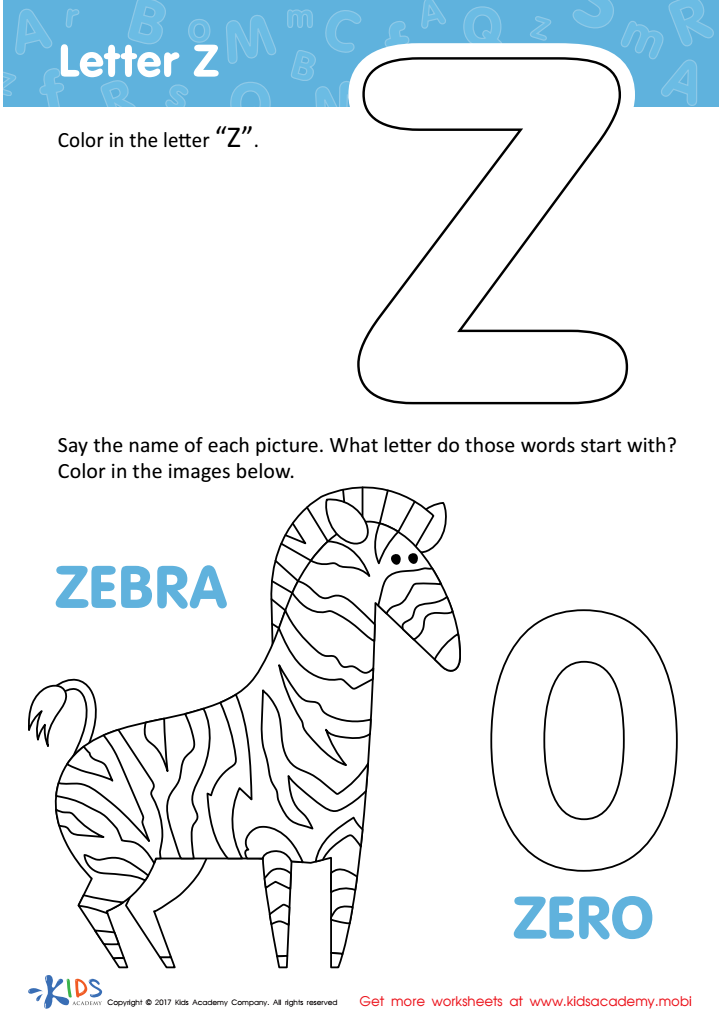
Letter Z Coloring Sheet
Assign to My Students







Sound Association Easy Alphabet is a crucial educational tool for parents and teachers focused on early literacy development for children ages 4-7. This method emphasizes the connection between letters and their corresponding sounds, which is foundational for reading and writing. Understanding this association helps young learners decode words, promoting phonetic awareness—a skill essential for fluent reading.
Parents and educators should care about this approach because it fosters confidence in children as they begin to explore language. By engaging with sound associations, children can easily learn to blend sounds, aiding in word recognition and spelling. This interactive method enhances motivation and curiosity about reading.
Moreover, promoting sound associations can significantly bridge the gap for struggling readers or those with learning disabilities, providing them with essential strategies to succeed in literacy. Implementing these principles in the classroom at home enables a cohesive learning experience, strengthening the partnership between home and school.
Ultimately, prioritizing sound association in early learning not only equips children with reading skills but also cultivates a lifelong love for literacy, setting them on a path toward academic success and personal growth. Students who grasp these concepts early are more likely to thrive in their later educational journeys.