Comparing numbers Easy Math Worksheets for Ages 4-7
3 filtered results
-
From - To
Welcome to our "Comparing Numbers Easy Math Worksheets" for children ages 4-7! These engaging worksheets are designed to help young learners develop foundational math skills by introducing them to the concept of comparing numbers. Through fun activities, kids will practice identifying greater, lesser, and equal numbers, enhancing their understanding of numerical relationships. Our vibrant and interactive resources foster early mathematical thinking in a playful manner, ensuring that children build confidence and competence in math. Perfect for home or classroom use, these worksheets are ideal for parents and teachers looking to make math learning enjoyable and effective. Get started today!
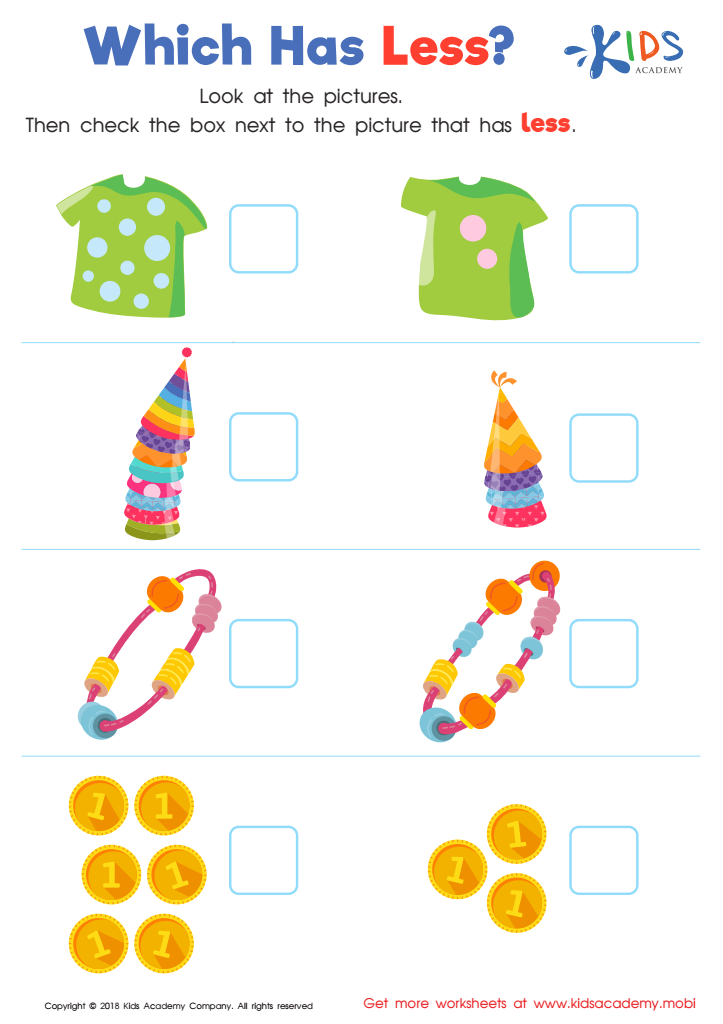
Which Has Less? Worksheet
 Assign to My Students
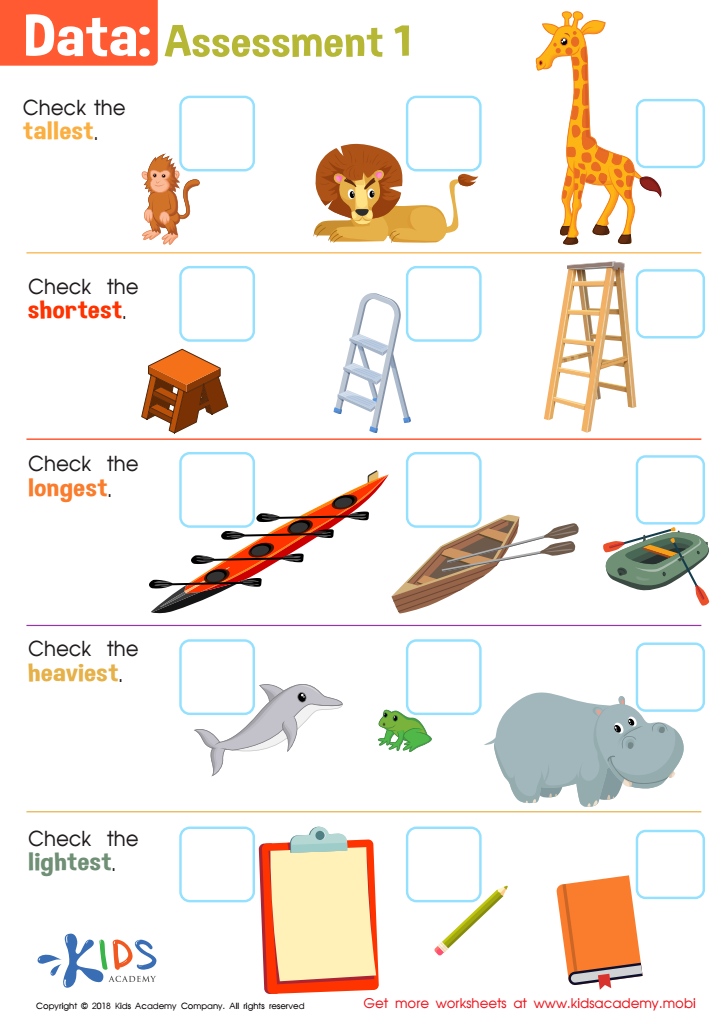
Data: Assessment 1 Worksheet
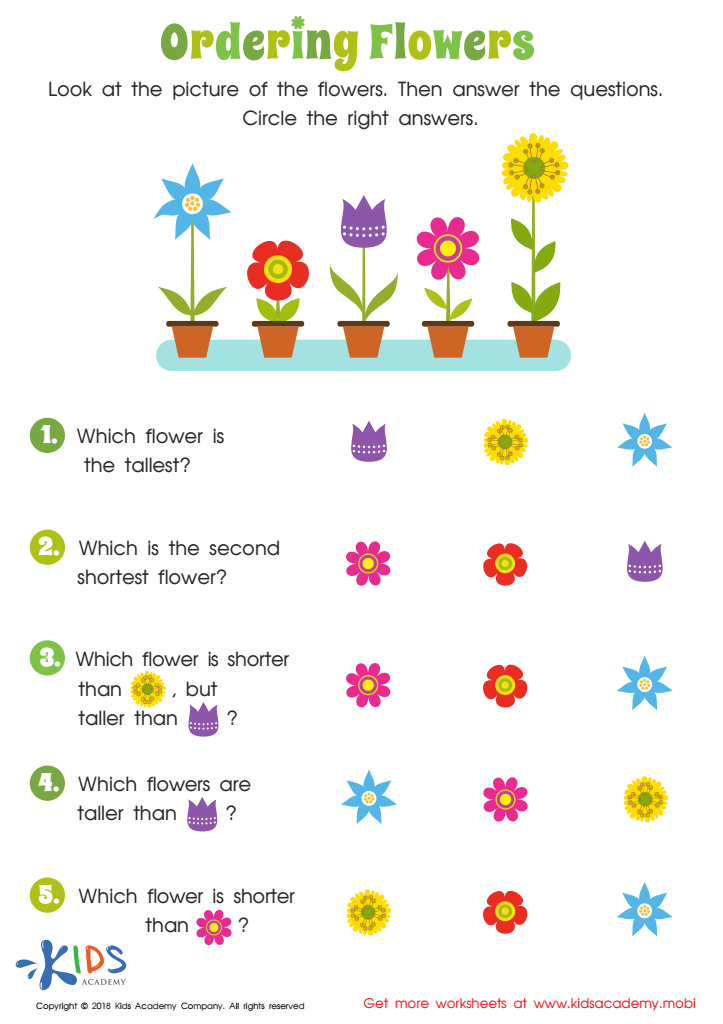
Ordering Flowers Worksheet







Comparing numbers is a foundational skill in early mathematics education, crucial for children aged 4 to 7. Parents and teachers should prioritize this concept as it helps develop critical thinking, problem-solving abilities, and number sense. By engaging young learners in comparing numbers, they gain an understanding of concepts like "more," "less," and "equal," which are essential for all future arithmetic operations.
Furthermore, comparing numbers enhances children’s cognitive development, encouraging them to analyze and articulate their thought processes. This skill not only applies to math but also promotes logical reasoning and decision-making in various aspects of life. Early proficiency in number comparison also builds a child's confidence, making them more willing to tackle more complex math challenges later on.
Additionally, comparing numbers can be an enjoyable and interactive activity. Parents and teachers can use games, visual aids, and real-life examples to make learning fun and engaging. By fostering a positive attitude towards math at an early age, educators and families set the stage for lifelong numerical literacy and enthusiasm for learning. This foundational skill ultimately prepares children for more advanced mathematical concepts, ensuring they have the tools necessary for academic success and everyday problem-solving.








