Capitalization rules Easy Alphabet Worksheets for Ages 4-8
4 filtered results
-
From - To
Introducing "Capitalization Rules Easy Alphabet Worksheets for Ages 4-8," the perfect educational resource to help young learners master capitalization rules through playful and engaging activities. These worksheets are expertly designed to make learning fun for kids, using colorful graphics and relatable examples. Children will learn to identify and correctly capitalize letters at the beginning of sentences, names, and common nouns. Ideal for kids aged 4-8, our worksheets ensure that foundational writing skills are acquired early on. Make language learning enjoyable and effective with our easy-to-follow capitalization exercises, crafted to lay strong educational groundwork.
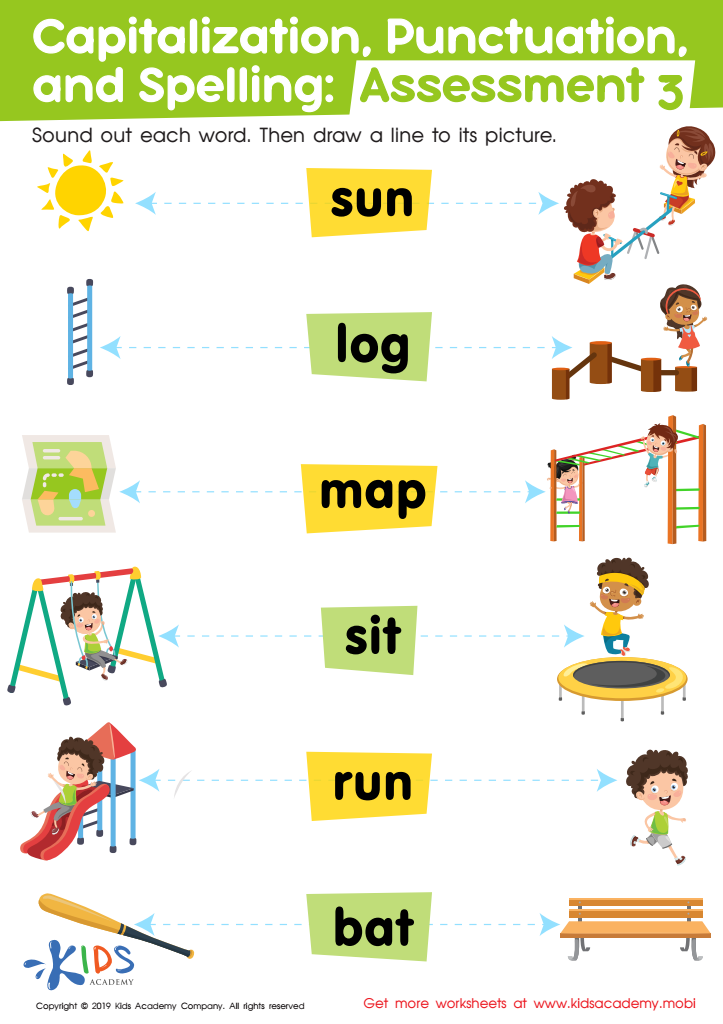
Capitalization. Punctuation. Spelling. Assessment 3 Worksheet
 Assign to My Students
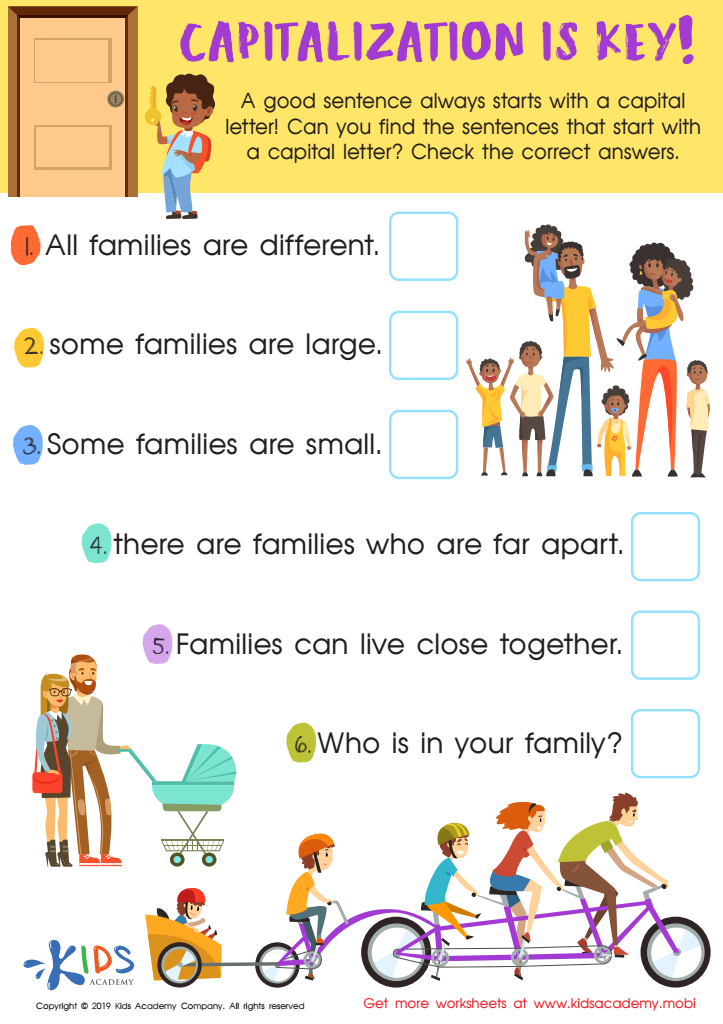
Capitalization Key Worksheet
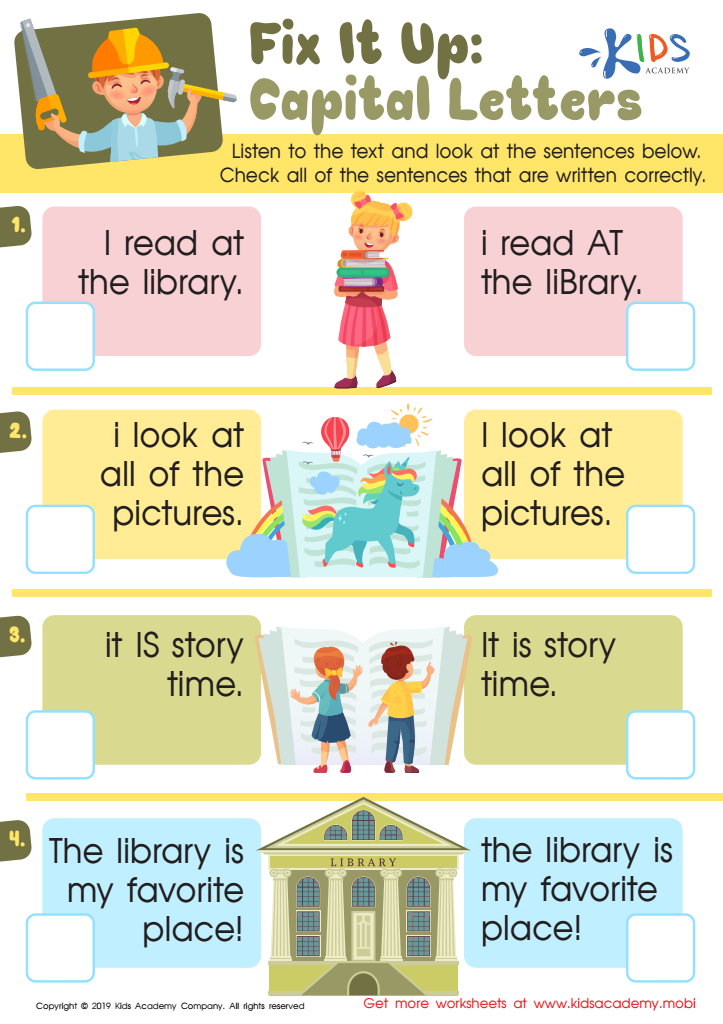
Fix Capital Letters Worksheet

How to Capitalize Worksheet







Capitalization rules are fundamental aspects of writing that set the stage for effective communication, even for young children aged 4-8. Teaching these rules early is crucial for several reasons.
First, capitalization helps children understand the structure and organization of written language. It indicates sentence beginnings, which aids in reading comprehension and fluent storytelling. Recognizing capital letters teaches kids where sentences and important words start, making texts easier to understand and follow.
Second, learning about capitalization promotes respect and proper identification of names and titles. When children's names are consistently capitalized, it reinforces their sense of identity and name recognition. Similarly, capitalizing words like "Mom" and "Dad" highlights their importance, fostering a greater sense of family and social roles.
Moreover, early knowledge of capitalization prepares children for future academic success. As they progress through school, adhering to these rules will be expected in all their writing. Mastery of basic grammar rules like capitalization will boost their confidence and competence, setting a foundation for more complex literacy skills.
Finally, correct capitalization supports overall cognitive development. It requires attention to detail and promotes pattern recognition, which are both critical thinking skills.
In summary, teaching capitalization to young children helps improve reading comprehension, acknowledges important names and titles, prepares them for future education, and enhances cognitive development.