
Animal recognition Easy Addition & Subtraction Worksheets for Ages 4-8
4 filtered results
Difficulty Level
Grade
Age
-
From - To
Subject
Activity
Standards
Discover the perfect blend of fun and learning with our "Animal Recognition Easy Addition & Subtraction Worksheets" designed for children aged 4-8. These engaging worksheets combine basic math skills with animal recognition, helping young learners practice addition and subtraction while identifying different animals. Each worksheet is crafted to captivate kids’ interest with colorful images and friendly animal characters. Ideal for early learners, these activities enhance math proficiency and zoological knowledge concurrently. Visit our page to download free worksheets that make learning both easy and enjoyable for your child. Empower their education with the joy of combining numbers and nature!
Favorites
With answer key
Interactive
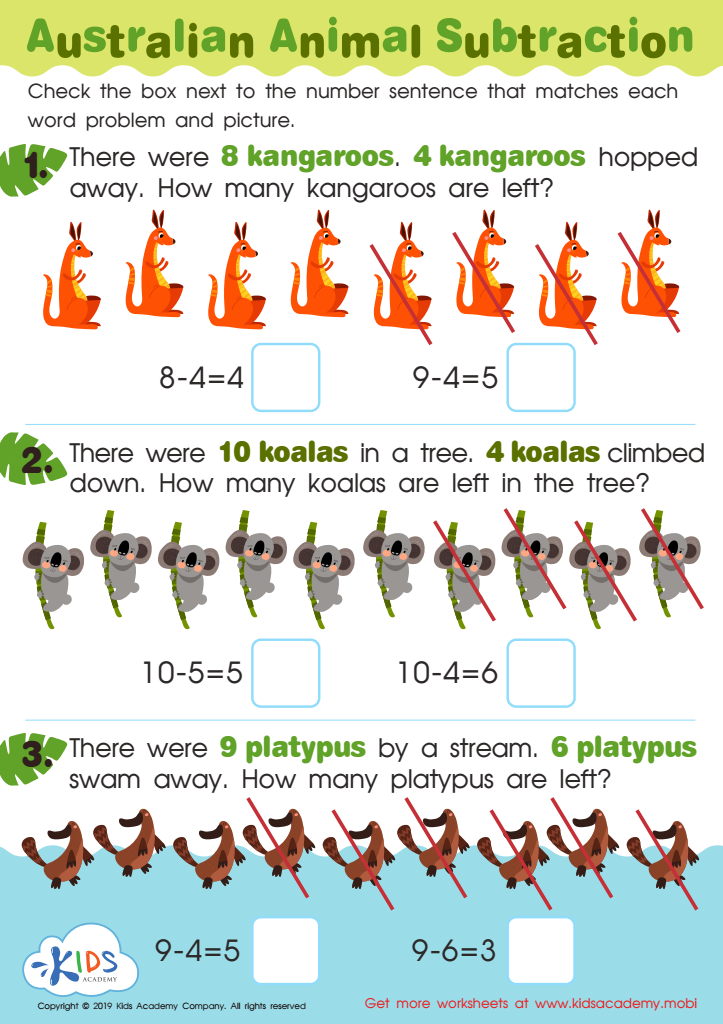
Australian Animal Subtraction Worksheet
Test your child's wildlife knowledge. Ask them to name animals indigenous to Australia or other countries. Show them the animals in this worksheet and have them match each word problem and picture with the correct number sentence.
 Assign to My Students
Australian Animal Subtraction Worksheet
Worksheet
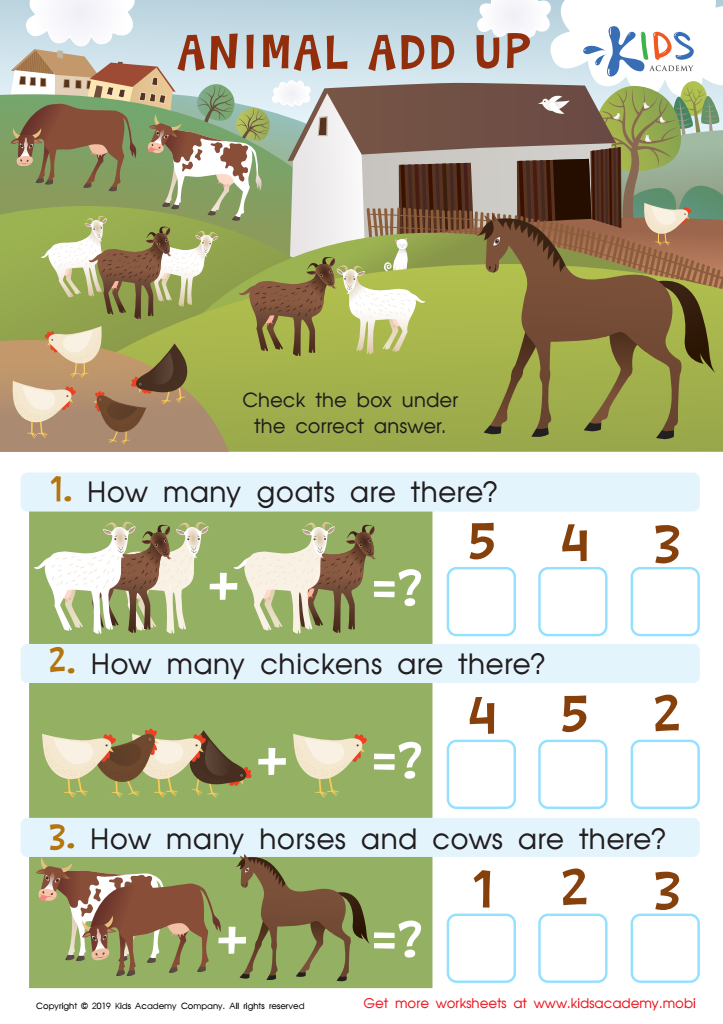
Animal Add Up Worksheet
Animals are fun to observe and interact with. They can be seen at the zoo, parks, farms and in homes with pets. This worksheet helps kids identify animals, and build addition skills. Look at the picture with them and help name each animal. After that, add the animals up and check the box for the correct answer. 80 words.
Animal Add Up Worksheet
Worksheet
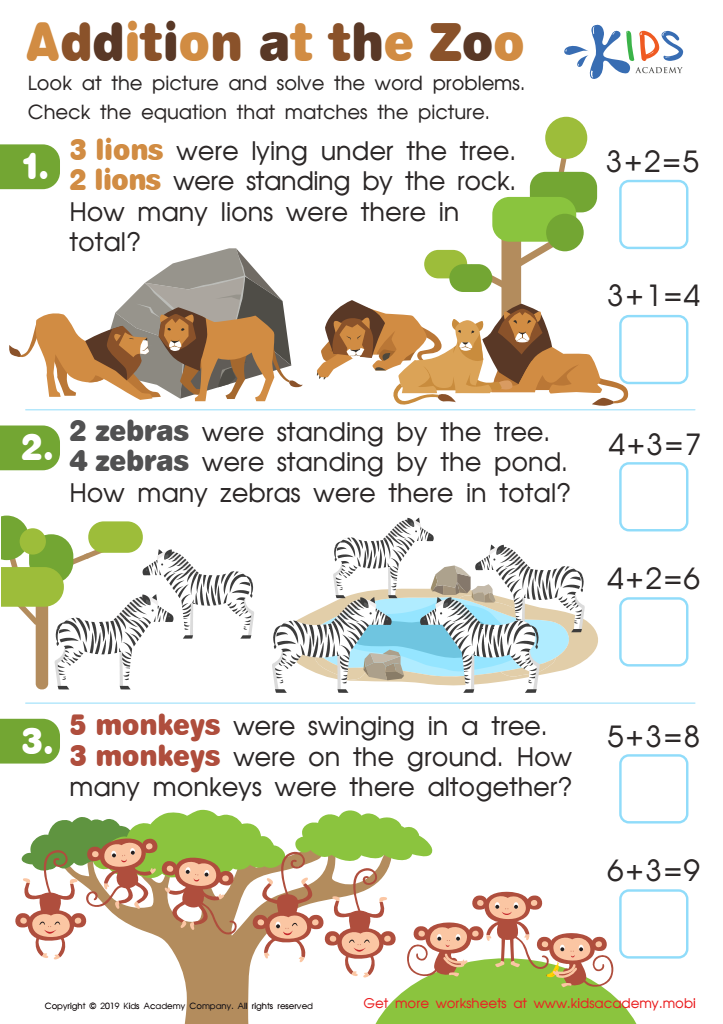
Addition at the Zoo Worksheet
Visit the zoo with your kids and point out all the different animals. Ask them to name their favorites and identify animals on a worksheet. Challenge them to solve word problems related to the pictures. Ask them for the equation that fits the picture and check the answer.
Addition at the Zoo Worksheet
Worksheet
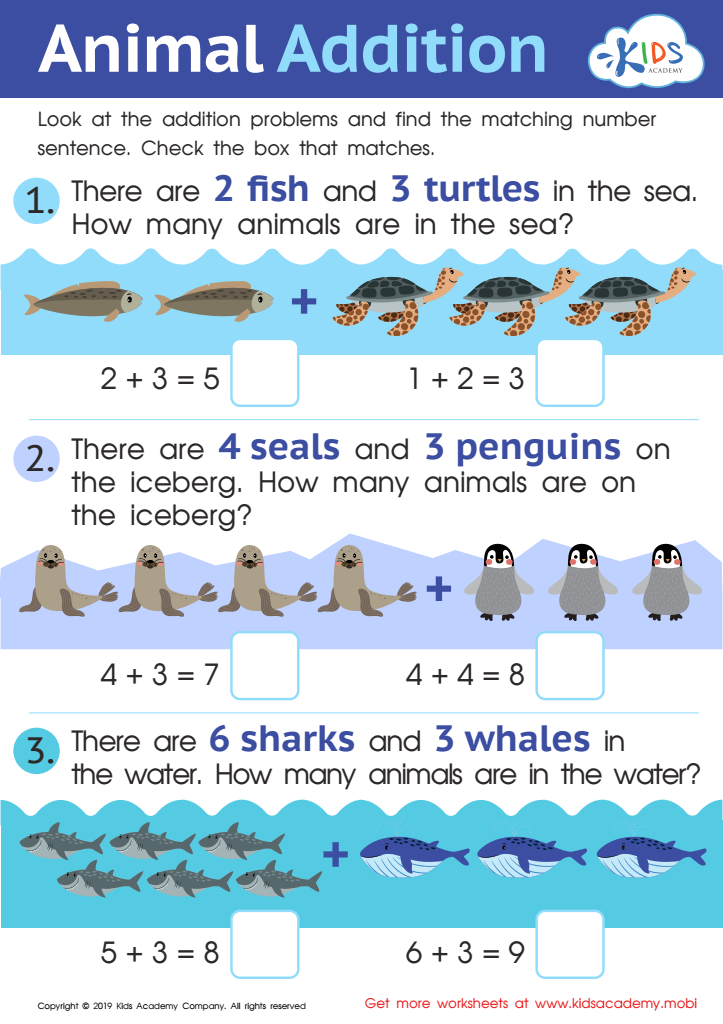
Animal Addition Worksheet
Get your kids learning addition and subtraction with this fun worksheet! Show them that solving equations can be enjoyable and help them match number sentences to the correct boxes. By doing this together, you'll create a positive learning experience that your kids won't forget.
Animal Addition Worksheet
Worksheet
Join Kids Academy for Free
Who is primarily going to use this learning content?








Introducing animal recognition, easy addition, and subtraction to children aged 4-8 offers multifaceted benefits vital for early development. Parents and teachers should care deeply about these activities as they lay a strong educational foundation and encourage cognitive growth.
Firstly, animal recognition enhances children's understanding of the natural world, fosters curiosity, and improves memory and observation skills. Recognizing animals and their characteristics promotes vocabulary expansion and categorization abilities, essential for language development and critical thinking.
Easy addition and subtraction are fundamental math skills critical for future academic success. Early exposure to these concepts develops numerical literacy, emphasizing patterns, logical reasoning, and problem-solving skills. Using animals in math problems, such as counting legs or adding and subtracting animals, makes learning relatable and enjoyable. It presents abstract concepts in a concrete, engaging manner, maintaining children's interest and encouraging experiential learning.
Furthermore, mastering these skills boosts confidence and encourages a positive attitude toward learning. Engaged learners who find enjoyment in educational activities are more likely to develop a lifelong love for learning. Parents and teachers should prioritize these foundational educational experiences to nurture well-rounded, curious, and capable children, setting the stage for academic and personal success in later years.








