Number comparison Easy Numbers Worksheets for Ages 4-8
4 filtered results
-
From - To
Introduce your child to number comparison with our "Number Comparison Easy Numbers Worksheets for Ages 4-8." Perfect for early learners, these worksheets are designed to help kids understand and compare numbers effortlessly. Featuring engaging visuals, fun activities, and simple exercises, children will effortlessly grasp concepts like greater than, less than, and equal to. Tailored for young minds aged 4-8, these worksheets foster essential mathematical skills while making learning enjoyable. Set a solid mathematical foundation for your child with our expertly crafted number comparison worksheets. Download now and watch them soar in confidence and competence!
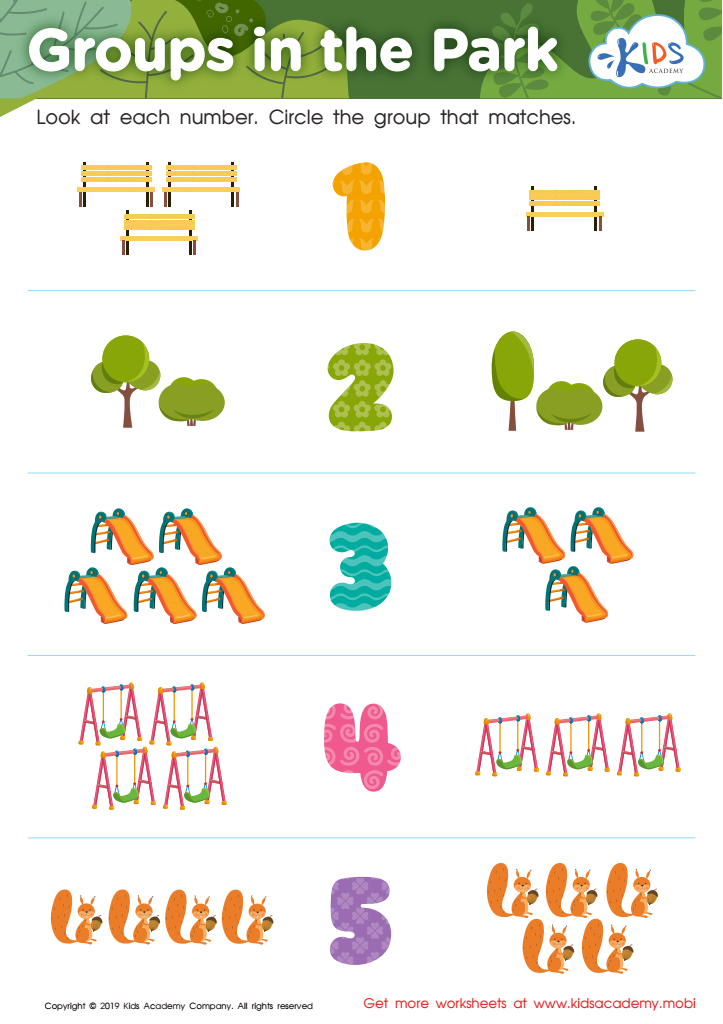
Groups in the Park Worksheet
 Assign to My Students
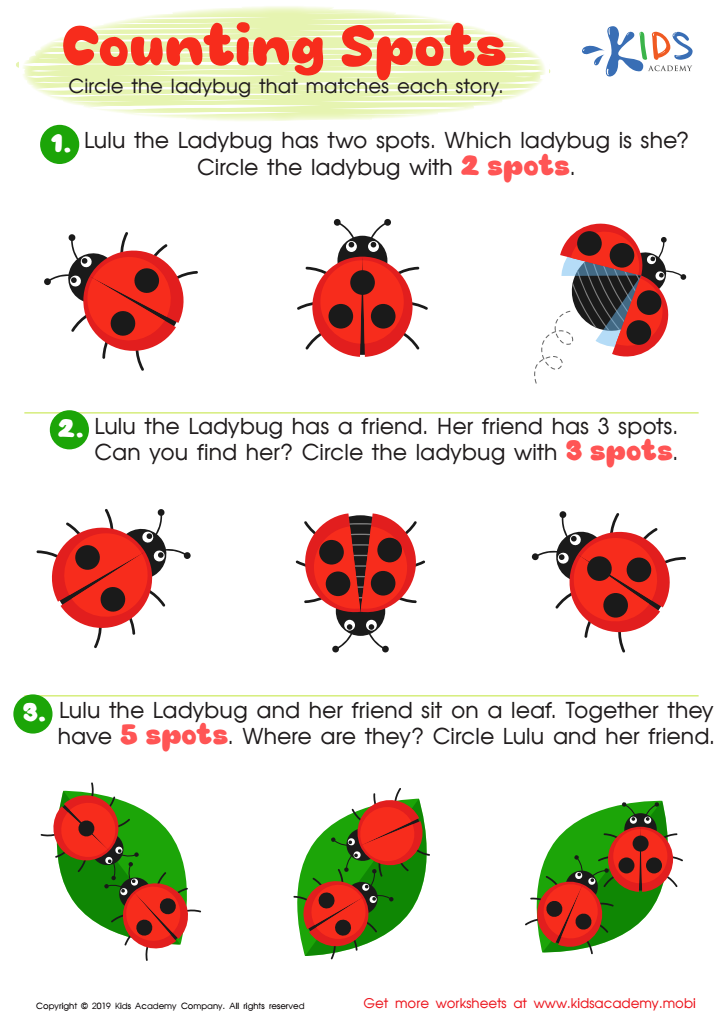
Counting Spots Worksheet
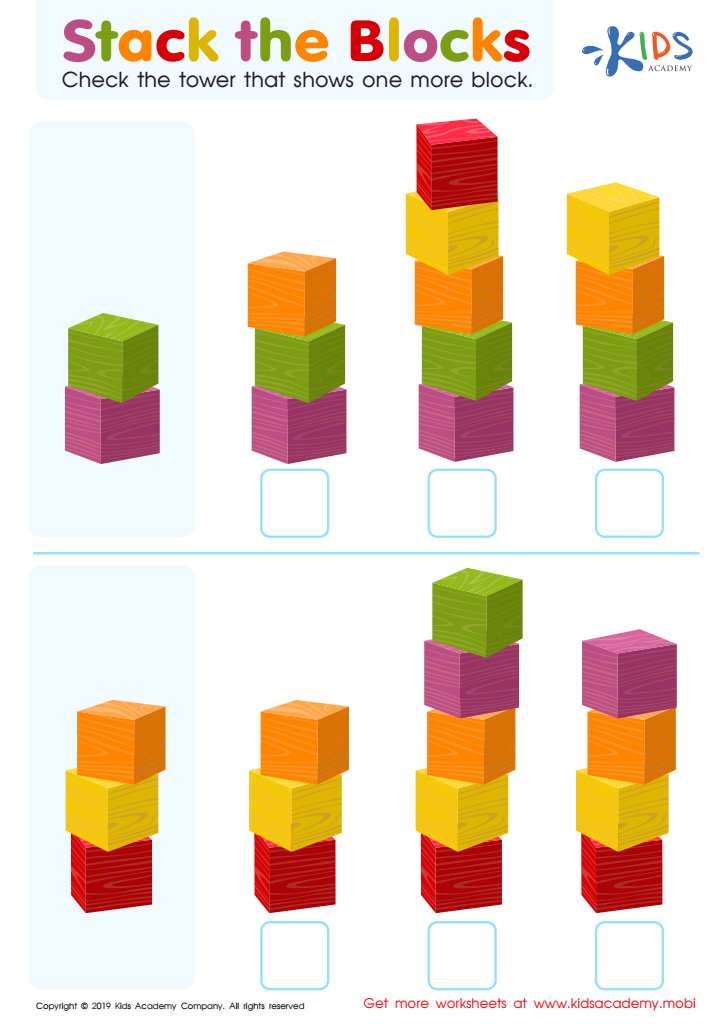
Stack the Blocks Worksheet
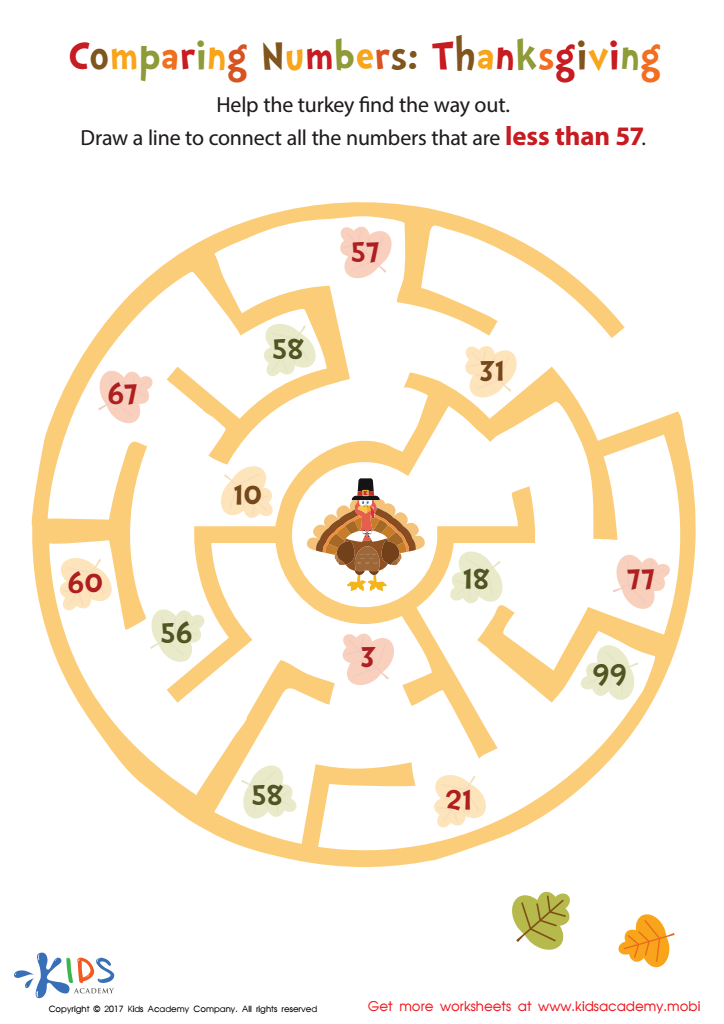
Comparing Numbers Printable








Parents and teachers should deeply care about Number Comparison for ages 4-8 because it lays the cornerstone of foundational math skills in young minds. Early primary years are critical for cognitive development, and activities like number comparison promote numerical literacy. By understanding basic mathematical concepts such as greater than, less than, and equal to, children begin to cultivate analytical and problem-solving abilities that are essential throughout their education.
Firstly, number comparison aids in enhancing counting skills and number sense, which are pivotal in math learning. It helps children to visualize and understand numerical relationships and patterns. This comprehension is key to grasping more complex math topics later on, like addition, subtraction, multiplication, and division.
Secondly, engaging in number comparison helps develop critical thinking and reasoning skills. When children evaluate which number is larger or smaller, they are exercising their ability to compare and contrast, make decisions, and process information logically.
Moreover, these early numerical skills are inherently tied to everyday life situations. Comparing quantities and understanding numerical values are practical skills that children use regularly, from determining if they have more cookies than a friend to understanding age differences within the family.
Lastly, fostering a positive attitude and confidence towards mathematics during these early years encourages a growth mindset.








