Pattern recognition Easy Math Worksheets for Ages 4-8
3 filtered results
-
From - To
Discover our engaging "Pattern Recognition Easy Math Worksheets for Ages 4-8," designed to make learning fun and effective! These worksheets help young learners develop crucial pattern recognition skills through vibrant visuals and interactive activities. Children will explore different types of patterns, enhancing their ability to identify and predict sequences. Suitable for home or classroom use, our printable resources cater to various learning styles, promoting growth in math readiness. With easy-to-follow instructions, these worksheets provide an excellent foundation for future mathematical concepts. Tailored for children ages 4-8, our worksheets ensure that every young mathematician gains confidence while enjoying the learning process!
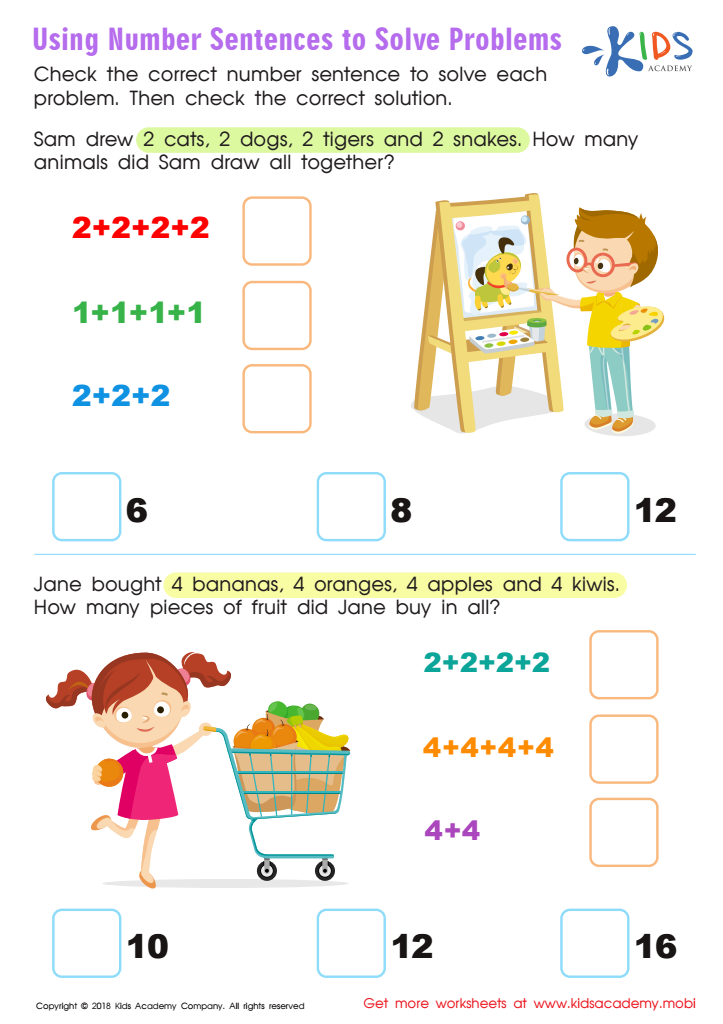
Using Number Sentences to Solve Problems Worksheet
 Assign to My Students
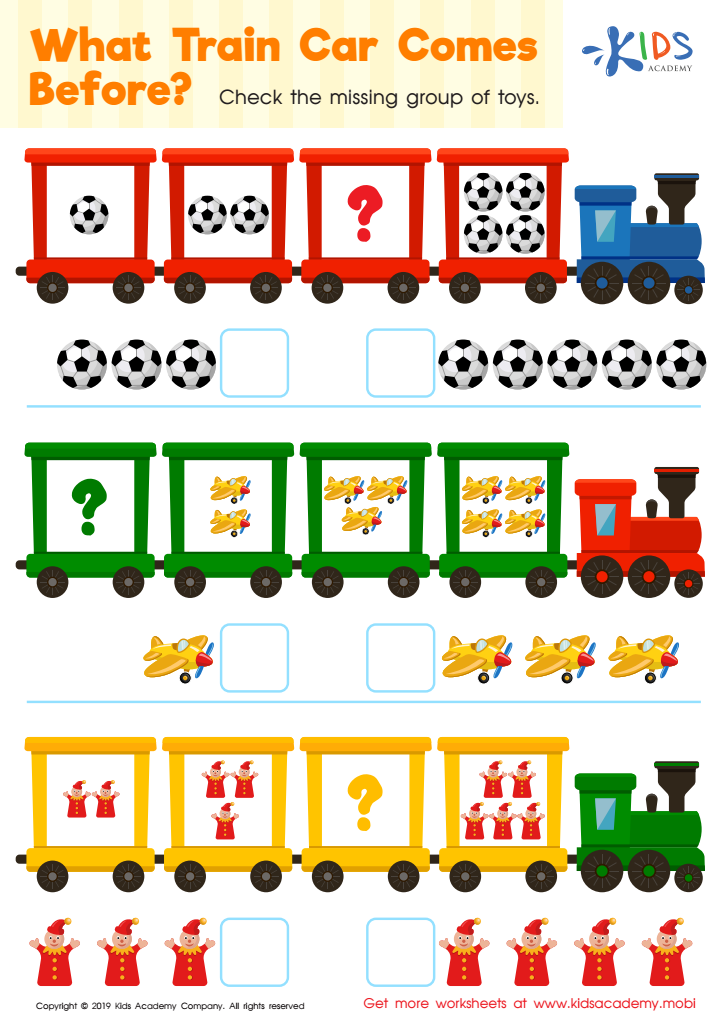
What Train Car Comes Before? Worksheet
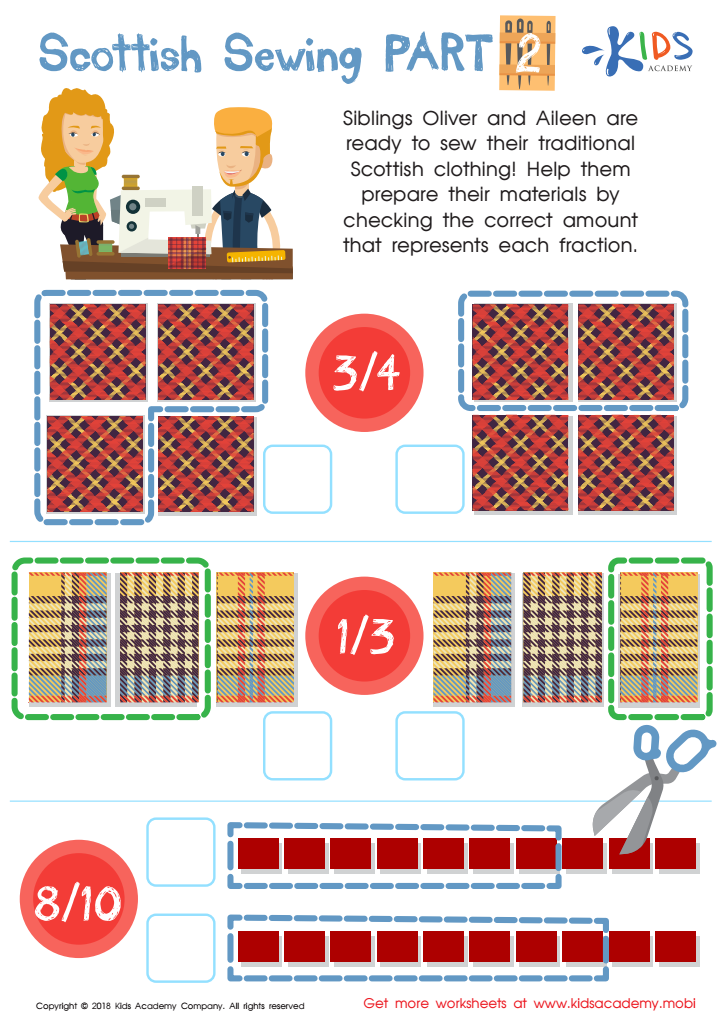
Scottish Sewing Part 2 Worksheet








Pattern recognition is a fundamental cognitive skill essential for early mathematical understanding and development in children aged 4-8. Parents and teachers should care about this skill for several reasons.
Firstly, recognizing patterns helps children make connections in learning. It fosters critical thinking and analytical abilities, which are essential for problem-solving in math and elsewhere. Patterns serve as the basis for concepts like addition and subtraction, providing a framework for more complex mathematical ideas later on.
Secondly, engaging in pattern activities promotes creativity and curiosity. As children explore and identify patterns in numbers, shapes, and real-life contexts, they develop observational skills that are vital for academic success across all subjects. This form of engagement makes learning fun and interactive, encouraging a positive attitude towards math.
Moreover, pattern recognition aligns with early childhood standards and helps prepare children for more advanced mathematics in later years. It's an important stepping stone that supports their overall cognitive development.
Finally, by emphasizing pattern recognition, parents and teachers can cultivate a strong foundation in math literacy. This sets children up for a lifetime of mathematical confidence and success, underscoring its significance in both educational and everyday contexts.








