Understanding number patterns Easy Math Worksheets for Ages 4-8
3 filtered results
-
From - To
Discover the joy of learning with our "Understanding Number Patterns" Easy Math Worksheets designed for children aged 4-8. These engaging, interactive worksheets introduce young learners to essential math skills through fun activities focused on identifying and creating number patterns. By exploring sequences and learning to recognize patterns, children enhance their problem-solving abilities and mathematical intuitions. Our worksheets are visually appealing and age-appropriate, making math approachable and enjoyable. Perfect for home or classroom use, these resources aid in building a strong numerical foundation. Encourage your child's love for math today with our thoughtfully crafted worksheets that turn learning into a delightful adventure!
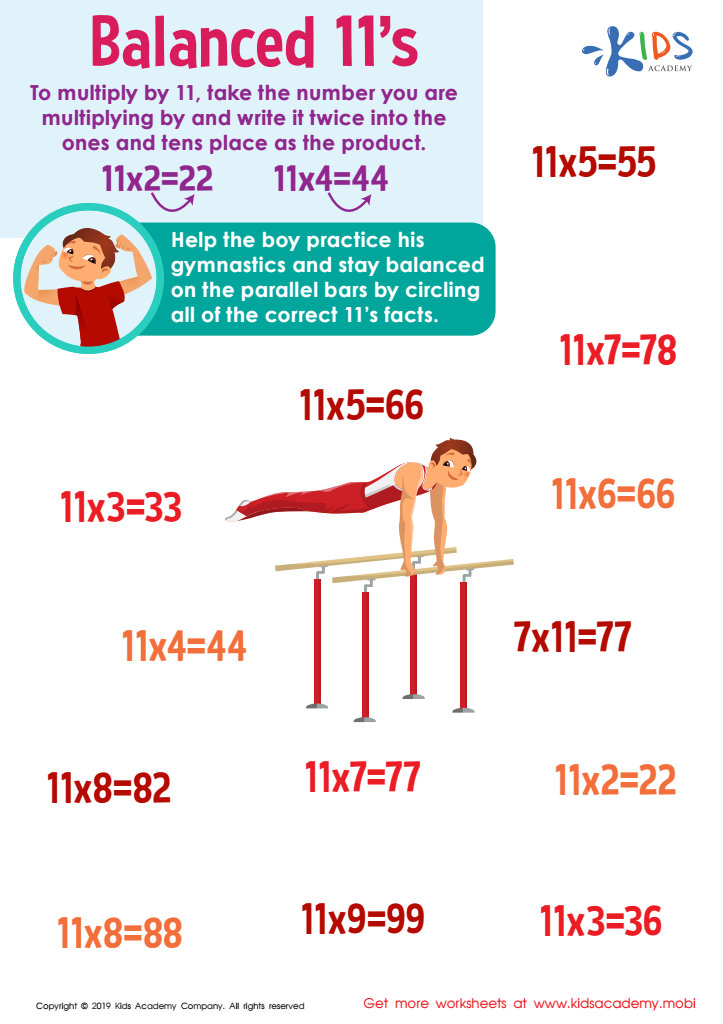
Balanced 11s Worksheet
 Assign to My Students
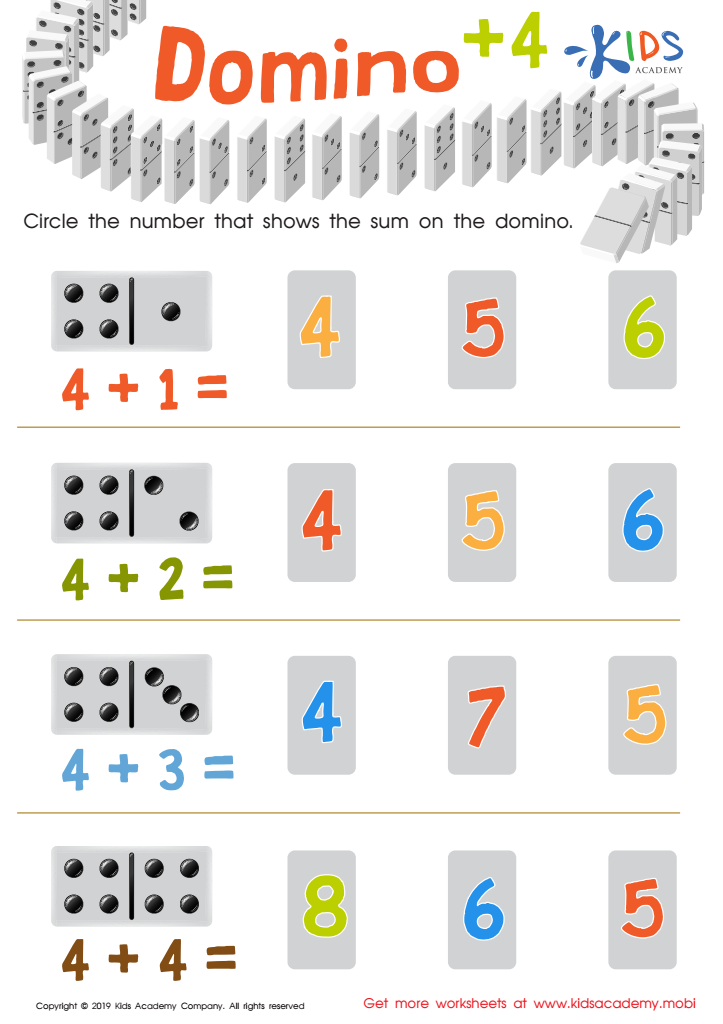
Domino +4 Worksheet
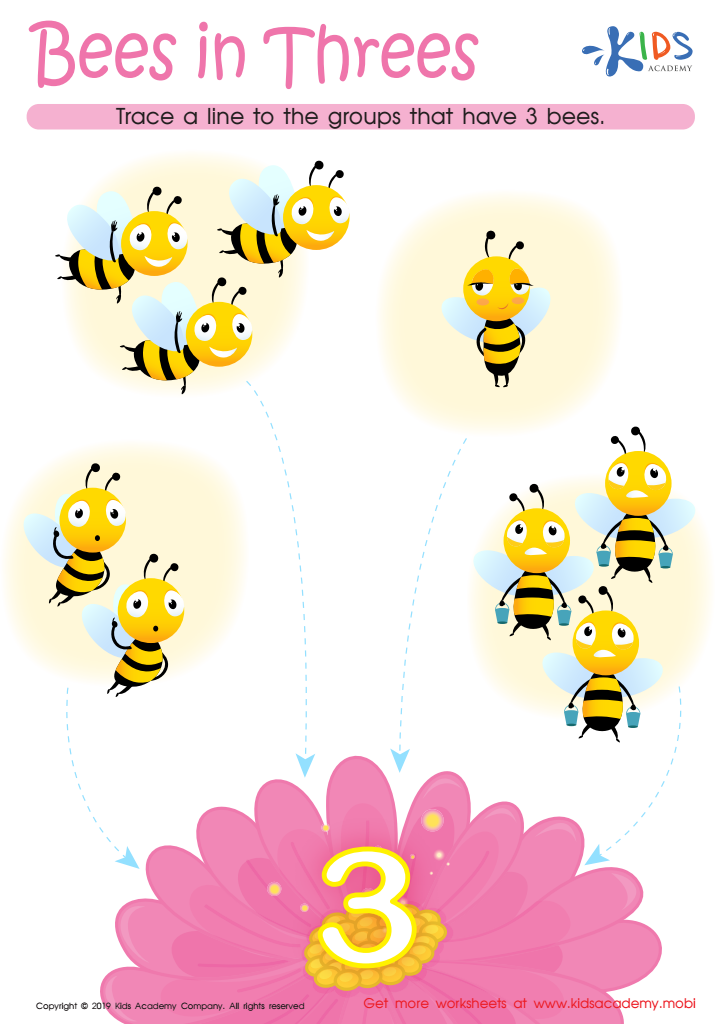
Bees in Threes Worksheet







Understanding number patterns is crucial for young learners aged 4-8 as it forms the foundation of their mathematical development. Teaching number patterns helps children recognize sequences and relationships between numbers, fostering critical thinking and problem-solving skills. This early exposure prepares them for more complex mathematical concepts, ensuring a smoother transition into higher levels of math.
Parents and teachers should care about this because developing pattern recognition nurtures skills essential for daily life and future academic success. It enhances children's abilities to make predictions, understand symmetry, and interpret data, all of which are vital in subjects beyond mathematics, like science and technology. Furthermore, learning through patterns promotes cognitive flexibility; children learn to navigate various problem-solving strategies and approaches.
Engaging with number patterns can also facilitate a joyful learning environment. Games, songs, and visual aids can make parsing numbers fun, thereby increasing interest in mathematics from a young age. Lastly, fostering a strong mathematical foundation instills confidence in children, empowering their other educational pursuits. By prioritizing understanding number patterns, parents and teachers can provide essential support in developing well-rounded, mathematically fluent students with a lifelong love of learning.








