
Comparing heights Easy Measurement Worksheets for Ages 4-8
3 filtered results
Difficulty Level
Grade
Age
-
From - To
Subject
Activity
Standards
Discover our "Comparing Heights Easy Measurement Worksheets" designed for children ages 4-8! These engaging worksheets introduce young learners to the concept of height measurement through fun exercises that promote hands-on learning. Kids will enjoy comparing different objects and characters, enhancing their observational skills while building key math concepts. Each worksheet provides colorful illustrations and straightforward instructions, making it easy for parents and teachers to guide students in understanding heights. Perfect for early grade classrooms or home learning, these worksheets foster critical thinking and give kids the confidence they need to explore measurements. Start their educational journey with our exciting activities today!
Favorites
With answer key
Interactive
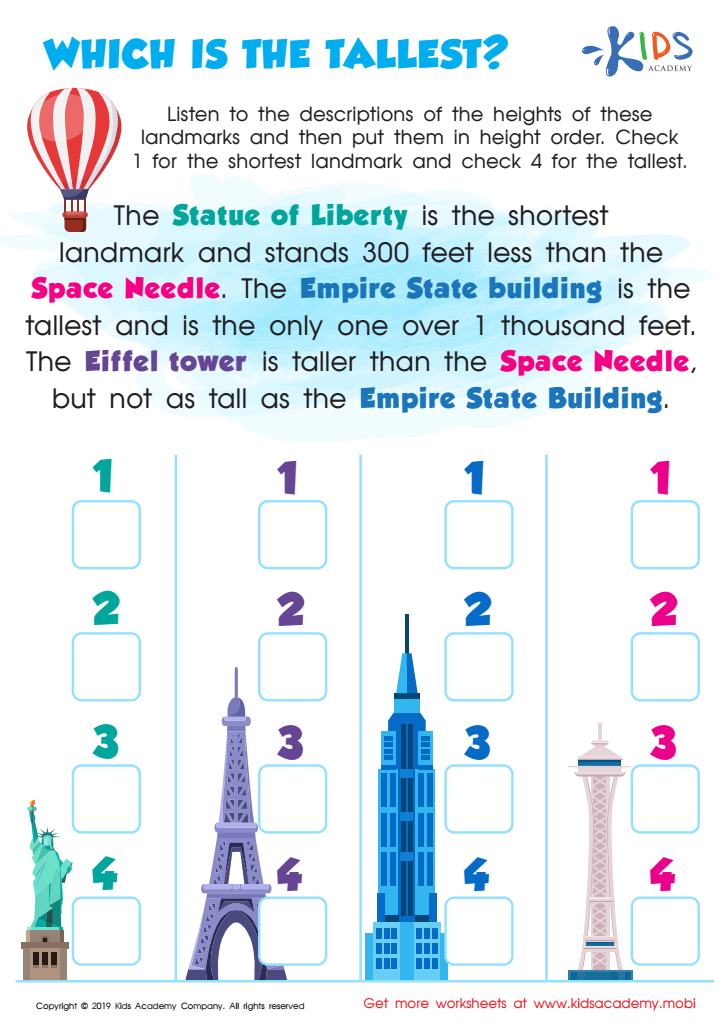
Which is the Tallest? Worksheet
Help your kids arrange the buildings in order of height: highest (4) to lowest (1). Ask them if they can think of other ways things can be measured. Read the texts describing the buildings and check 4 for the tallest and 1 for the shortest.
 Assign to My Students
Which is the Tallest? Worksheet
Worksheet
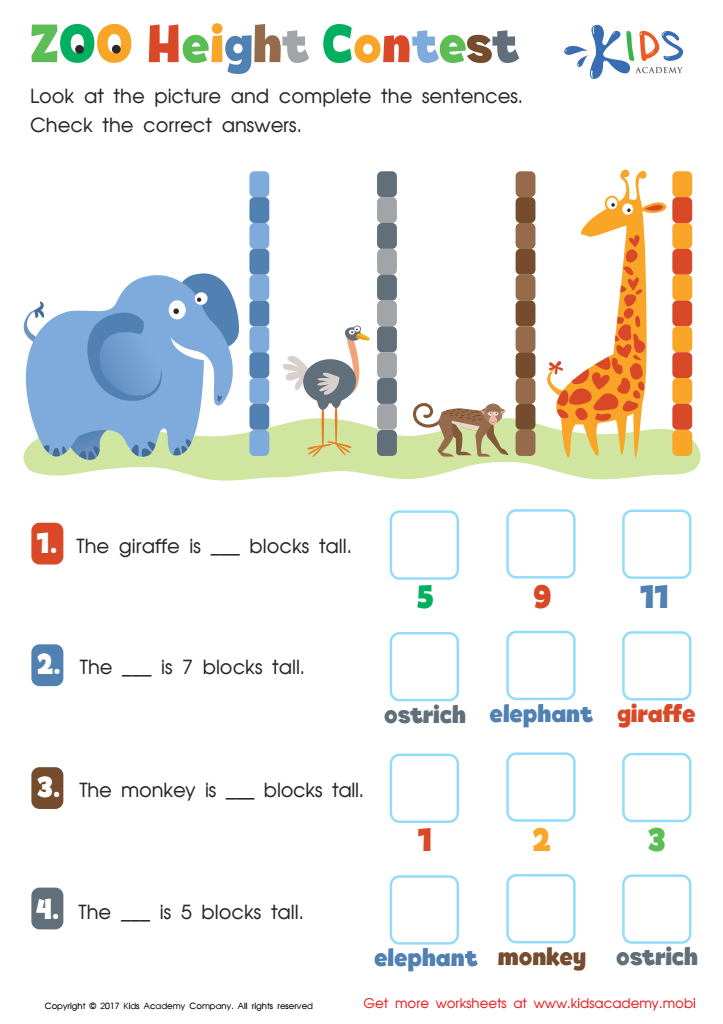
Zoo Height Contest Worksheet
Let's head to the zoo and use colorful blocks to measure your child's favorite animals! With this Kids Academy worksheet, help them practice and prepare for learning measurement. Guide them in looking at the zoo animals and counting blocks to find the height. Then, read the questions and check the box next to the correct answer.
Zoo Height Contest Worksheet
Worksheet
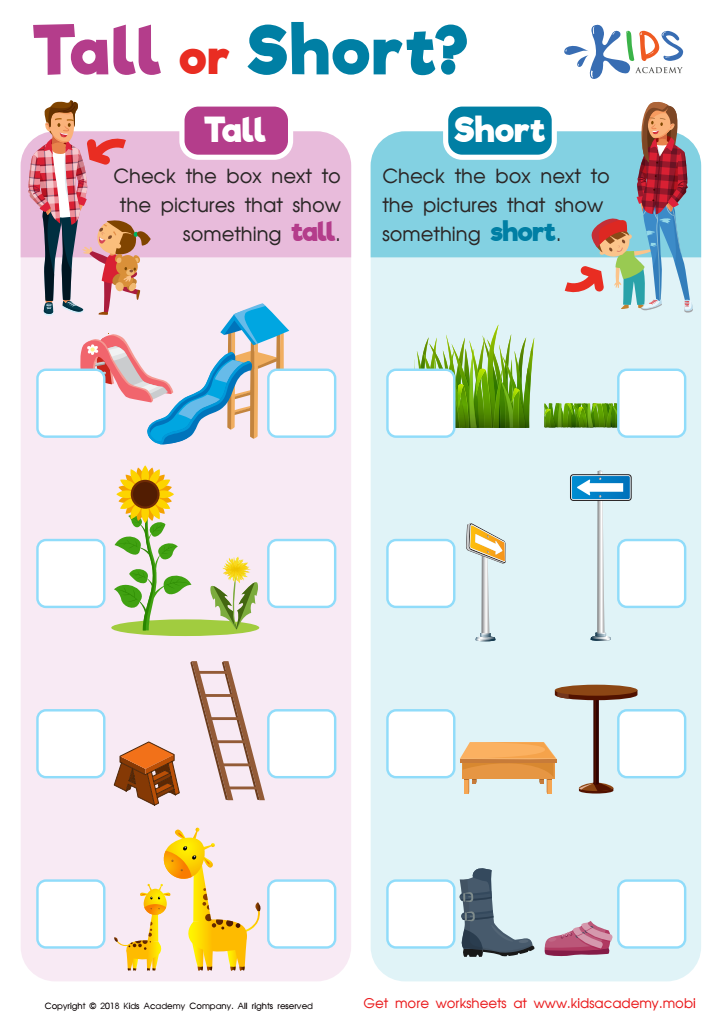
Tall or Short? Worksheet
Comparing tall and short objects is an early math skill. Our free worksheet uses fun colors and pictures to help kids practice. This will give them a head start for higher-level measurement skills, and they'll remember tangible objects for comparison.
Tall or Short? Worksheet
Worksheet
Join Kids Academy for Free
Who is primarily going to use this learning content?








Parents and teachers should prioritize measurements, such as comparing heights, for children aged 4-8 as it lays a foundational understanding of mathematical concepts and encourages healthy development. During these formative years, children are naturally curious about their bodies and the world around them, making height comparisons an engaging way to introduce measurement.
Engaging children in measuring activities fosters essential skills like critical thinking, comparison, and attention to detail. When children compare heights, they learn to use units of measurement, recognize spatial relationships, and develop a sense of proportionality, which are vital math skills. These activities also enhance their language and vocabulary as they describe what they observe.
Furthermore, measuring and discussing heights can support socialization among peers, helping children learn to work collaboratively while boosting their self-esteem. It promotes body positivity as children gain an understanding and appreciation of diversity in body shapes and sizes. Additionally, highlighting the importance of growth offers parents and teachers an opportunity to discuss concepts of health and nutrition.
In essence, comparing heights is more than just an activity; it's a stepping stone toward greater academic skills and personal confidence, making it essential for children's overall growth and learning.








