Comparing numbers Easy Measurement Worksheets for Ages 4-8
3 filtered results
-
From - To
Explore our "Comparing Numbers Easy Measurement Worksheets" designed specifically for ages 4-8! These engaging worksheets help young learners develop strong foundational skills in comparing numbers and understanding measurement concepts. Packed with fun activities and colorful illustrations, your child will practice greater than, less than, and equal to, enhancing their number sense in a playful way. Our worksheets are tailored to support early math learning, allowing kids to grasp important concepts through hands-on experience. Ideal for classrooms or at-home learning, these resources ensure a balanced mix of education and enjoyment. Start nurturing mathematical confidence today with our easy measurement worksheets!
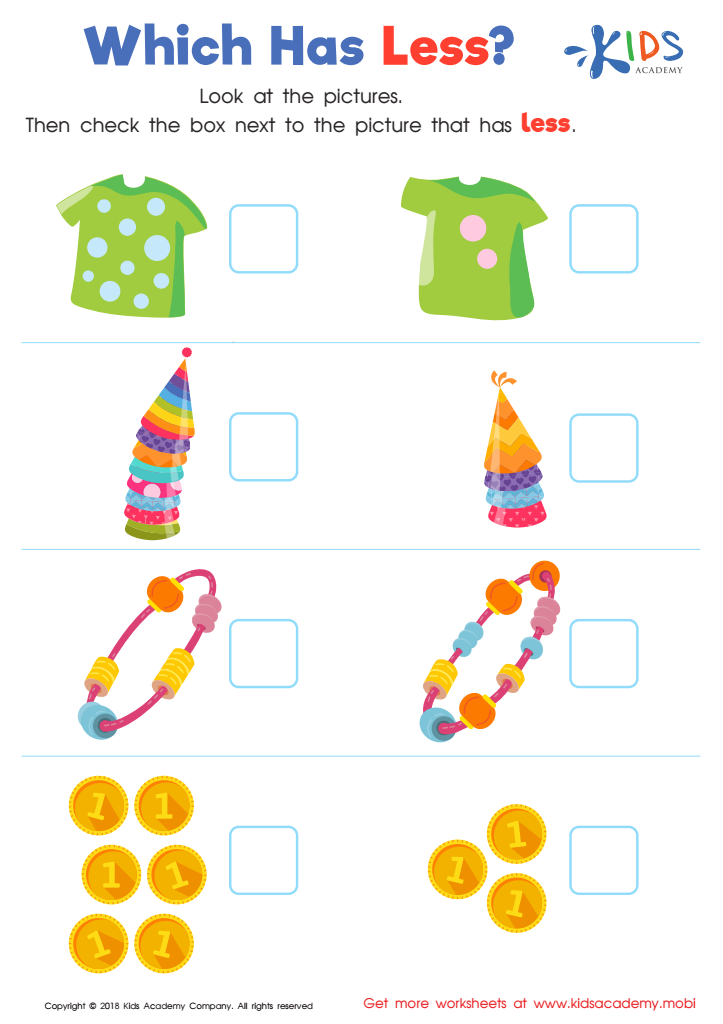
Which Has Less? Worksheet
 Assign to My Students
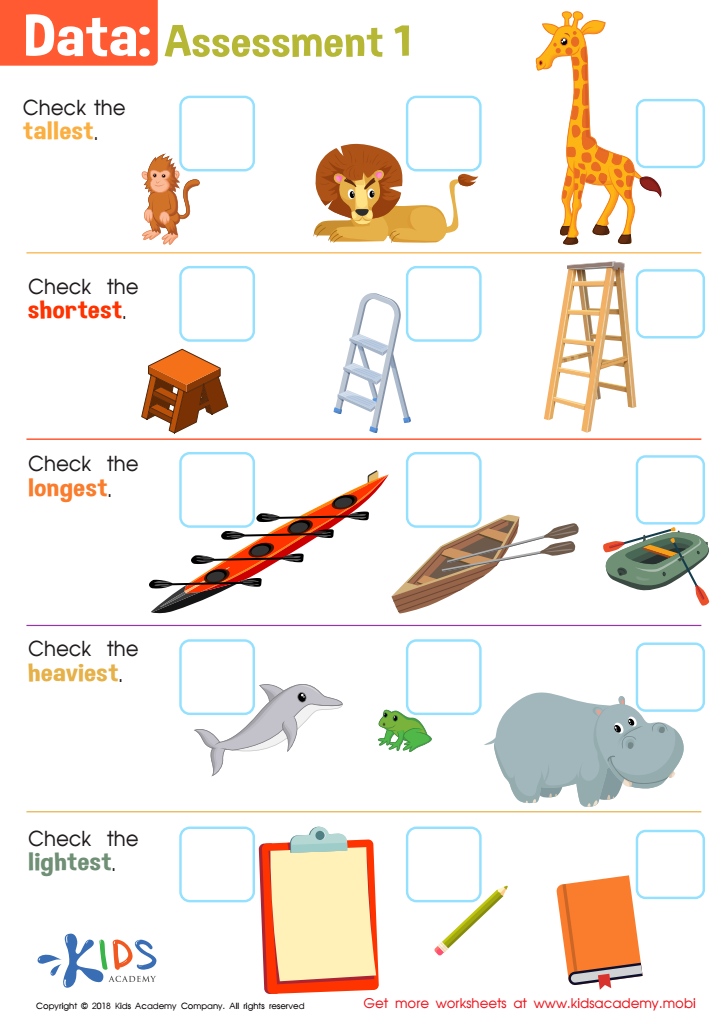
Data: Assessment 1 Worksheet
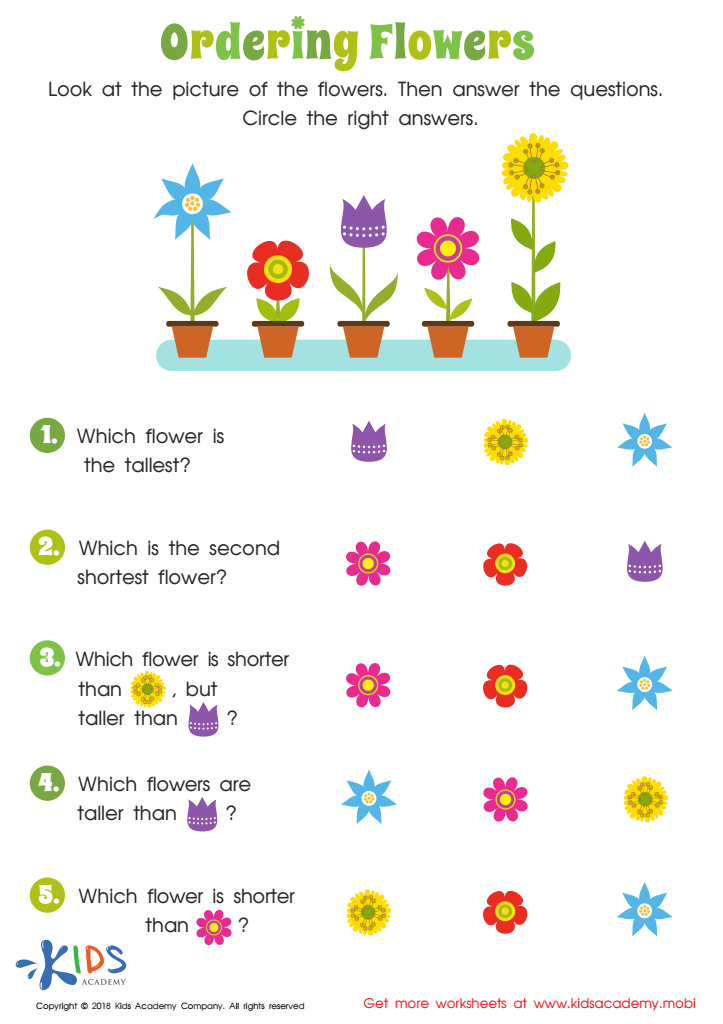
Ordering Flowers Worksheet








Comparing numbers and understanding measurement are foundational skills for children ages 4-8, and both parents and teachers play a crucial role in fostering this understanding. First, proficiency in comparing numbers enhances a child's cognitive development, promoting critical thinking and problem-solving skills. By engaging with activities that involve counting, sorting, and measuring, children learn to analyze relationships between quantities, fostering a greater numerical literacy that will benefit them in more advanced mathematics later on.
Additionally, mastering basic measurement concepts—including length, weight, and volume—helps children connect their learning to real-world applications. For instance, they can learn to measure ingredients while cooking or compare the heights of friends during play, making the learning process engaging and relevant. This practical application not only boosts comprehension but also retains their interest in math as a fun and useful skill.
Furthermore, early exposure to these concepts aids in developing self-confidence in their mathematical abilities, setting a positive foundation for lifelong learning. By actively participating in their child's numerical development, parents and teachers can cultivate an encouraging environment, reinforcing the belief that math is both accessible and enjoyable, thus ensuring their children thrive academically and personally.








