Understanding life cycles Easy Reading Worksheets for Ages 4-8
3 filtered results
-
From - To
Discover "Understanding Life Cycles Easy Reading Worksheets" tailored for ages 4-8, from Kids Academy. These engaging worksheets introduce children to the fascinating world of life cycles through fun and easy-to-read activities. Perfectly designed to meet the reading and comprehension level of young learners, these worksheets offer vibrant illustrations and enjoyable learning tasks. With a focus on educational growth, they aim to spark curiosity and a love for nature in your child. Develop key reading skills while exploring how plants, animals, and insects grow and change. Ideal for classrooms and at-home learning; start your child's journey today!
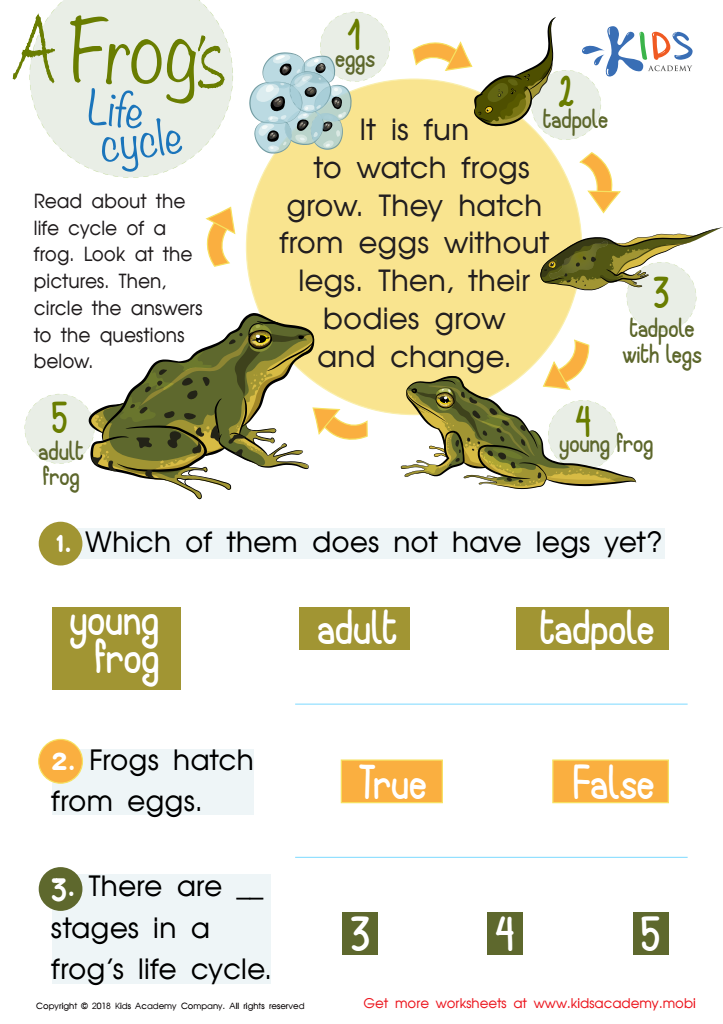
A Frog’s Life Cycle Worksheet
 Assign to My Students
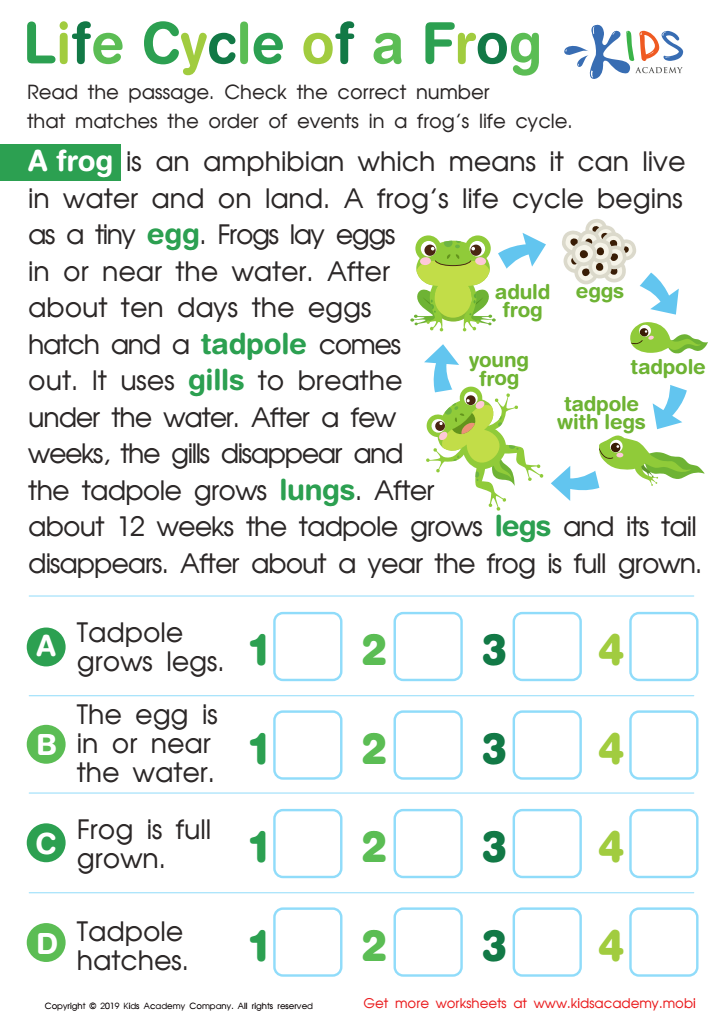
Life Cycle of a Frog Worksheet
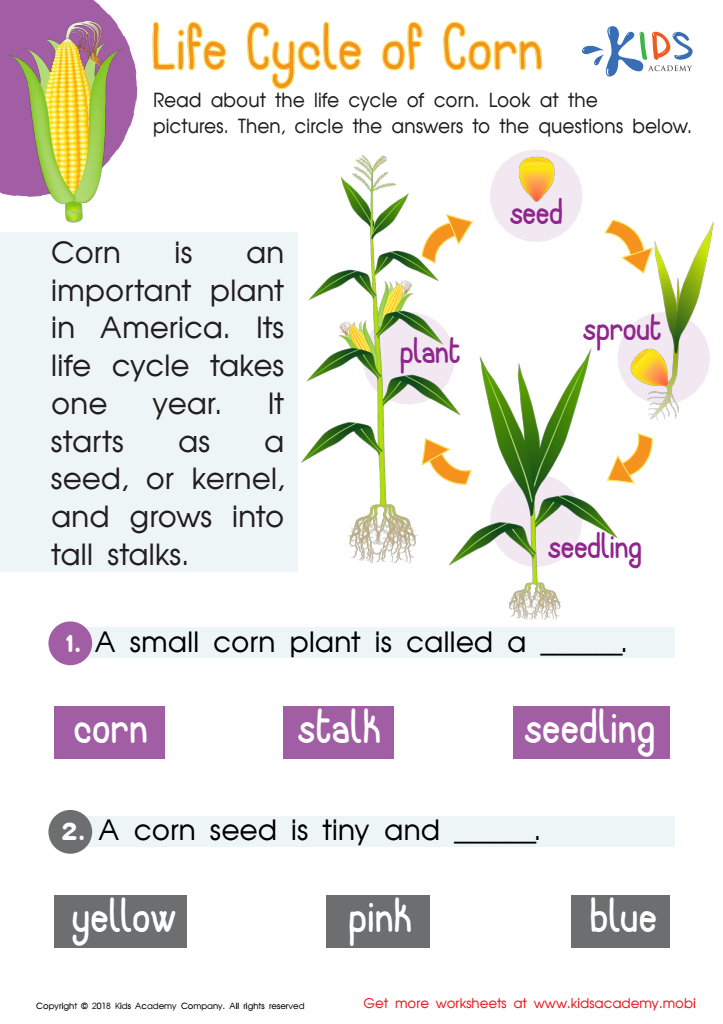
Life Cycle of Corn Worksheet







.jpg)
Understanding life cycles is crucial for children ages 4-8 because it fosters a foundational appreciation of the natural world and promotes critical cognitive development. At this formative age, children are naturally curious and absorb information quickly. By introducing them to life cycles, parents and teachers help satiate their curiosity and build a deeper understanding of how living things grow and change.
Engaging with concepts like seed to plant, caterpillar to butterfly, or egg to chick not only stimulates a child’s imagination but also anchors important scientific concepts in their minds early on. This foundational knowledge can be instrumental in developing scientific literacy, which is valuable in many future learning contexts.
Moreover, understanding life cycles can teach children about responsibility and empathy. For instance, they learn that the tadpoles they care for will turn into frogs, learning patience and responsibility in the process. From a literacy perspective, reading about life cycles improves language skills, vocabulary, and comprehension, benefiting their overall educational experience.
In essence, incorporating life cycles into early education makes learning a multidisciplinary adventure, blending science with real-world empathy and literacy skills—the ingredients for nurturing well-rounded and inquisitive individuals.