Handwriting practice Easy Letter Recognition Worksheets for Ages 4-9
3 filtered results
Difficulty Level
Grade
Age
-
From - To
Subject
Activity
Standards
Handwriting practice is essential for young learners, and our Easy Letter Recognition Worksheets for Ages 4-9 are here to help! Designed to make early reading and writing fun, these engaging worksheets guide children through the basics of letter formation and recognition. Suitable for preschool through early elementary grades, our resources are strategically crafted to build fine motor skills, boost confidence, and encourage a love for learning. Each worksheet combines colorful visuals and hands-on activities to ensure an interactive experience. Ideal for both classroom and at-home learning, these worksheets are the perfect tool to spark joy in your child's literacy journey!
Favorites
With answer key
Interactive
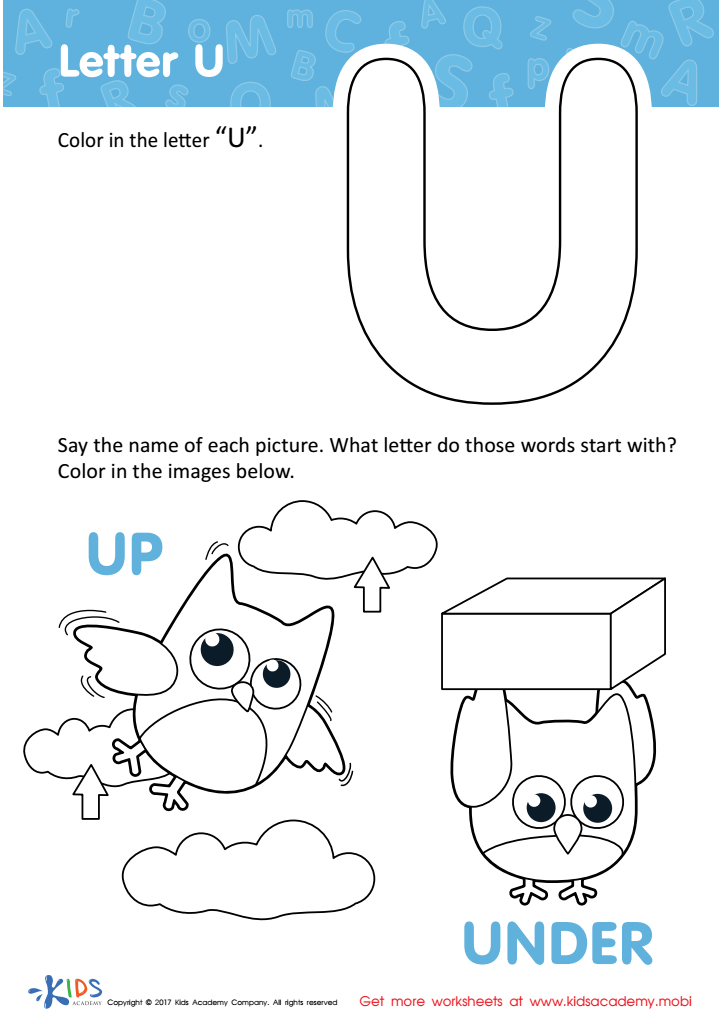
Letter U Coloring Sheet
This letter "U" coloring page helps your child learn two things at once - the letter "U" and positional words! An adorable owl character aids in understanding up and under. In a few strokes of a crayon, your child can master these concepts.
Download (PDF)
 Assign to My Students
Assign to My Students
Letter U Coloring Sheet
Worksheet
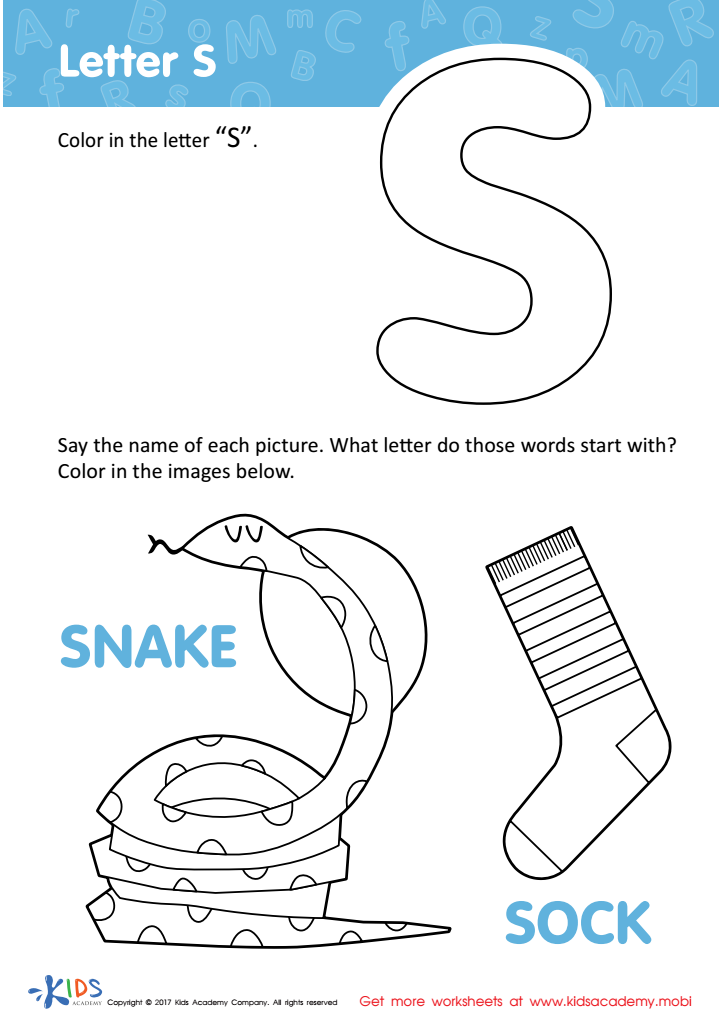
Letter S Coloring Sheet
Help your child practice recognizing the letter "S" and the sound it makes with this fun coloring page. It features a slippery snake, smelly sock and more! Give them extra practice by coming up with more "S" sounds and words.
Download (PDF)
Assign to My Students
Assign to My Students
Letter S Coloring Sheet
Worksheet
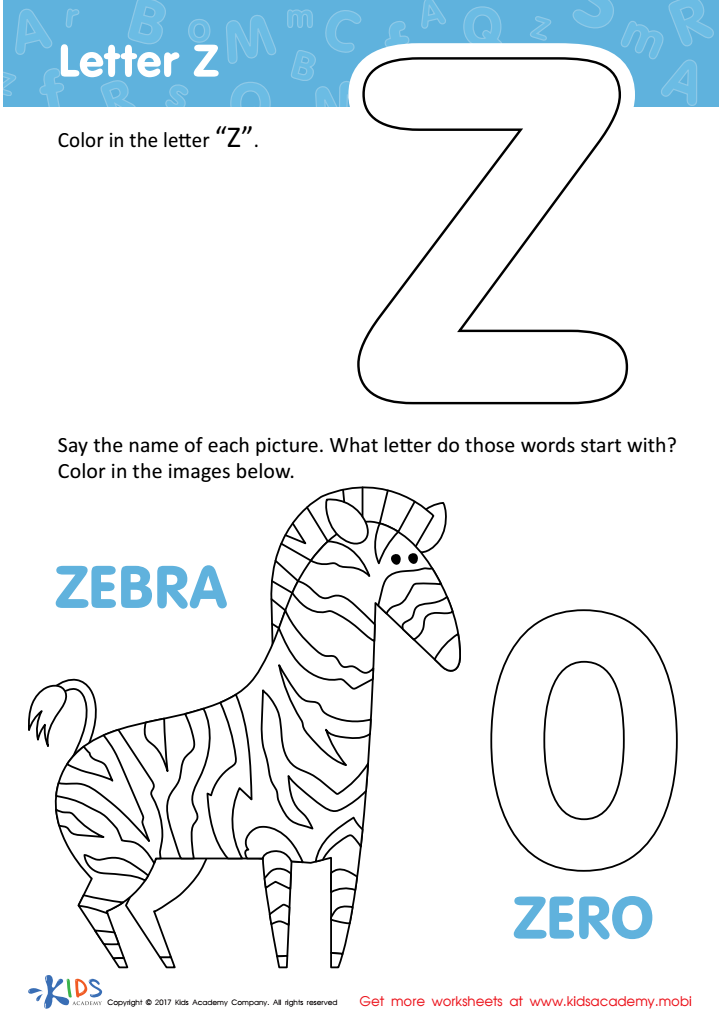
Letter Z Coloring Sheet
This coloring page featuring the letter "Z" is perfect for your child to practice letter recognition! Help them learn the unique sound it makes as they color. It'll be a fun and easy activity they won't have trouble with!
Download (PDF)
Assign to My Students
Assign to My Students
Letter Z Coloring Sheet
Worksheet
Join Kids Academy for Free
Who is primarily going to use this learning content?








Handwriting practice and easy letter recognition are crucial for children ages 4-9 as they form the foundation of literacy and communication skills. At this developmental stage, children are rapidly advancing in their cognitive and motor abilities. Handwriting practice helps refine fine motor skills, enhancing dexterity and coordination. This is crucial not just for writing but for other everyday tasks like buttoning shirts or using utensils.
Furthermore, recognizing letters effortlessly is a cornerstone of reading fluency. When children can quickly identify letters, they can focus more on understanding the text rather than decoding individual characters, accelerating their reading skills. Practicing handwriting reinforces memory retention of letter shapes and sounds, bridging the connection between visual symbols and verbal communication.
Additionally, handwriting has been linked to improved brain development in areas related to thinking, language, and memory. Writing by hand engages different neural pathways compared to typing or touching screens, fostering better comprehension and critical thinking skills.
For parents and teachers, encouraging consistent handwriting practice provides children with the confidence and ability to communicate effectively. Early intervention helps prevent future literacy struggles, supports academic achievement, and builds a foundation for lifelong learning. Investing in these skills is essential for fostering capable, confident, and resilient learners.