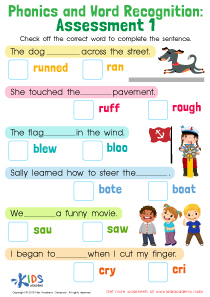
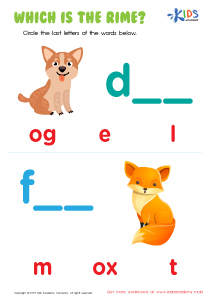
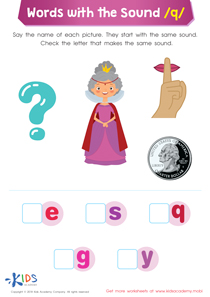
Letter-sound correlation Easy Letter Sounds Worksheets for Ages 4-9
3 filtered results
-
From - To
Introduce your child to the world of phonics with our Easy Letter Sounds Worksheets designed for ages 4-9. These engaging and educational printable worksheets help young learners master letter-sound correlation, laying a solid foundation for reading success. Each worksheet is thoughtfully crafted to make learning fun and interactive, guiding children through identifying and pairing letters with their correct sounds. Perfect for both classroom and home use, these resources support early literacy skills, confidence building, and independent learning. Explore our collection today to enhance your child's reading journey!
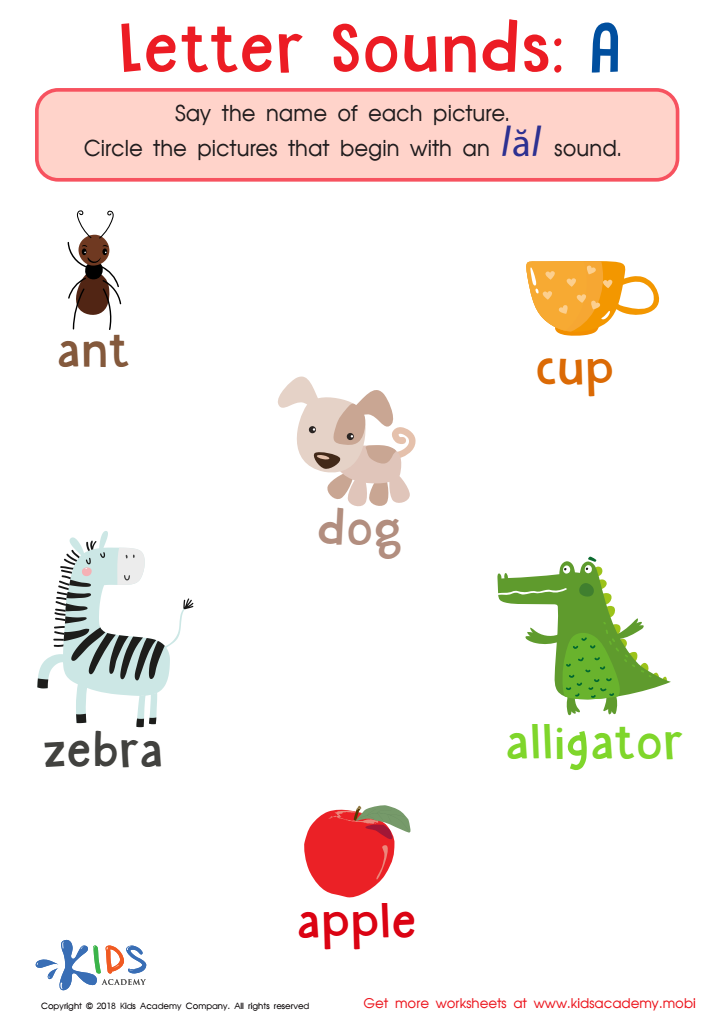
Letter A Sounds Worksheet
 Assign to My Students
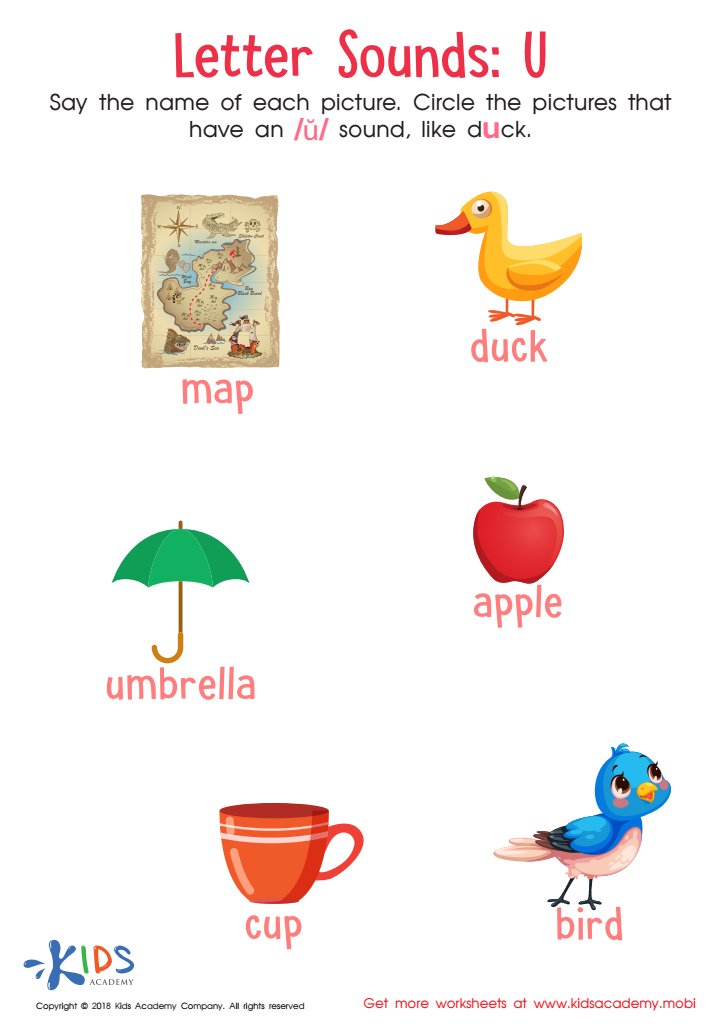
Letter U Sounds Worksheet
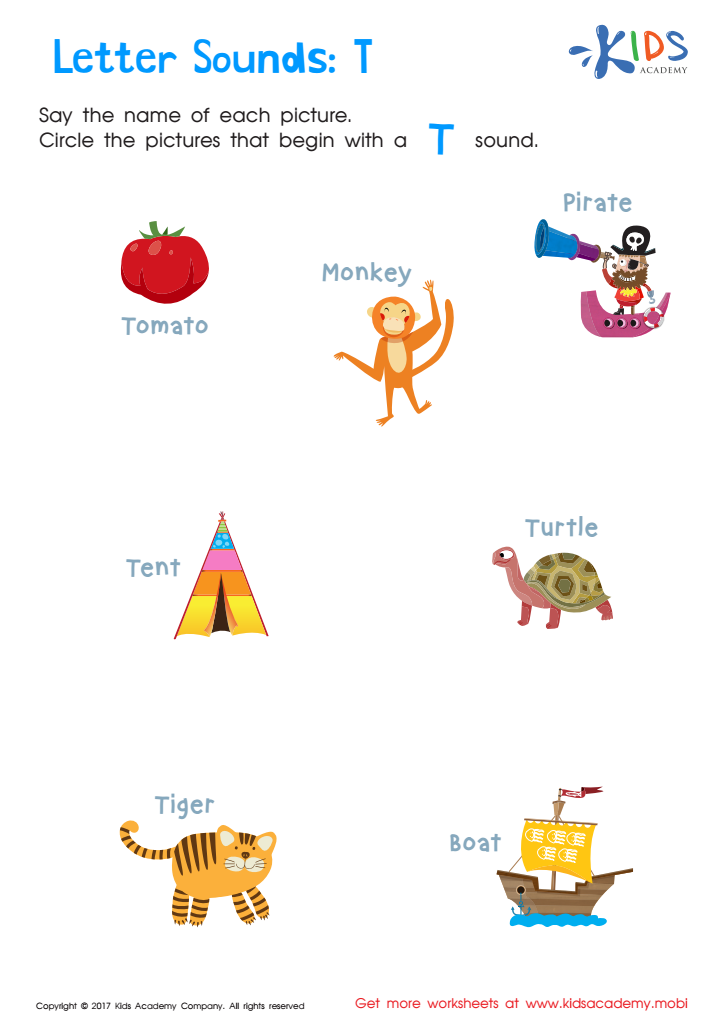
Letter T Sounds Worksheet








Understanding letter-sound correlation, often referred to as phonics, is fundamental for young children's literacy development. For ages 4-9, learning these correlations is essential as it forms the foundation for reading and writing skills. Phonics helps children decode words by linking sounds to letters, making it easier to read unfamiliar words. This skill is critical not only for reading fluency but also for comprehension, enabling children to focus on understanding the text rather than struggling with word recognition.
Parents and teachers should prioritize this aspect because it's a predictor of future academic success. Proficient early readers tend to perform better across subjects, as reading is integral to learning. Young children who grasp letter sounds can spell and write more effectively, fostering confidence in their abilities and encouraging a positive attitude towards learning.
Moreover, early exposure to letter sounds enhances phonemic awareness, the ability to hear and manipulate distinct sounds in words. This skill is a strong indicator of future reading proficiency. Interactive and engaging methods to teach phonics make learning enjoyable and cater to various learning styles, promoting a lifelong love for reading. Ultimately, giving attention to letter-sound correlations equips children with essential tools to navigate their educational journey successfully.