Capitalization rules Easy Upper & Lowercase Letters Worksheets for Ages 4-9
3 filtered results
-
From - To
Introducing our "Capitalization Rules Easy Upper & Lowercase Letters Worksheets for Ages 4-9," designed to simplify early literacy skills for young learners. These fun and interactive worksheets guide children through mastering upper and lowercase letters while learning essential capitalization rules. Perfect for preschool to early elementary-aged kids, our thoughtfully crafted activities enhance their understanding of proper sentence structure and grammar. Help your child differentiate between when to use capital letters and lowercase through engaging exercises that boost confidence and learning enjoyment. Build a solid literacy foundation with these comprehensive and easy-to-follow worksheets today!
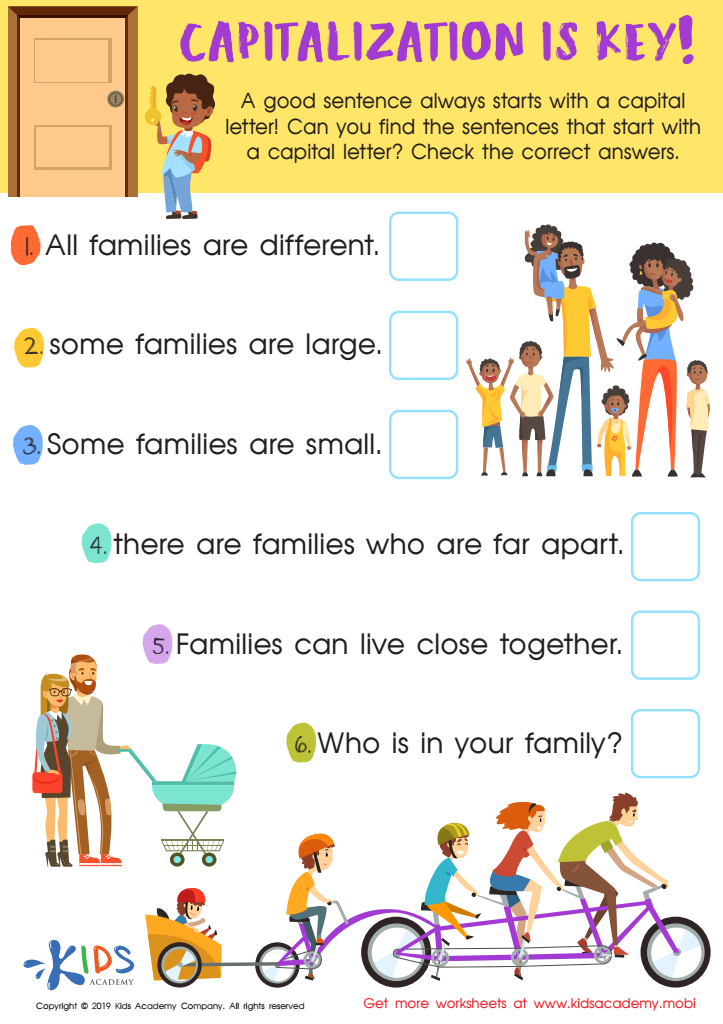
Capitalization Key Worksheet
 Assign to My Students

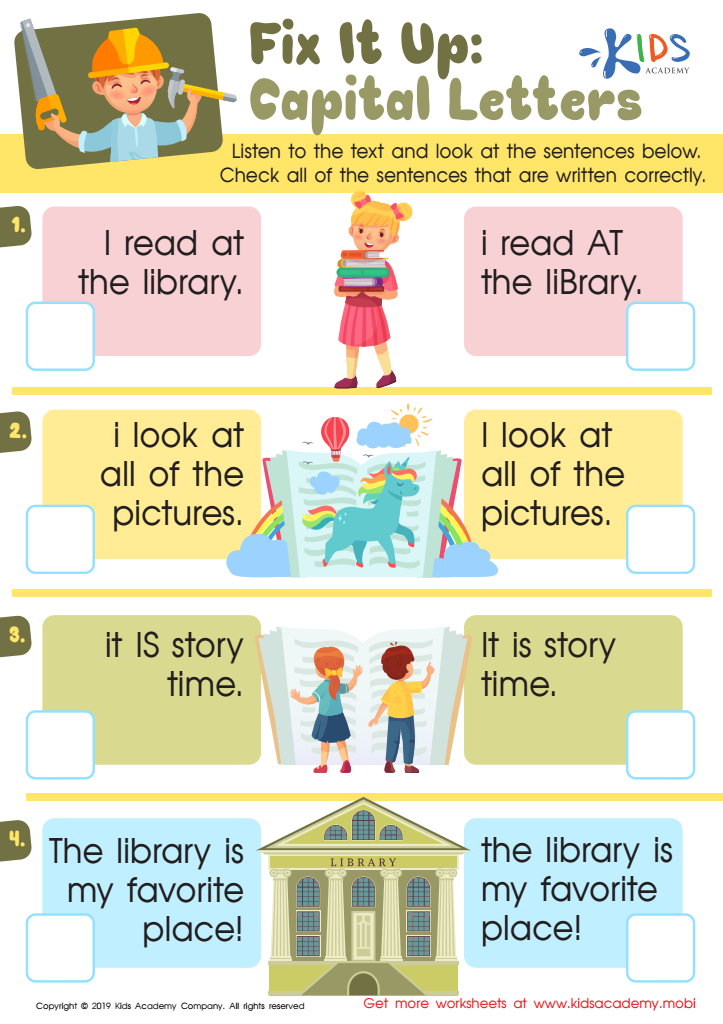
Fix Capital Letters Worksheet

How to Capitalize Worksheet






Understanding capitalization rules is essential for kids aged 4-9 as it lays the foundation for effective communication and literacy skills. At this developmental stage, children's brains are particularly receptive to learning and retaining new information, making it the ideal time to introduce foundational language concepts.
Firstly, proper use of upper and lowercase letters helps children recognize the beginning of sentences, which enhances reading comprehension. Recognizing that a capital letter often starts a sentence helps guide young readers through the text in logical chunks, making it easier to understand.
Secondly, capitalization of proper nouns, including names, places, days of the week, and months, is crucial for clarity and specificity. It helps children distinguish common nouns from specific ones, which is useful in various contexts, from storytelling to everyday communication.
Moreover, learning capitalization instills a sense of discipline and attention to detail. These skills are transferable and can benefit children across various academic subjects and activities.
For parents and teachers, reinforcing these rules efficiently equips children with the skills they need to be confident writers and readers. Starting early also ensures that these concepts become second nature as they progress to higher levels of education, ultimately setting the stage for academic success and effective everyday communication.