Addition Practice Easy Math Worksheets for Ages 4-9 - Page 2
27 filtered results
-
From - To
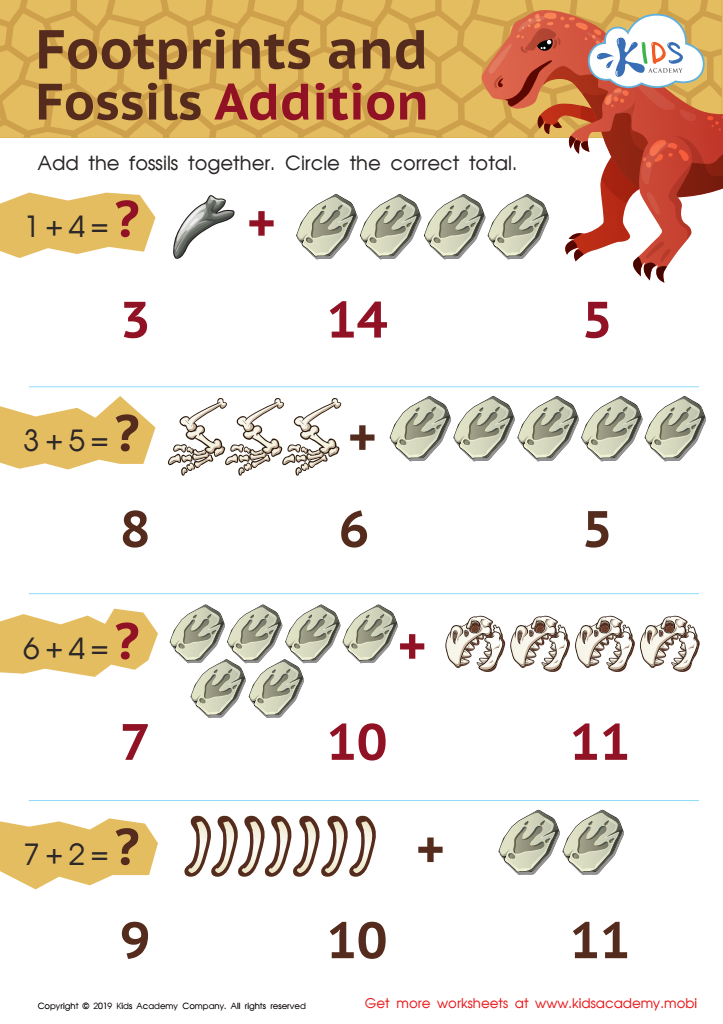
Footprints and Fossils Addition Worksheet
 Assign to My Students
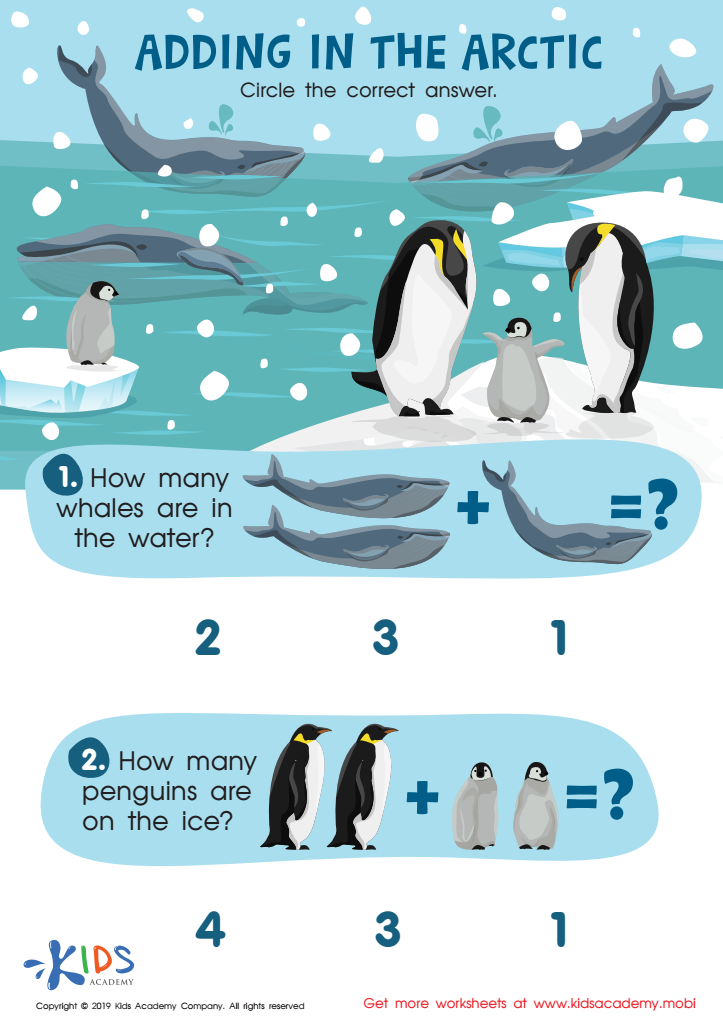
Adding in the Arctic Worksheet
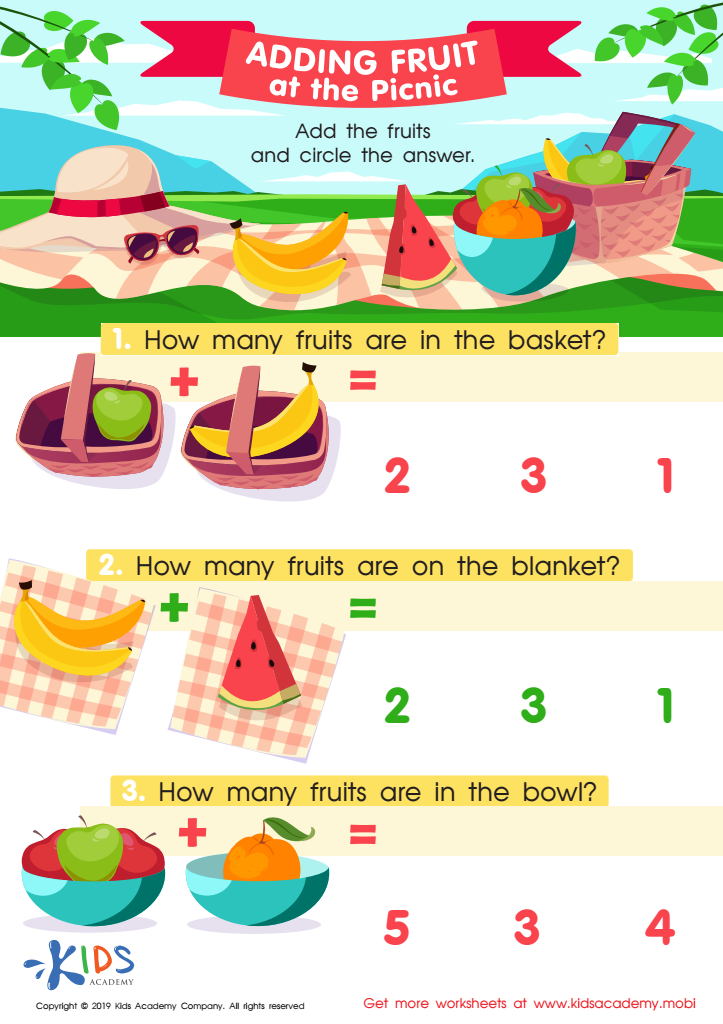
Adding Fruit at the Picnic Worksheet




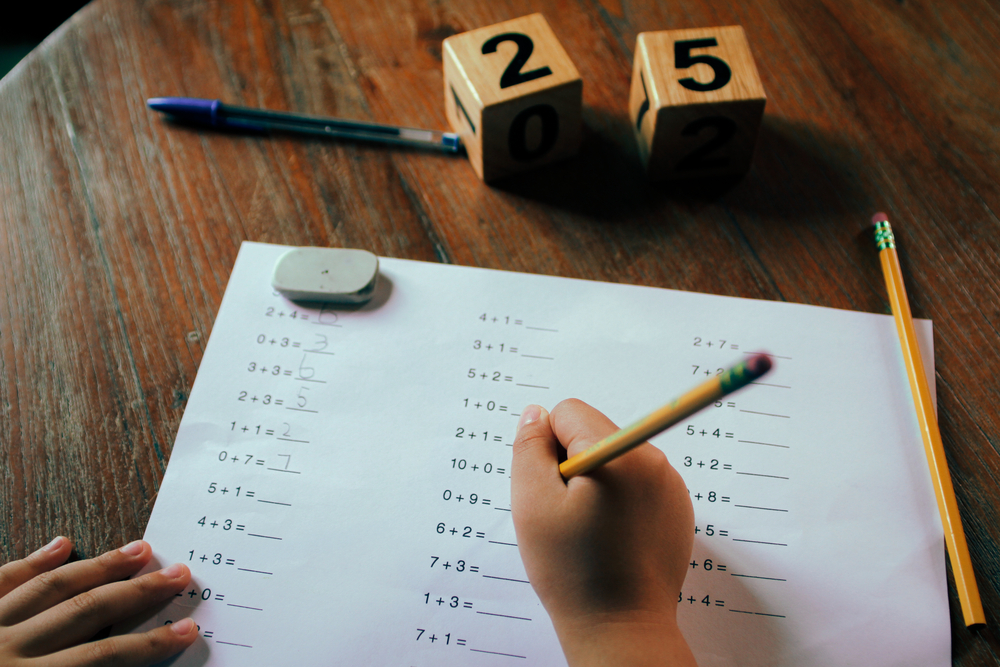



Addition practice is a foundational element of early math education, especially critical for children ages 4-9. During these formative years, a child's brain is highly receptive to learning basic mathematical concepts, including addition, which serves as a cornerstone for more advanced arithmetic and problem-solving skills.
For teachers and parents, facilitating addition practice helps children develop numerical fluency and confidence. When basic addition becomes second nature, students can more easily tackle complex equations and higher-level math with fewer obstacles. This continuous reinforcement fosters logical thinking, enabling children to approach problems systematically and improve their cognitive skills.
Moreover, success in early math is often linked to improved performance in other academic areas and standardized tests. Confidence in performing basic mathematical operations can boost a child's overall self-esteem and academic enthusiasm, paving the way for a positive lifelong relationship with learning.
Through engaging and playful addition exercises, young learners often approach math with more enthusiasm, seeing it as a fun challenge rather than a tedious task. Parents and teachers can also use addition practice as interactive bonding moments, making learning communal and supportive. Thus, focusing on addition practice not only sharpens mathematical skills but also enhances a child's broader educational journey…all while fostering a love for learning and curiosity.








