Addition Practice Easy Math Worksheets for Ages 5-7 - Page 2
27 filtered results
-
From - To
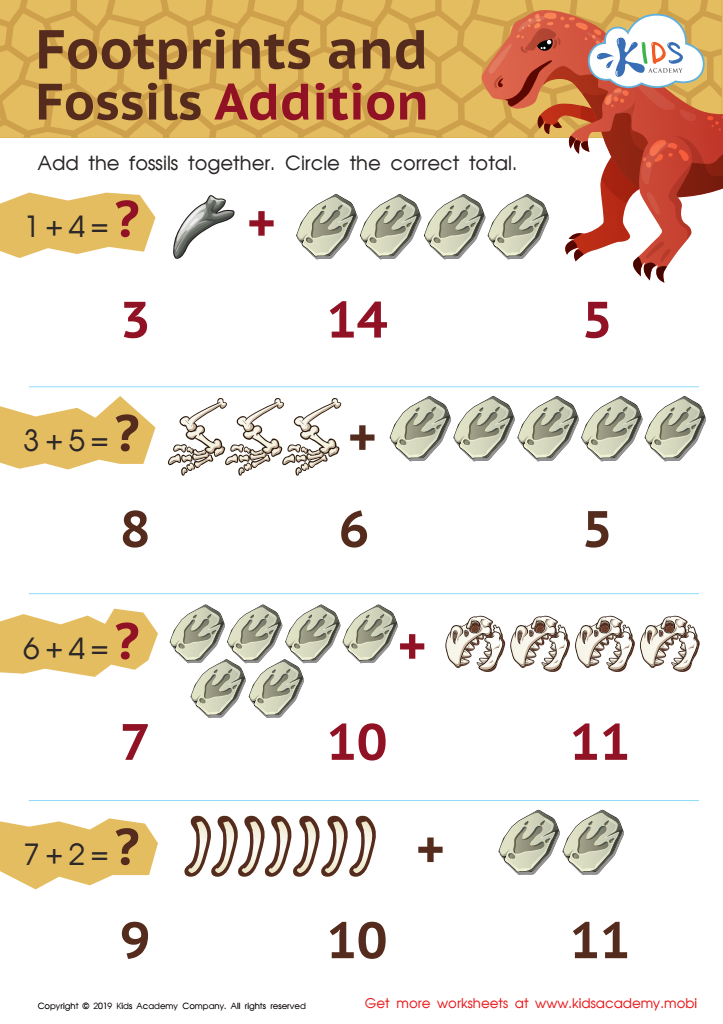
Footprints and Fossils Addition Worksheet
 Assign to My Students
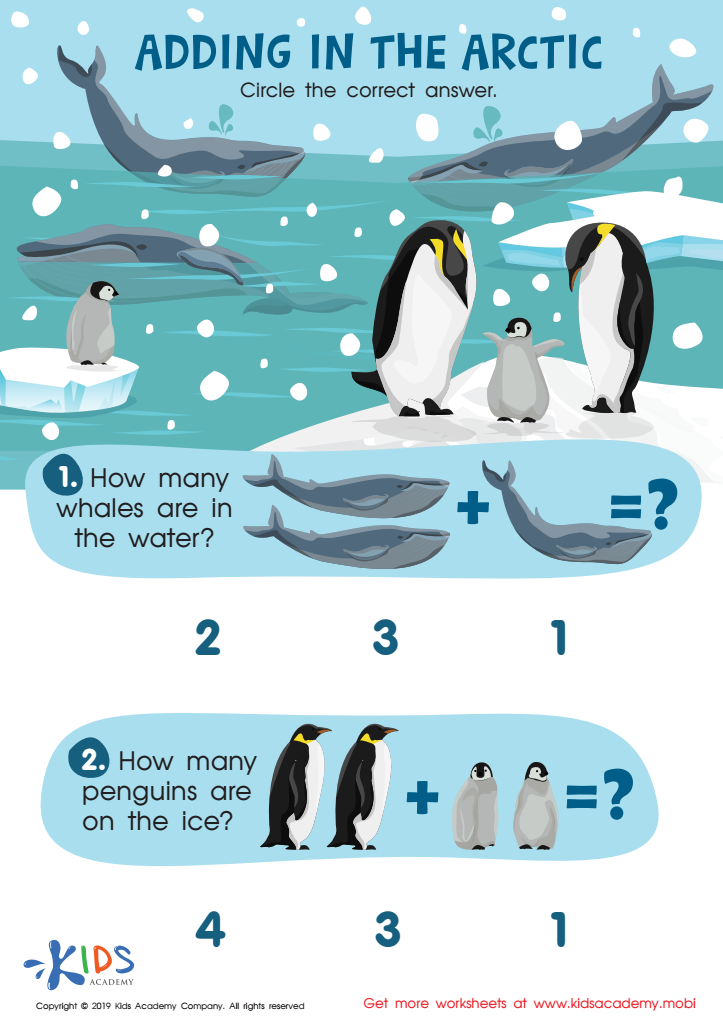
Adding in the Arctic Worksheet
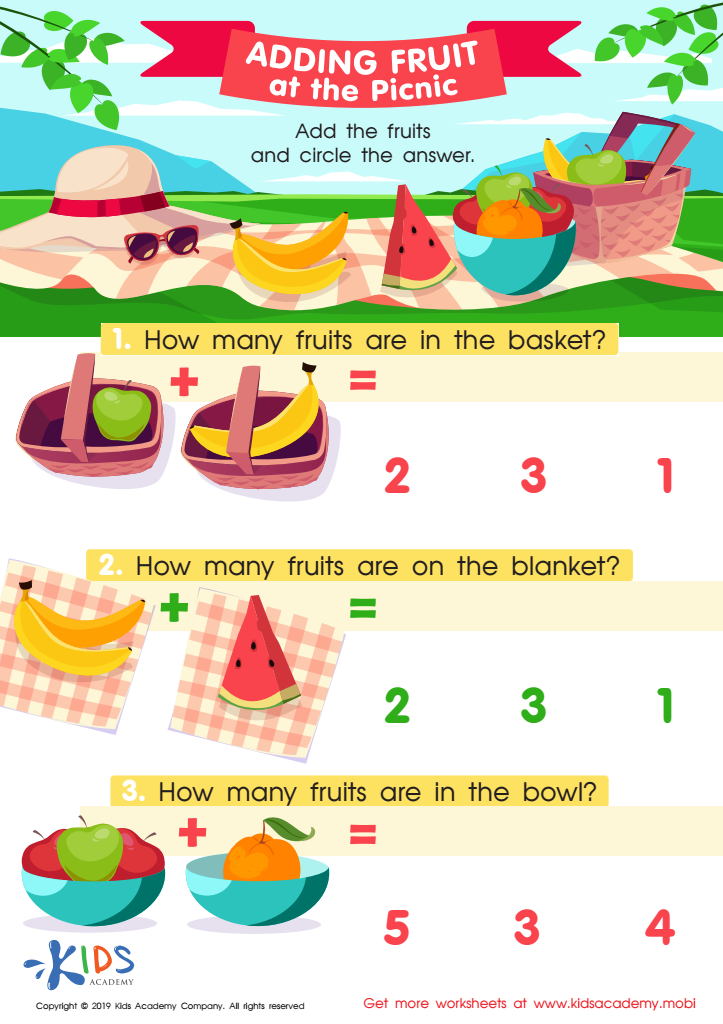
Adding Fruit at the Picnic Worksheet







Parents and teachers should prioritize addition practice for children ages 5-7 because foundational math skills established during this period can significantly influence their future academic success and confidence. At this age, children's cognitive development is ripe for absorbing basic mathematical concepts, and mastering addition lays the groundwork for more advanced arithmetic operations like subtraction, multiplication, and division.
Consistent practice with addition helps enhance problem-solving skills, critical thinking, and logical reasoning. These are not only essential for mathematics but also for understanding concepts in science, technology, engineering, and other subjects. Additionally, early success and familiarity with numbers foster a positive attitude towards mathematics, reducing anxiety and building confidence with numerical tasks.
Moreover, through addition practice, children learn various strategies for computation, such as counting on fingers or using visual aids like number lines and blocks, which can aid in comprehension and retention.
By investing time in addition practice within a supportive and patient learning environment, parents and teachers give children essential tools for academic achievement and practical life skills. Facilitating enjoyable, engaging, and plentiful opportunities for addition practice can thereby ensure that children build a robust mathematical foundation, setting them up for lifelong confidence and competence in mathematics.








