Understanding Quantities Easy Math Worksheets for Ages 5-7
6 filtered results
-
From - To
Introduce your young learner to the world of numbers with our "Understanding Quantities Easy Math Worksheets" tailor-made for children ages 5-7. These engaging worksheets are designed to help kids grasp the concept of quantities through fun, interactive activities. By using images and relatable scenarios, children will learn to count, compare, and understand numbers effortlessly. Perfect for early learners, these worksheets ensure a solid foundation in math, fostering confidence and a love for numbers. Boost your child's math skills today with these easy-to-follow, educational resources from Kids Academy! Ideal for homeschooling or supplemental practice.
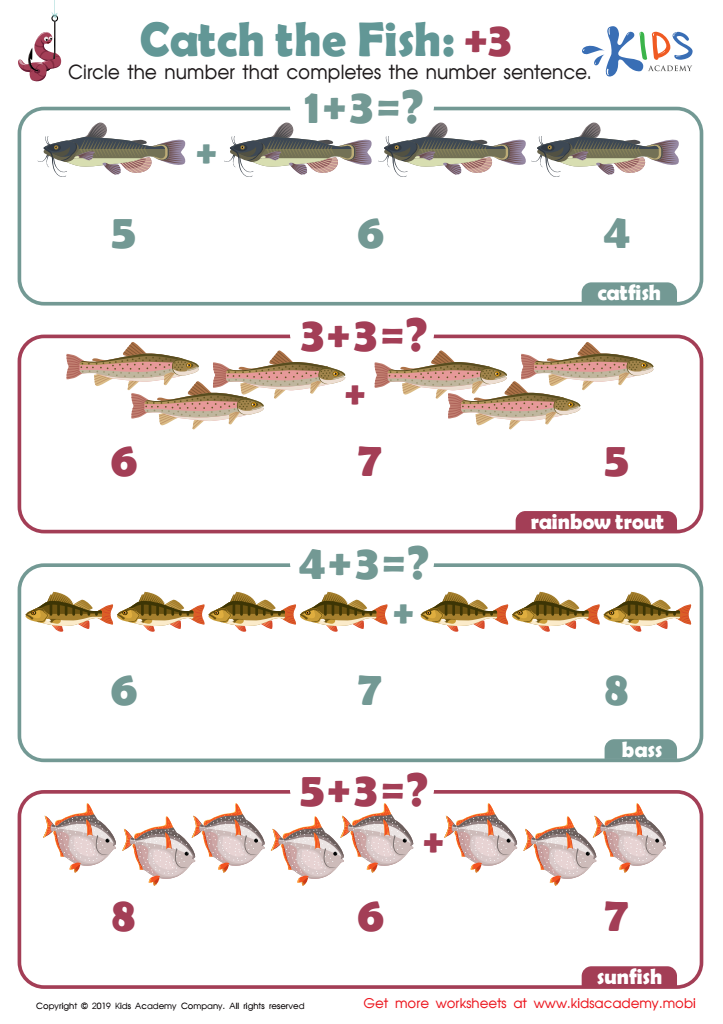
Catch the Fish: +3 Worksheet
 Assign to My Students
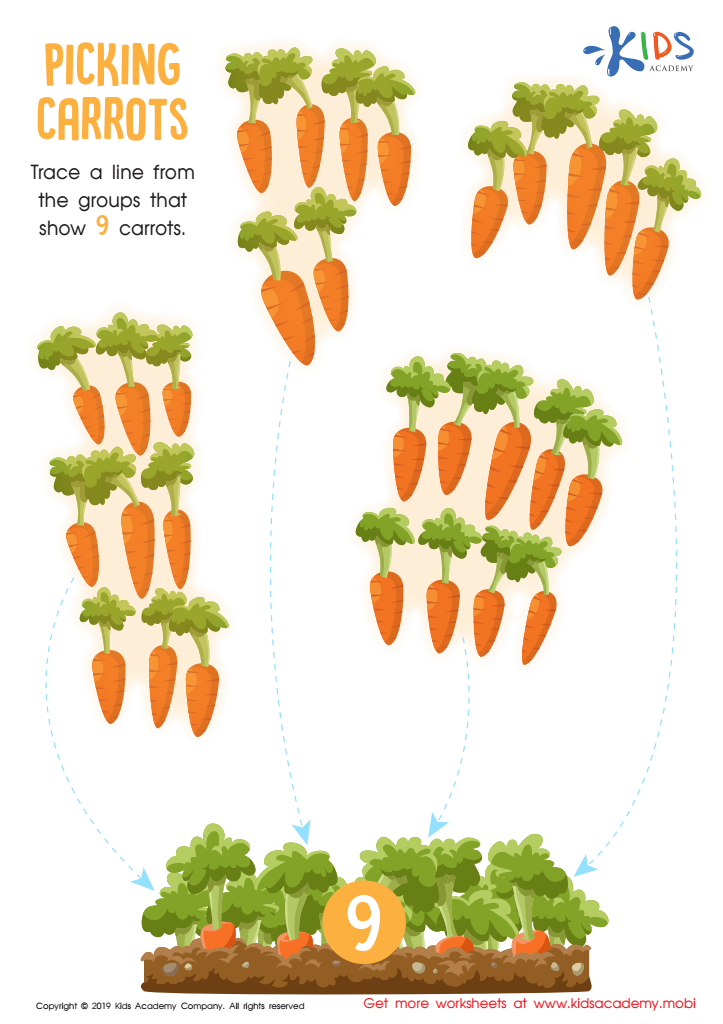
Picking Carrots Worksheet
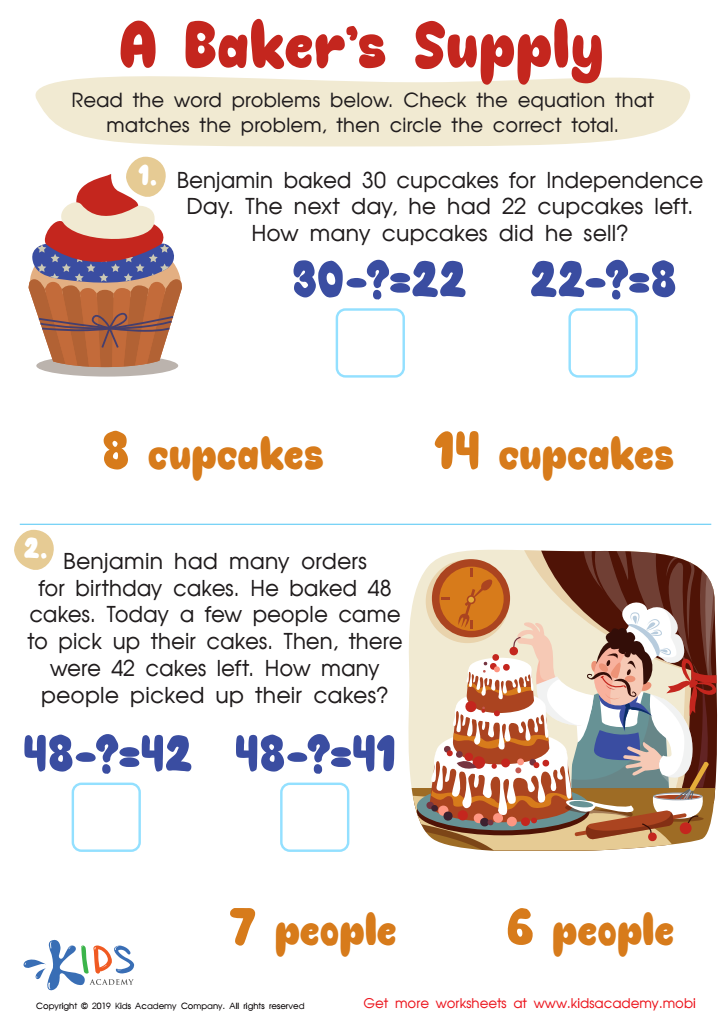
A Baker's Supply Worksheet
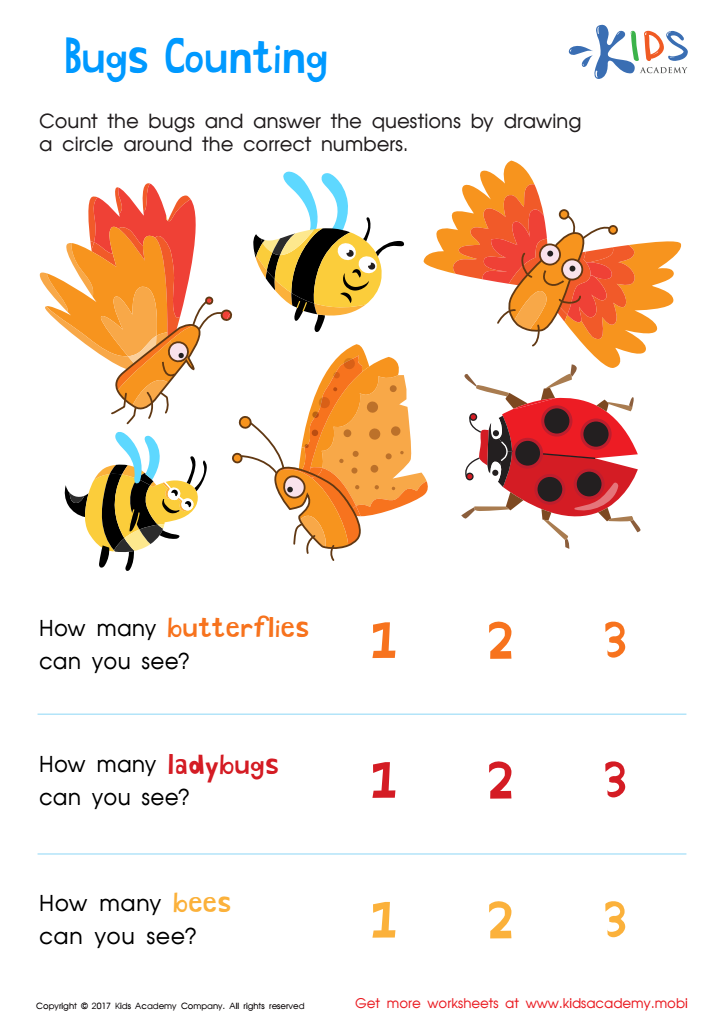
Bugs Counting Worksheet
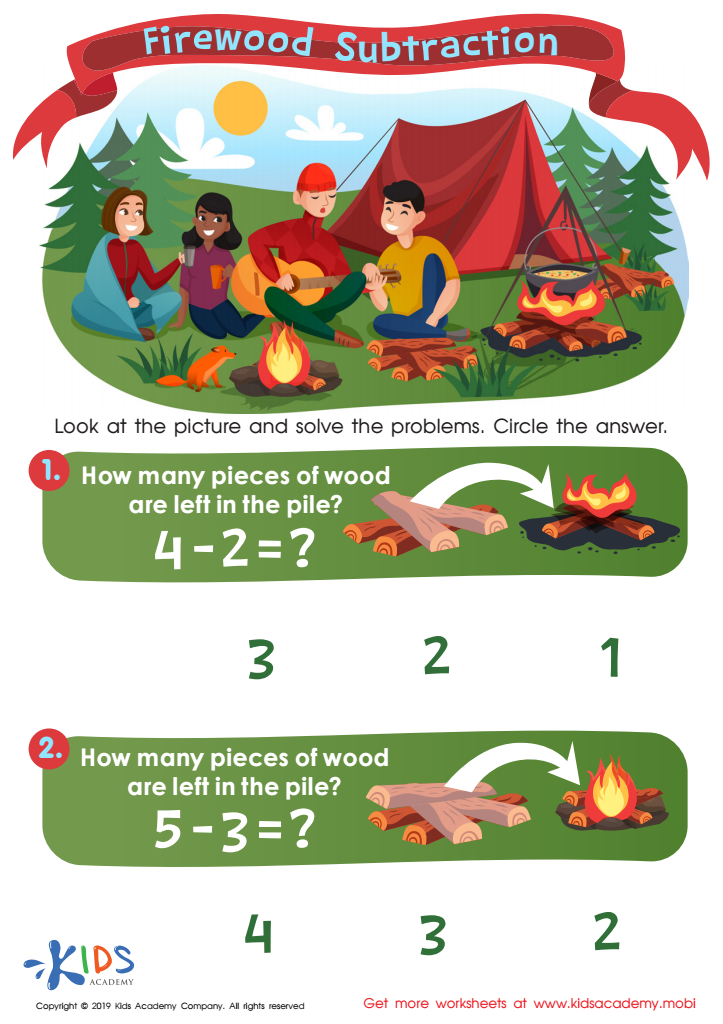
Firewood Subtraction Worksheet
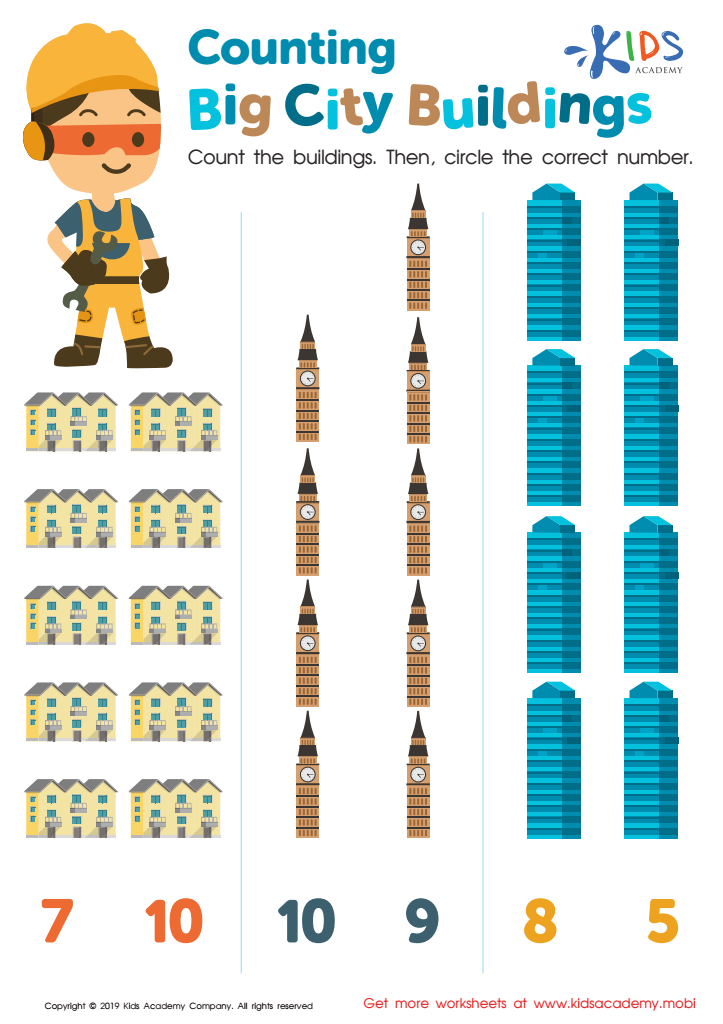
Counting Big City Buildings Worksheet








Understanding quantities in early math is crucial for young children's cognitive and foundational skill development. Ages 5-7 represent a formative period when children transition from basic counting to grasping more complex mathematical concepts. Parents and teachers should prioritize this aspect for several compelling reasons.
Firstly, a solid grasp of quantities nurtures logical thinking and problem-solving skills, essential for daily life and academic success. Quantitative understanding forms the building blocks of arithmetic, enabling children to eventually tackle addition, subtraction, and even multiplication with confidence. It aids in understanding the relationships between numbers, such as greater than, less than, and equal to, which are fundamental underpinnings of later mathematical principles.
Secondly, early math skills are strongly linked to future academic achievements. Studies show that early numerical abilities are predictors of later success in math and even literacy. When children see the world through a quantitative lens, they can better engage in activities involving time, measurements, and even finances as they grow older.
Moreover, fostering a love for math at an early age eliminates the math anxiety that many older students and adults experience. It's vital for parents and teachers to create a positive, engaging learning environment and introduce fun, hands-on activities that make understanding quantities enjoyable, thus laying the groundwork for a lifelong appreciation of mathematics.








