Understanding quantity Easy Math Worksheets for Ages 5-7
3 filtered results
-
From - To
Discover our "Understanding Quantity Easy Math Worksheets for Ages 5-7," designed to build foundational math skills in young learners. These engaging and colorful worksheets help children grasp essential concepts such as counting, comparing, and recognizing quantities through fun exercises. Ideal for early learners, the activities enhance number sense and problem-solving abilities while making learning enjoyable. Perfect for home or classroom use, these worksheets are crafted to cater to different learning styles, ensuring every child progresses with confidence. Start your child’s mathematical journey today with our expertly designed resources!
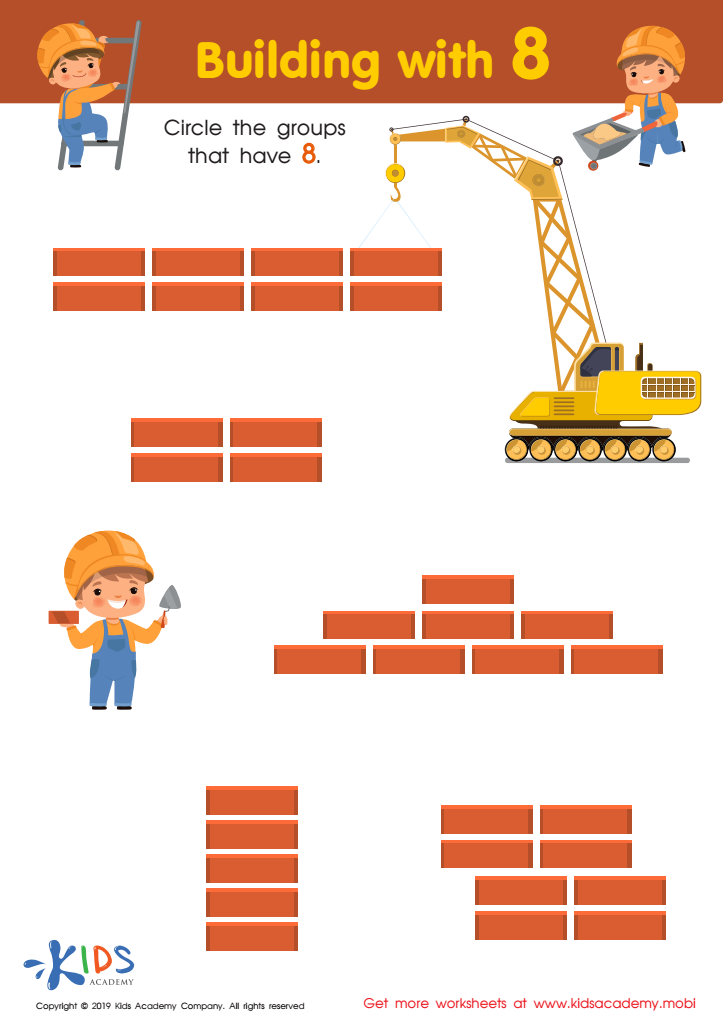
Building with 8 Worksheet
 Assign to My Students
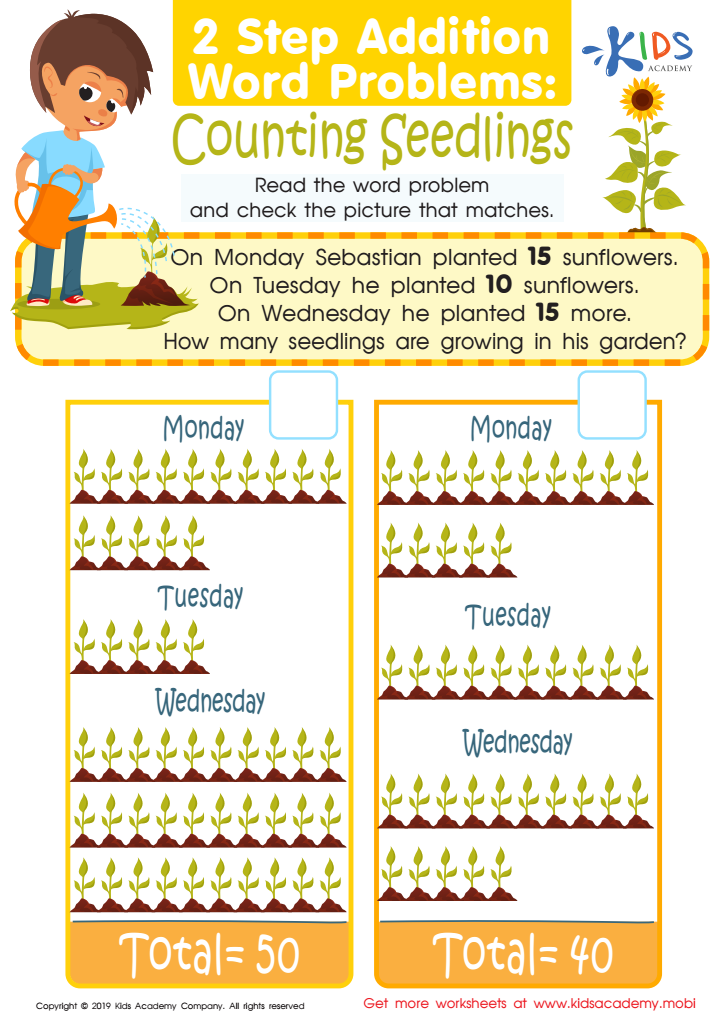
Counting Seedlings Worksheet
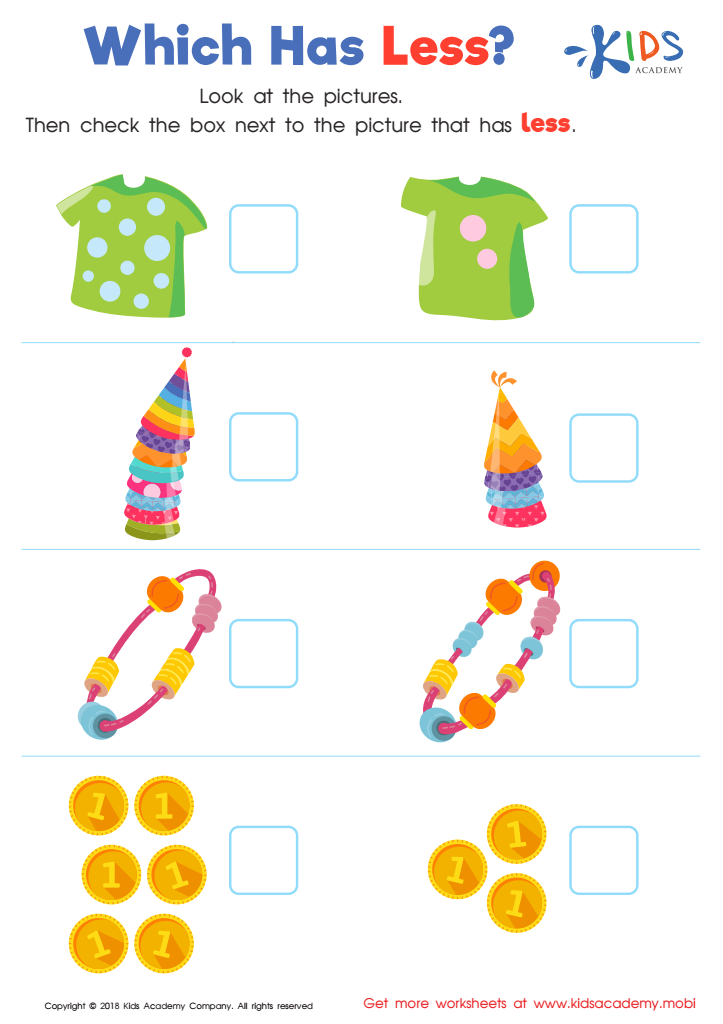
Which Has Less? Worksheet







Understanding quantity and basic math concepts at an early age is crucial for children ages 5-7. Firstly, it serves as the foundation for all future mathematical learning. Grasping the basic ideas of counting, addition, subtraction, and recognizing numbers enhances a child’s ability to understand more complex math problems later on. These early skills are directly linked to academic success in later grades.
Additionally, early math competency is associated with better problem-solving abilities. When children understand quantity, they can more easily apply logical thinking to various situations, not just in math but across different subjects and day-to-day activities.
Early math skills also play a significant role in developing a child's confidence and enthusiasm for learning. Struggling with math at a young age can lead to a lack of confidence, while success fosters a positive attitude towards education.
For teachers, recognizing the importance of early math skills means they can tailor their teaching methods to support each child's learning process, thereby enhancing educational outcomes. For parents, engaging in simple math activities at home, like counting games or number puzzles, provides valuable support and helps instill a lifelong love of learning in their children. Regular interaction with basic math concepts helps make these skills a natural part of the child's world, ensuring better initial understanding and long-term competence.








