Writing practice Easy Letter Recognition Worksheets for 5-Year-Olds
3 filtered results
-
From - To
Discover our Writing Practice Easy Letter Recognition Worksheets, designed specifically for 5-year-olds! These engaging and educational worksheets from Kids Academy make learning fun for young writers. Your child will master letter recognition and improve their handwriting skills with traceable letters and simple exercises. With vibrant illustrations and interactive tasks, our worksheets keep little learners focused and motivated. Perfect for preschool, kindergarten, and homeschooling, these printables ensure that developing literacy skills is an enjoyable experience. Help your child build a strong foundation in writing and reading with our expert-crafted, age-appropriate resources. Start exploring today!
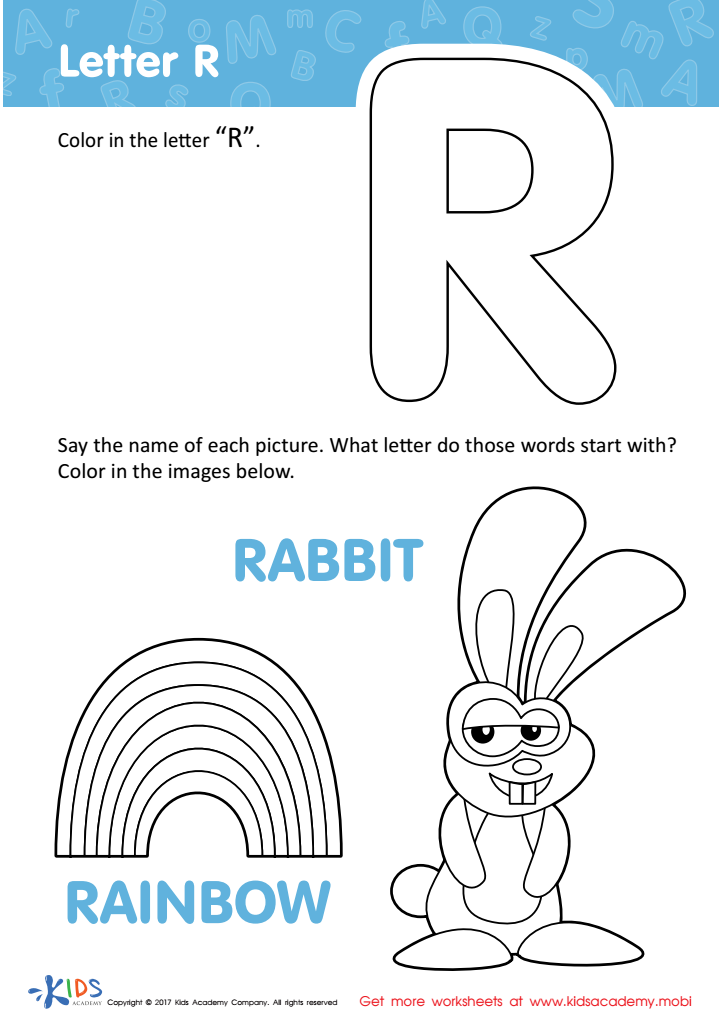
Letter R Coloring Sheet
 Assign to My Students
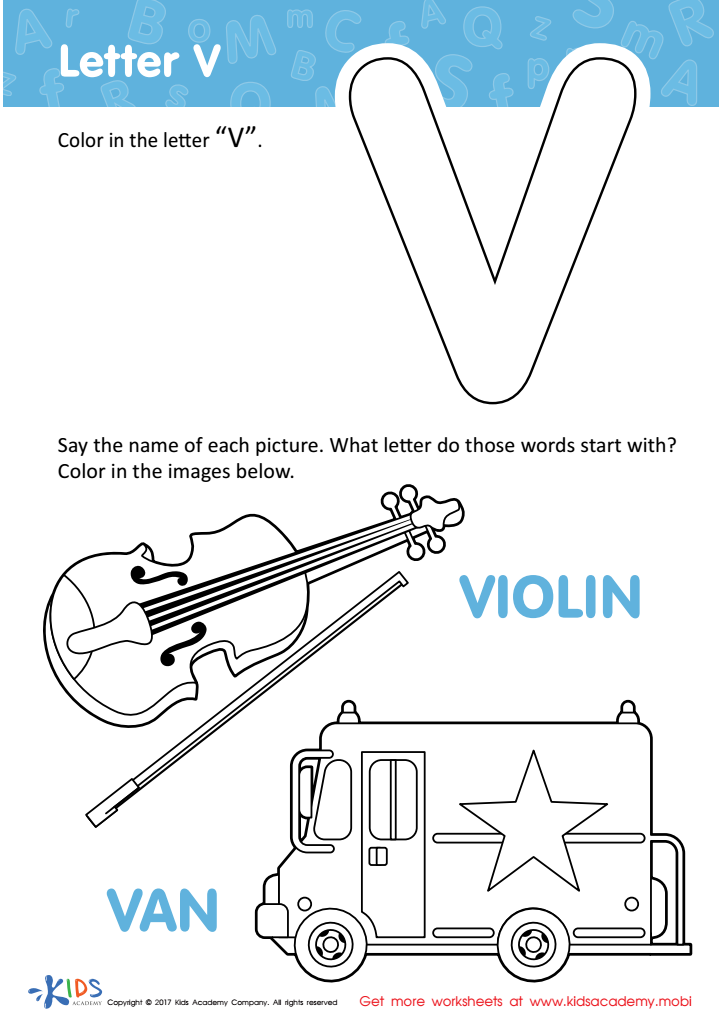
Letter V Coloring Sheet
Assign to My Students
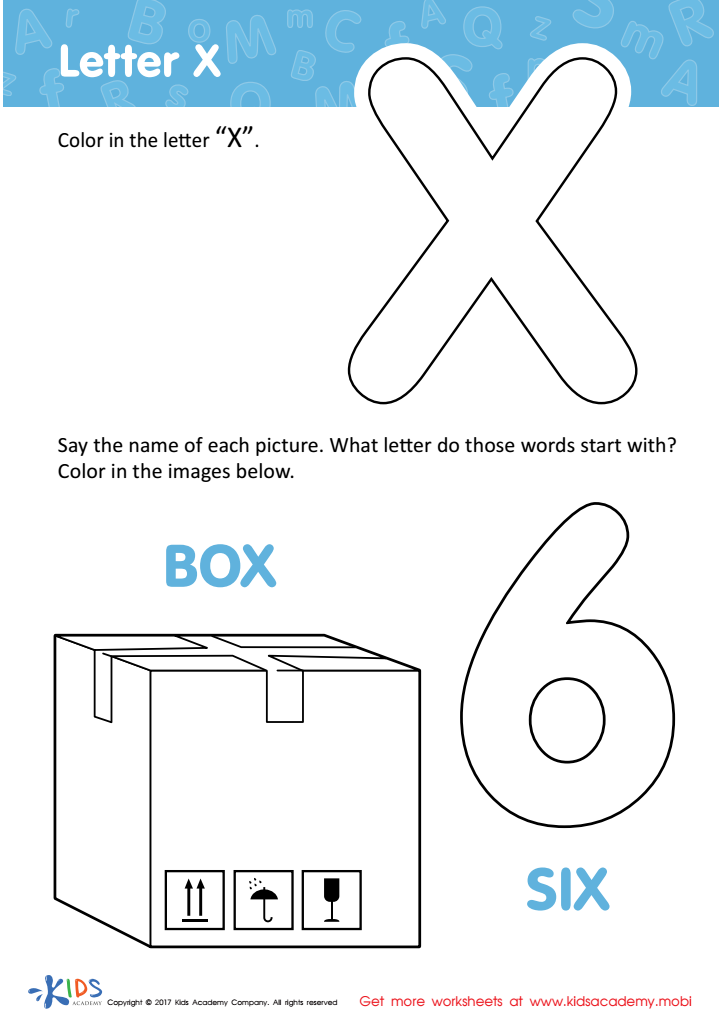
Letter X Coloring Sheet
Assign to My Students








Parents and teachers should place significant importance on writing practice and easy letter recognition for 5-year-olds because these skills form the foundational pillars of literacy. At this formative age, children are naturally curious and are rapidly developing cognitive abilities. Being introduced to writing and letter recognition early on fosters essential communication skills.
Firstly, writing practice helps enhance fine motor skills. By guiding a pencil or crayon to form letters, children develop hand-eye coordination and fine motor control, which are vital for other academic tasks and daily activities. Secondly, recognizing letters is critical in learning to read. When children become familiar with letter shapes, they can start to connect them to sounds, aiding in phonemic awareness, which is a major predictor of reading success.
Additionally, early exposure to writing and letter activities nurtures cognitive development. It encourages children to process information, understand symbolic representation, and grasp language patterns. Socially, it builds confidence as they acquire a sense of accomplishment through mastering each letter, motivating them for further learning.
In sum, emphasizing these foundational skills at an early age ensures children are better equipped to succeed academically, which has long-term benefits for their overall educational journey and future opportunities.