Number comparison Easy Numbers 0–10 Worksheets for 5-Year-Olds
3 filtered results
Difficulty Level
Grade
Age
-
From - To
Subject
Activity
Standards
Explore our engaging "Number Comparison Easy Numbers 0–10 Worksheets" designed specifically for 5-year-olds! These worksheets provide a fun and interactive way for young learners to develop essential math skills. Kids will practice comparing numbers, enhancing their understanding of greater than, less than, and equal to concepts. With vibrant illustrations and a variety of exciting activities, these worksheets make learning enjoyable. Ideal for classroom or home use, they help build a strong foundation in number recognition and comparison. Download and print our worksheets today to inspire your child's love for math and boost their confidence in early numeracy skills!
Favorites
With answer key
Interactive
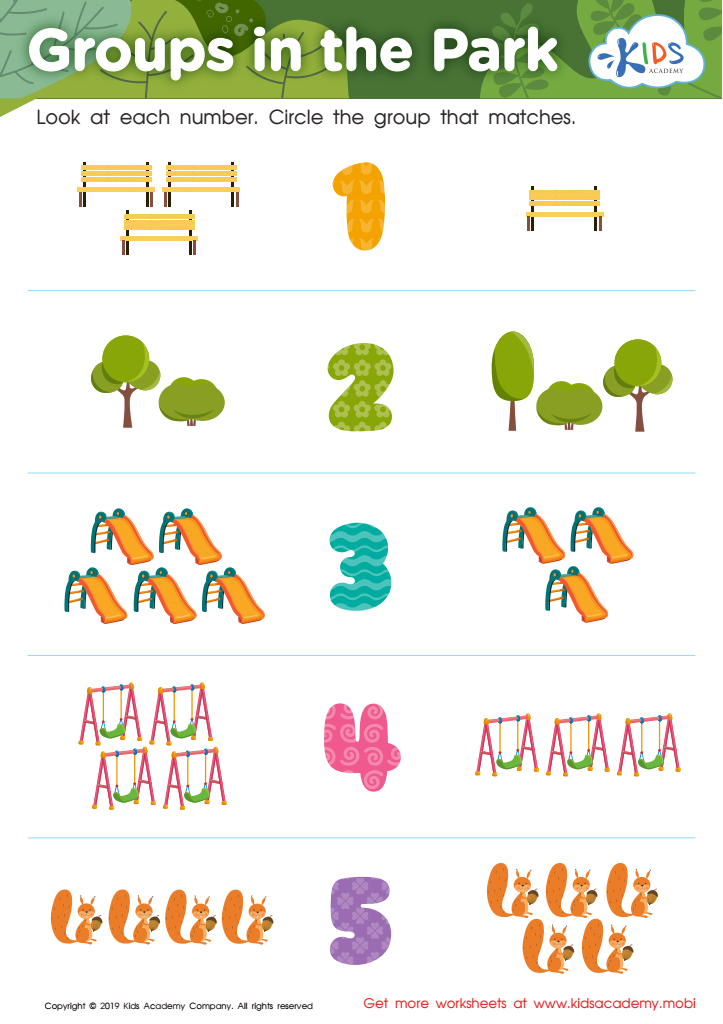
Groups in the Park Worksheet
Take your kids to the park and let them enjoy the freedom to play! Ask them what they love doing most and study a picture together - name items and count objects in the sets, then circle the correct one. It's a fun way for your kids to learn.
 Assign to My Students
Groups in the Park Worksheet
Worksheet
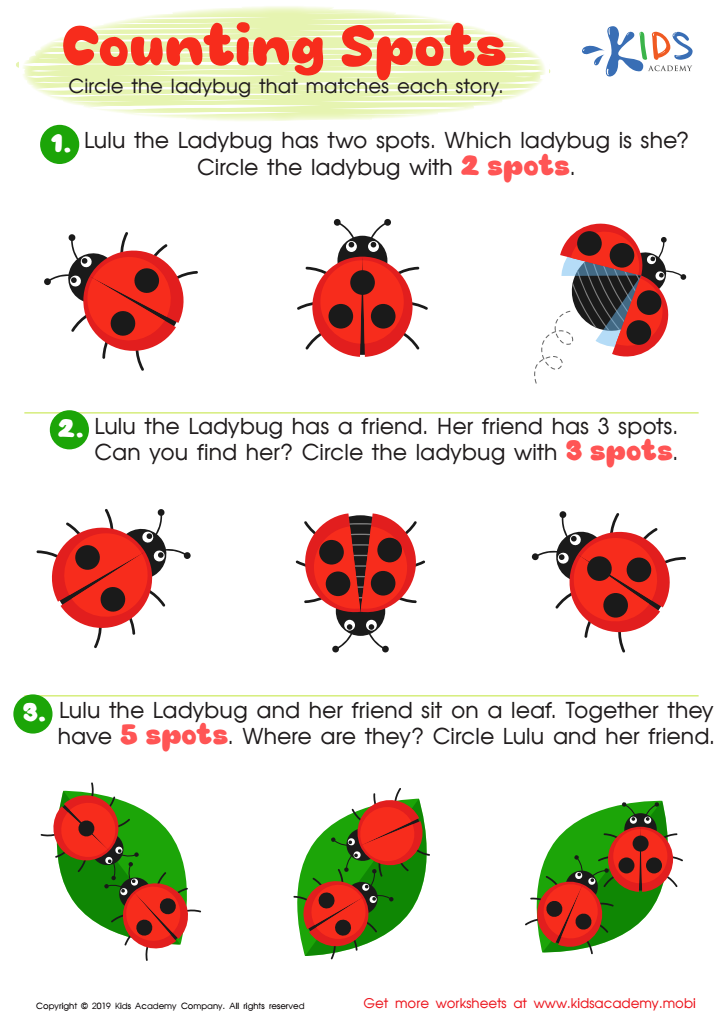
Counting Spots Worksheet
This worksheet is full of cute, colorful ladybugs. Help your kids identify Lulu, who has two spots on her body. Count the spots on each ladybug and circle the one with two spots. Then read the instructions on the other sections and help them find the ladybugs there, too!
Counting Spots Worksheet
Worksheet
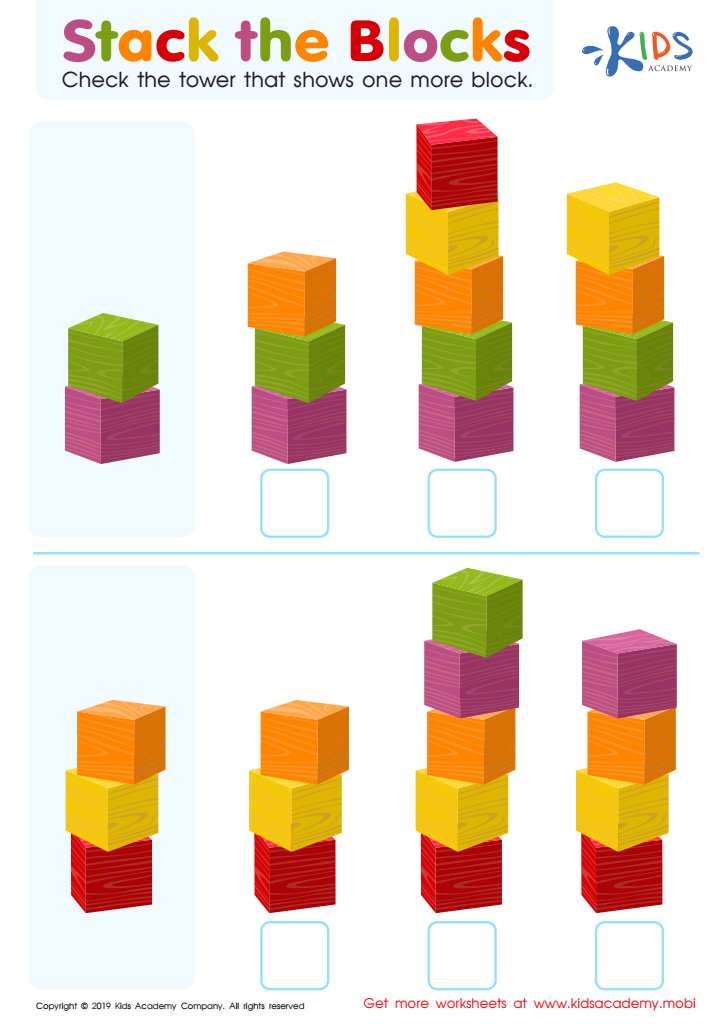
Stack the Blocks Worksheet
Playing with blocks is a great way for kids to learn! They can create patterns, shapes, and even count. In this worksheet, ask them to identify the colors and count each stack of blocks. If they can spot one extra block in the tower, even better! Encourage learning through play with these fun blocks.
Stack the Blocks Worksheet
Worksheet
Join Kids Academy for Free
Who is primarily going to use this learning content?








Parents and teachers should prioritize seamless number comparison for 5-year-olds because it lays the foundation for early numeracy skills essential in future mathematics learning. Understanding number comparison helps children grasp key concepts such as quantity, more or less, and basic addition and subtraction. When children can effectively compare numbers from 0 to 10, they strengthen their critical thinking and problem-solving skills, setting the stage for more complex mathematical concepts later on.
Additionally, mastering number comparison promotes confidence and enthusiasm for learning. Young children thrive on positive reinforcement, and as they become adept at comparing numbers, their self-esteem grows, fostering a love for math that can endure into later years. Engaging in fun activities, such as games or visual aids, makes learning enjoyable while reinforcing these skills in an interactive environment.
Moreover, these foundational skills support parents and teachers in assessing a child's progress and readiness for advanced math topics in school. By focusing on number comparison at this age, caregivers empower children to become independent learners, enhancing their overall educational experience. Ultimately, instilling solid number sense at such an impressionable age creates lifelong benefits, shaping proficient mathematicians. Therefore, prioritizing number comparison is a vital commitment for educational success.