Matching skills Easy Math Worksheets for Ages 6-7
4 filtered results
-
From - To
Enhance your child's learning journey with our "Matching Skills Easy Math Worksheets for Ages 6-7." These engaging worksheets are designed to bolster young learners' abilities by blending fun with foundational math skills. Children will enjoy matching numbers, shapes, and patterns while developing crucial cognitive and problem-solving skills. Perfect for both classroom and home use, these worksheets offer a mix of exciting activities that cater to different learning styles. Easy-to-follow instructions and visually appealing designs make learning enjoyable and effective, turning math practice into a favorite activity for your child. Boost their confidence and proficiency in math with Kids Academy today!
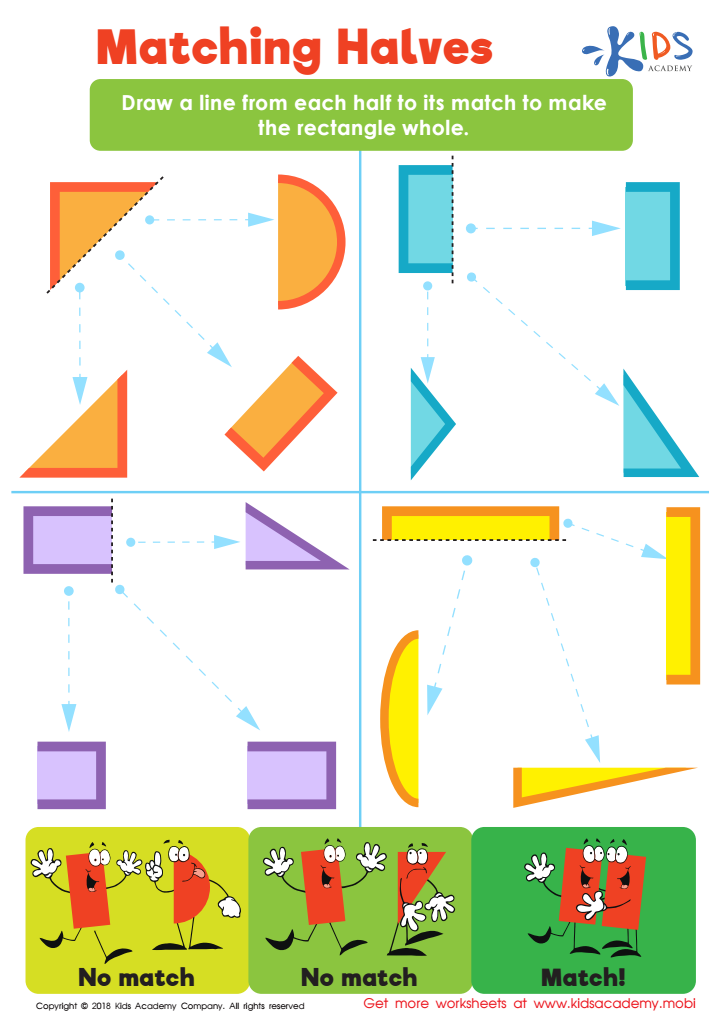
Matching Halves Worksheet
 Assign to My Students
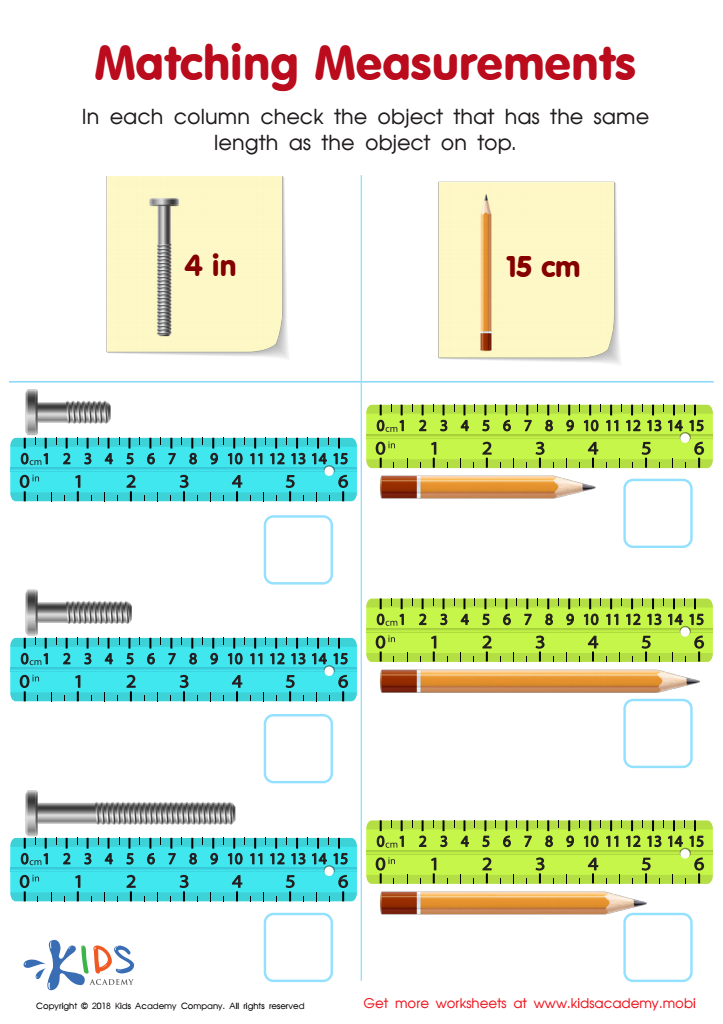
Matching Measurements Worksheet
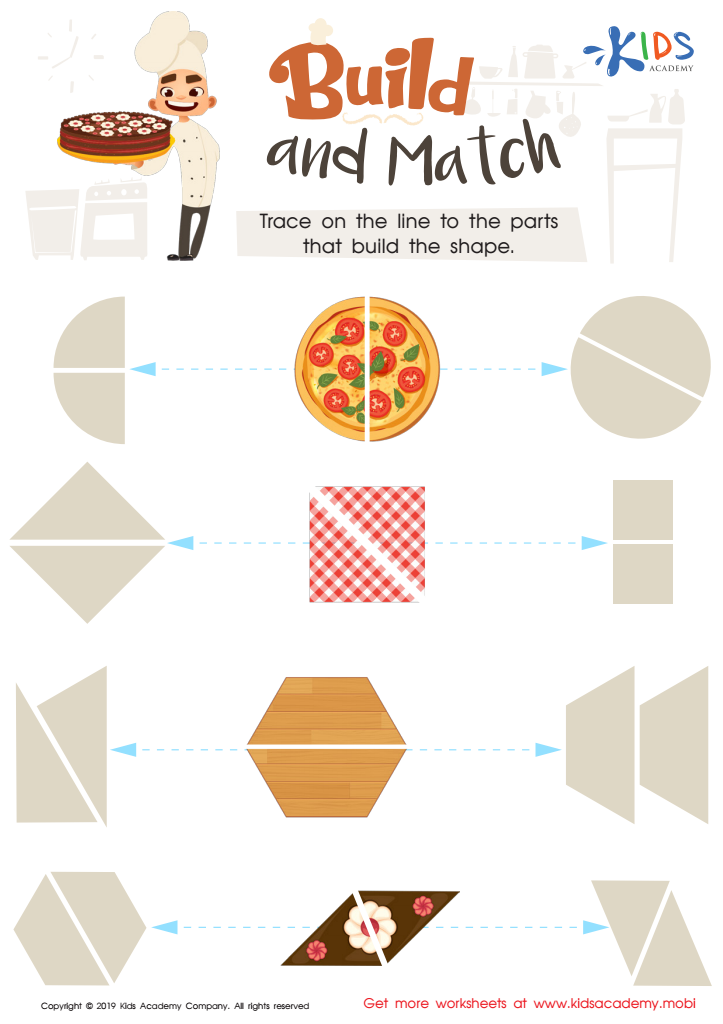
Build and Match Worksheet
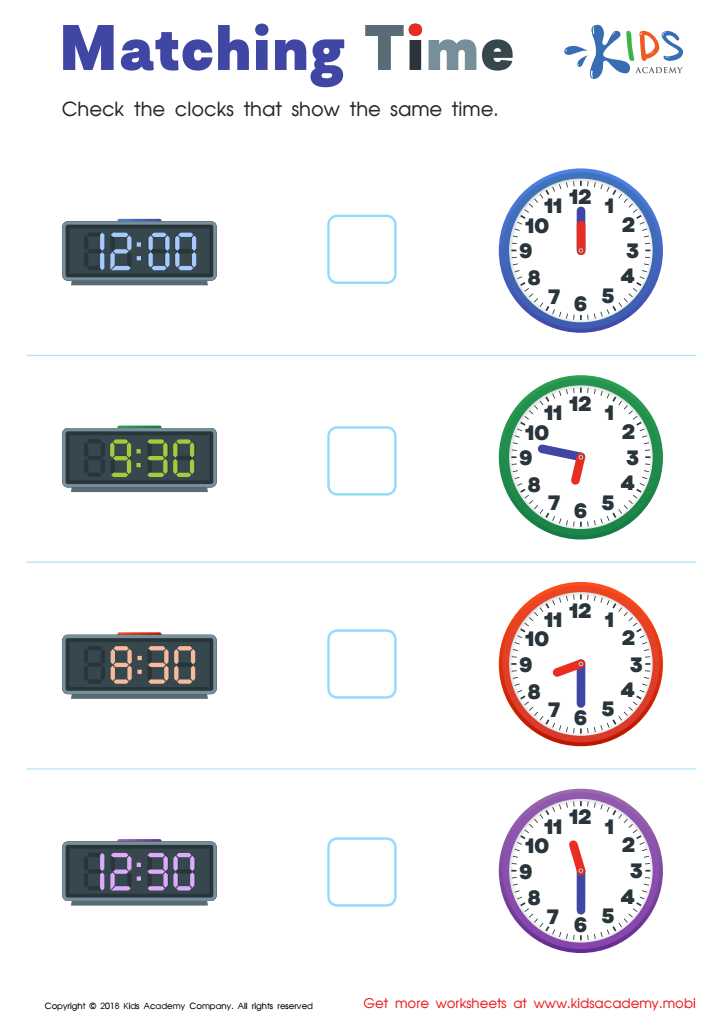
Matching Time Worksheet








Matching skills in easy math activities are essential for children aged 6-7 as they lay the foundation for more complex mathematical concepts and overall cognitive development. At this early stage, children typically grasp numbers, shapes, patterns, and similarities. Effective matching exercises enhance these skills by fostering critical thinking, attention to detail, and problem-solving abilities.
For parents and teachers, incorporating matching activities into the learning process helps children understand relationships between objects and numbers, an essential skill for math proficiency. When kids match objects to numbers or similar shapes, they begin to recognize and establish basic principles of one-to-one correspondence, which is crucial for addition and subtraction.
Engaging in these activities also strengthens visual memory, concentration, and fine motor skills, all of which are pivotal for academic success beyond mathematics. Matching games and worksheets can be made enjoyable and interactive, instilling a sense of achievement in young learners which boosts their confidence and interest in the subject.
By caring about and prioritizing matching skills in early mathematics education, parents and teachers ensure that children build a strong numerical foundation. This investment in their early skills ultimately sets the stage for future competencies in math and other learning areas.








