Counting practice Easy Addition & Subtraction Worksheets for Ages 6-9
5 filtered results
-
From - To
Discover our Counting Practice Easy Addition & Subtraction worksheets designed for children aged 6 to 9. Enhance your child's math skills with engaging exercises that cover fundamental addition and subtraction. These worksheets help reinforce number recognition, improve problem-solving abilities, and boost confidence in basic arithmetic operations. Perfect for teachers and parents, our expertly crafted resources simplify math concepts, making learning enjoyable and accessible. Empower young learners to excel in math with our fun, interactive counting practice activities. Visit Kids Academy for free, printable worksheets that support your child's educational journey towards mathematical proficiency.
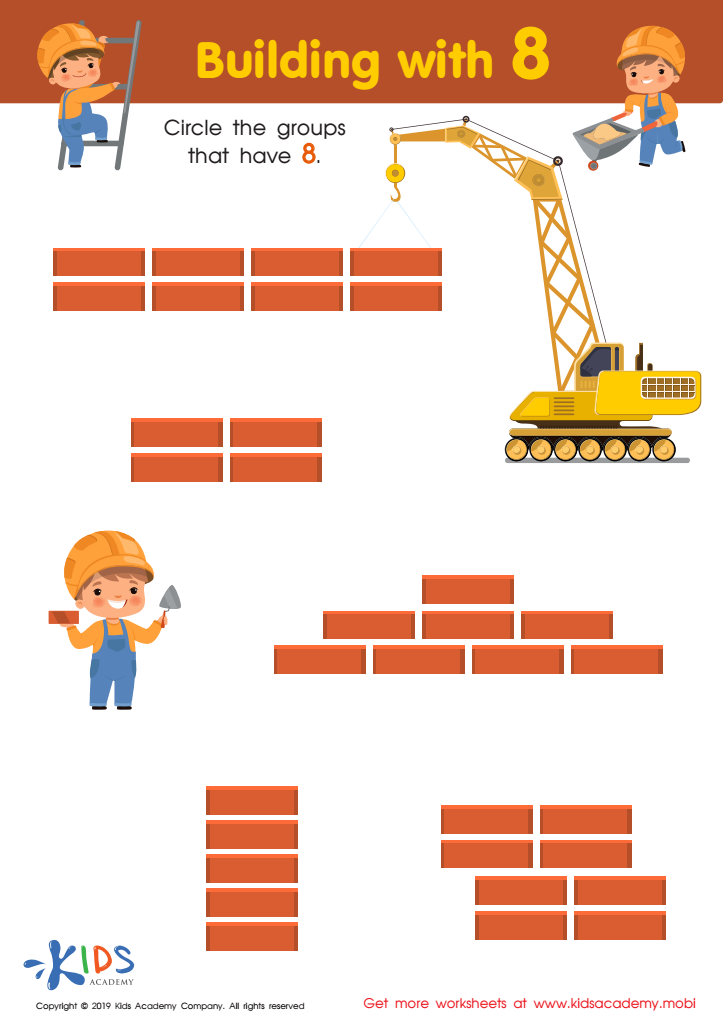
Building with 8 Worksheet
 Assign to My Students
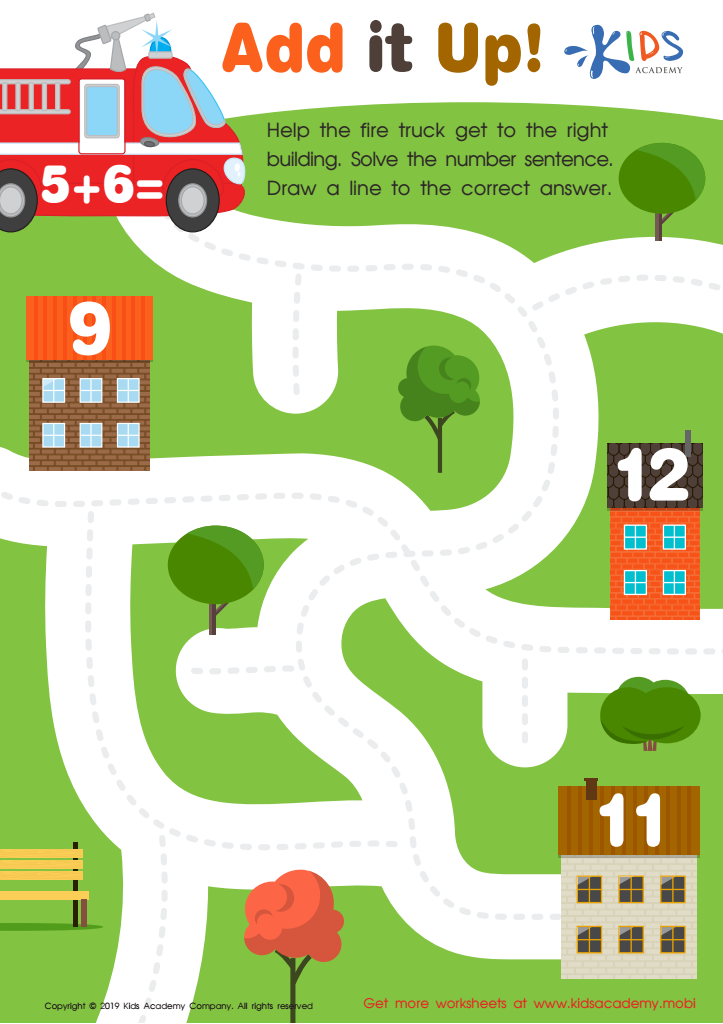
Add it Up Worksheet
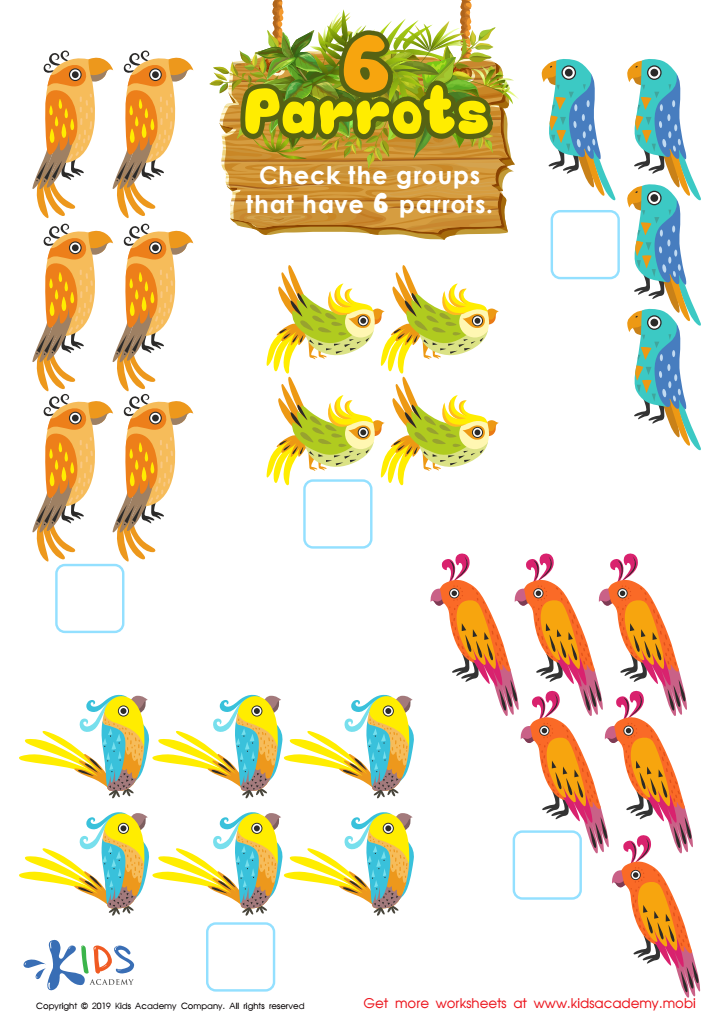
6 Parrots Worksheet
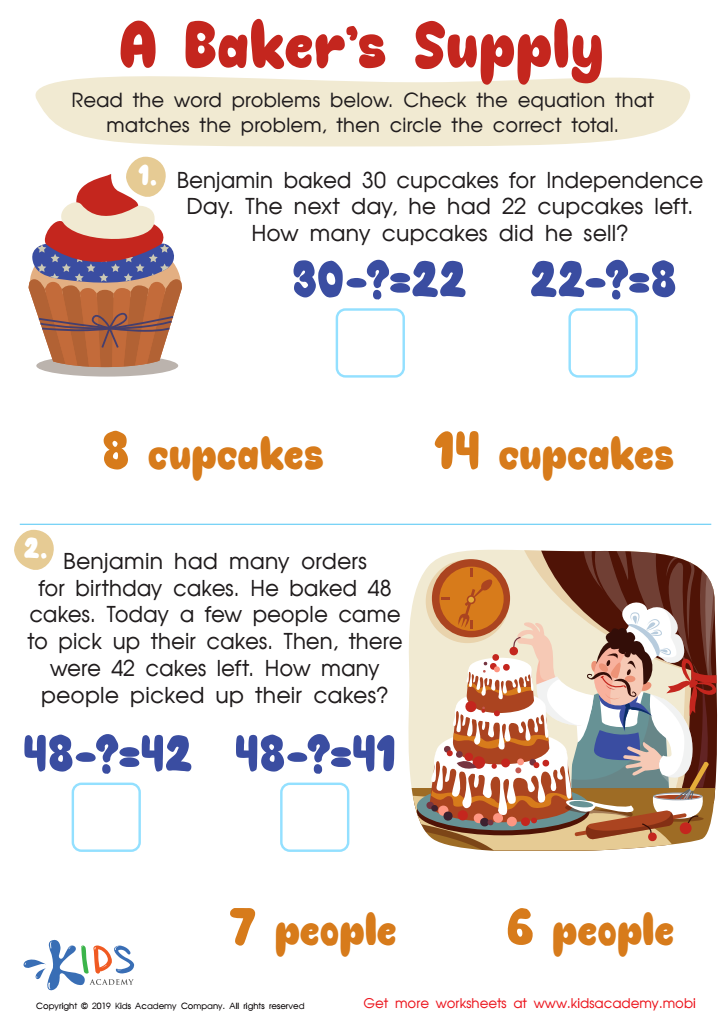
A Baker's Supply Worksheet
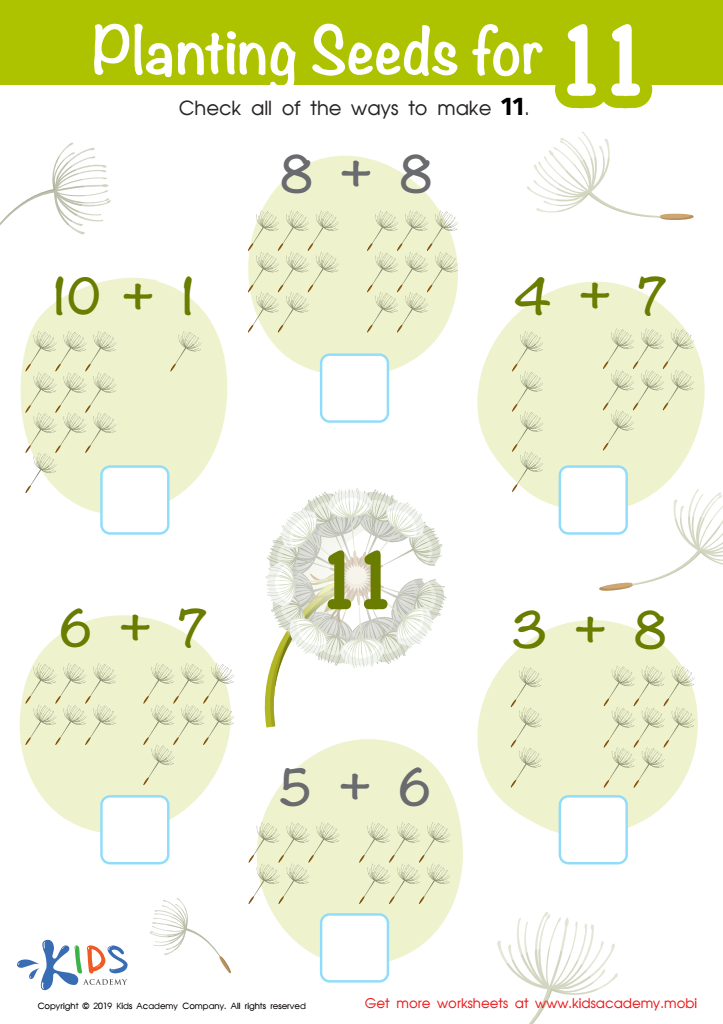
Planting Seeds for 11 Worksheet








Counting practice, along with easy addition and subtraction exercises, is essential for children ages 6-9 as it lays the foundation for their mathematical understanding and numerical literacy. During these formative years, children are developing critical cognitive skills that will support their academic progress.
Firstly, these activities help in the development of basic arithmetic skills. By consistently practicing counting, addition, and subtraction, children can grasp fundamental concepts that are the basis for more complex mathematical operations. Mastery of these basics boosts confidence and fosters a positive attitude toward math in general.
Moreover, early arithmetic practice also enhances problem-solving skills. Through simple addition and subtraction, children learn how to approach problems methodically and logically, enhancing their ability to think critically. This kind of mental processing is not confined to math alone but extends to everyday decision-making and comprehending other academic subjects.
Additionally, integrating counting and basic math exercises into daily routines supports better memory retention. Repetition solidifies their understanding and makes it easier to retrieve information as needed. Finally, engaging in math activities can be fun and enjoyable, providing opportunities for positive reinforcement from teachers and parents, thereby motivating children to continue learning. Therefore, the importance of developing these foundational skills can't be overstated for nurturing well-rounded, academically prepared children.








