Problem-solving abilities Easy Addition & Subtraction Worksheets for Ages 6-9
5 filtered results
-
From - To
Enhance your child's problem-solving skills with our Easy Addition & Subtraction Worksheets designed for ages 6-9. These engaging worksheets from Kids Academy focus on building fundamental math competencies through fun and interactive exercises. Children will develop their ability to solve problems step-by-step while mastering basic arithmetic. Our carefully crafted activities encourage analytical thinking, precision, and confidence, catering to different learning paces. Perfect for classroom use or extra practice at home, these worksheets make math both accessible and enjoyable. Start your child on a journey towards mathematical proficiency with our expertly designed resources!
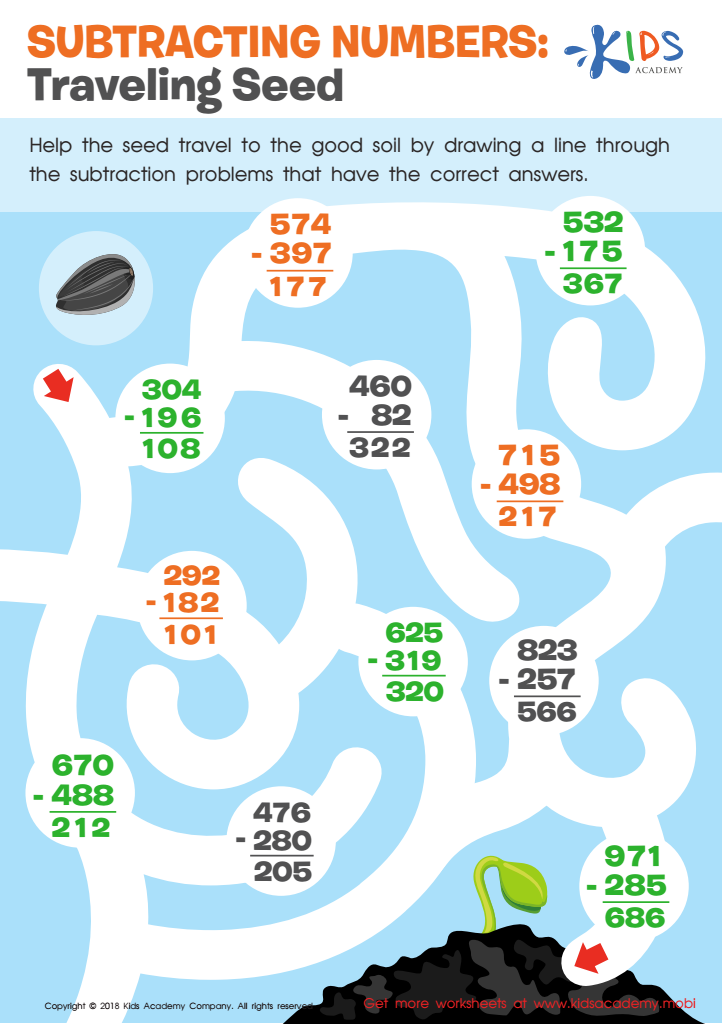
Subtracting Numbers: Traveling Seeds Worksheet
 Assign to My Students
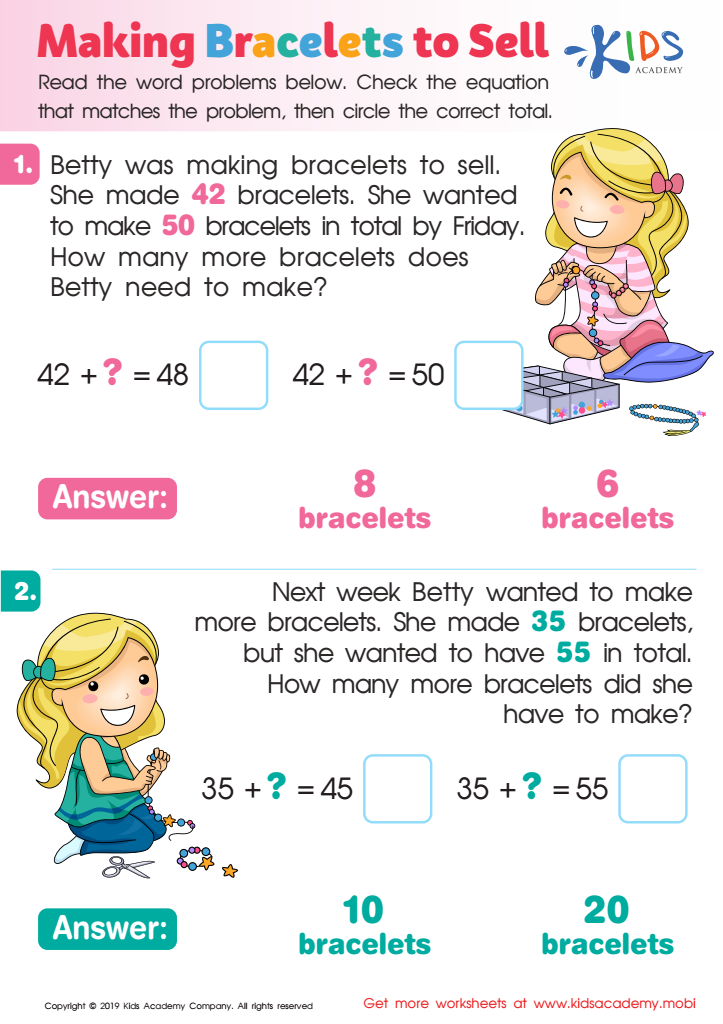
Making Bracelets to Sell Worksheet
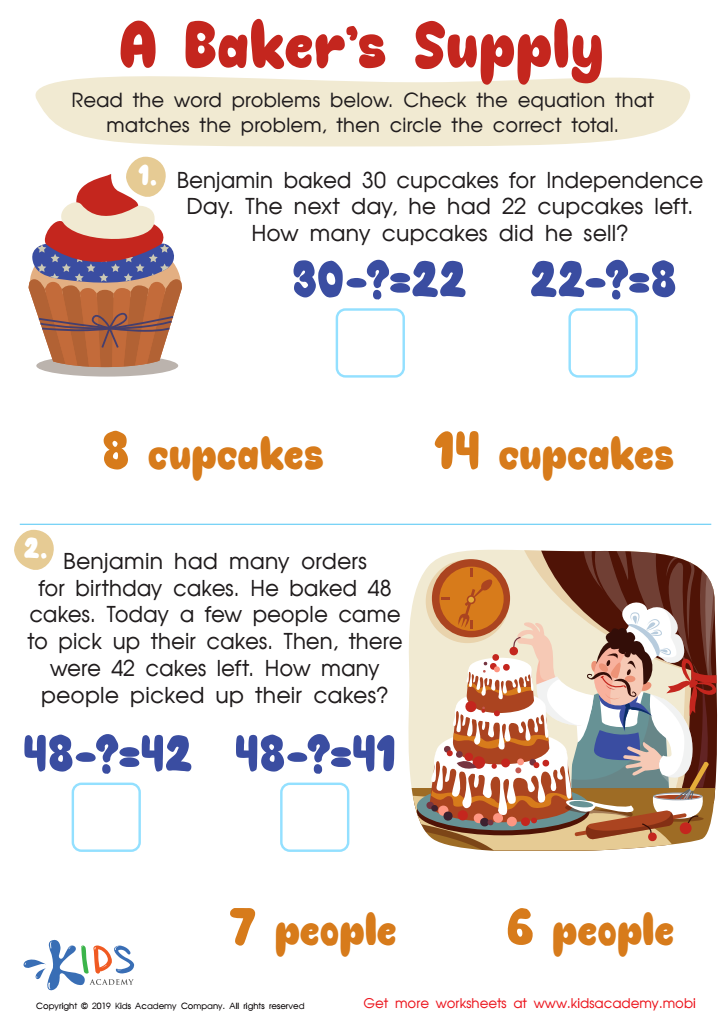
A Baker's Supply Worksheet
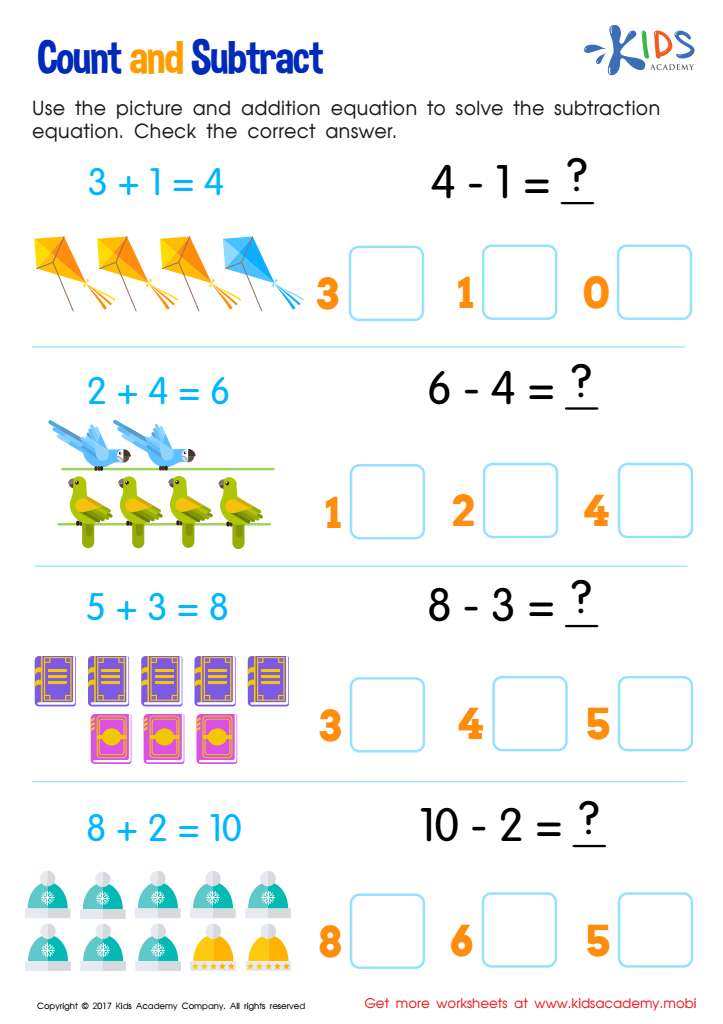
Count and Subtract Worksheet
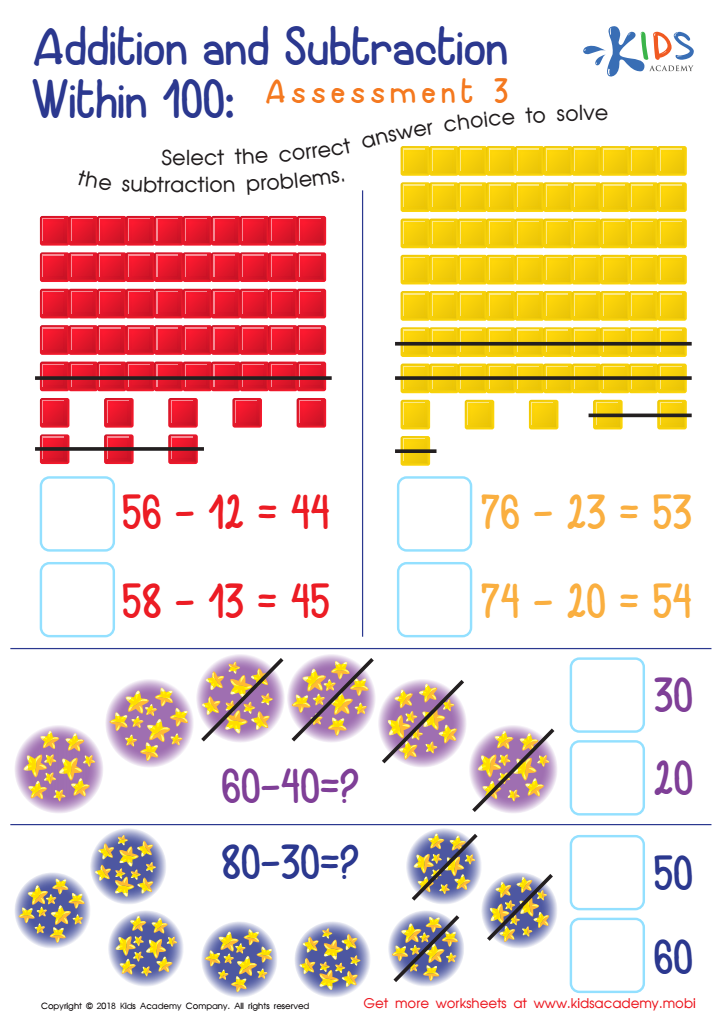
Addition and Subtraction Within 1: Assessment 3 Worksheet








Developing problem-solving abilities through easy addition and subtraction is crucial for children aged 6-9 because it builds a strong foundation for future learning and daily life skills. At this tender age, children are highly receptive to new concepts, and grasping basic arithmetic fosters logical thinking and cognitive development.
Mastering these foundational skills in a supportive environment helps children gain confidence in their abilities. When encountering addition and subtraction problems, kids learn to approach challenges methodically, analyze potential solutions, and arrive at answers systematically. This process hones their logical reasoning and critical thinking, which are transferable to other subjects and real-life scenarios.
Furthermore, early proficiency in addition and subtraction sets the stage for more complex mathematical concepts. A strong grasp of these basics supports the understanding of multiplication, division, fractions, and more advanced operations down the road. This cumulative learning ensures smoother progression through their education.
Parents and teachers should prioritize these skills to ensure children not only excel academically but also develop problem-solving competencies that are essential throughout life. Encouraging practice with fun activities, games, and practical applications like counting change or measuring ingredients can bridge learning with everyday experiences, making math relatable and enjoyable for young minds.








