Understanding sequencing Easy Numbers Worksheets for Ages 6-9
3 filtered results
-
From - To
Understanding Sequencing Easy Numbers Worksheets for Ages 6-9 help bolster essential cognitive skills through fun, engaging activities tailored to young learners. Perfect for children aged 6 to 9, these worksheets focus on the foundational math concepts of number sequencing. Designed to develop critical thinking and problem-solving abilities, the activities guide kids in recognizing patterns, understanding consecutive numbers, and improving numerical fluency. By completing these worksheets, children will build greater confidence in their math abilities, setting a strong foundation for future math success. Created by educational experts and easily accessible online, they ensure learning is both effective and enjoyable.
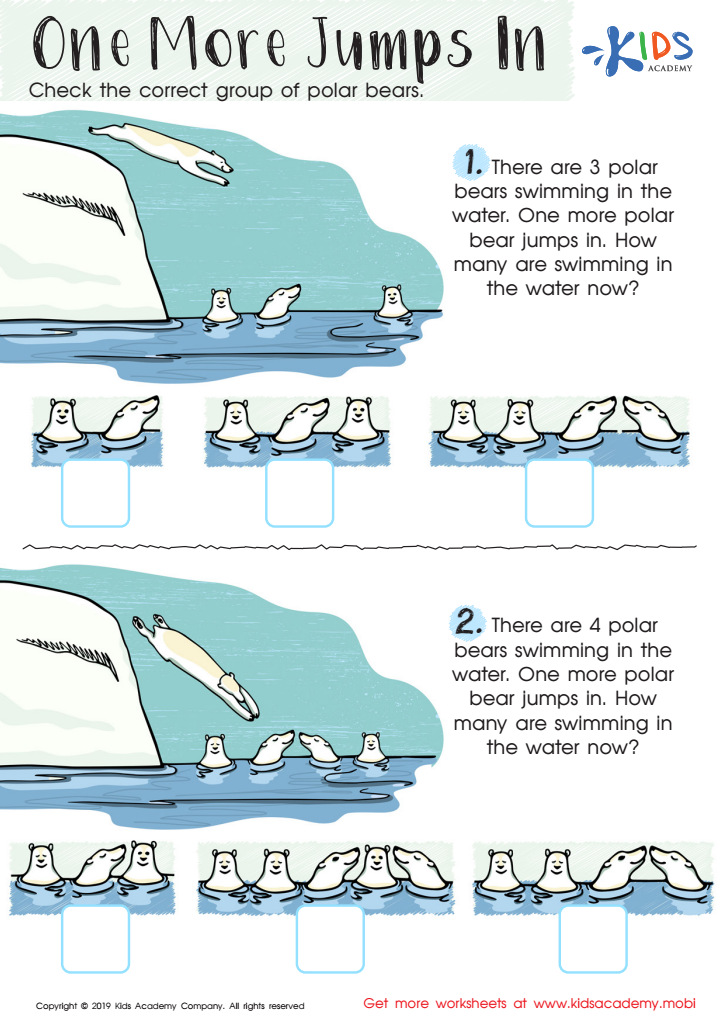
One More Jumps In Worksheet
 Assign to My Students
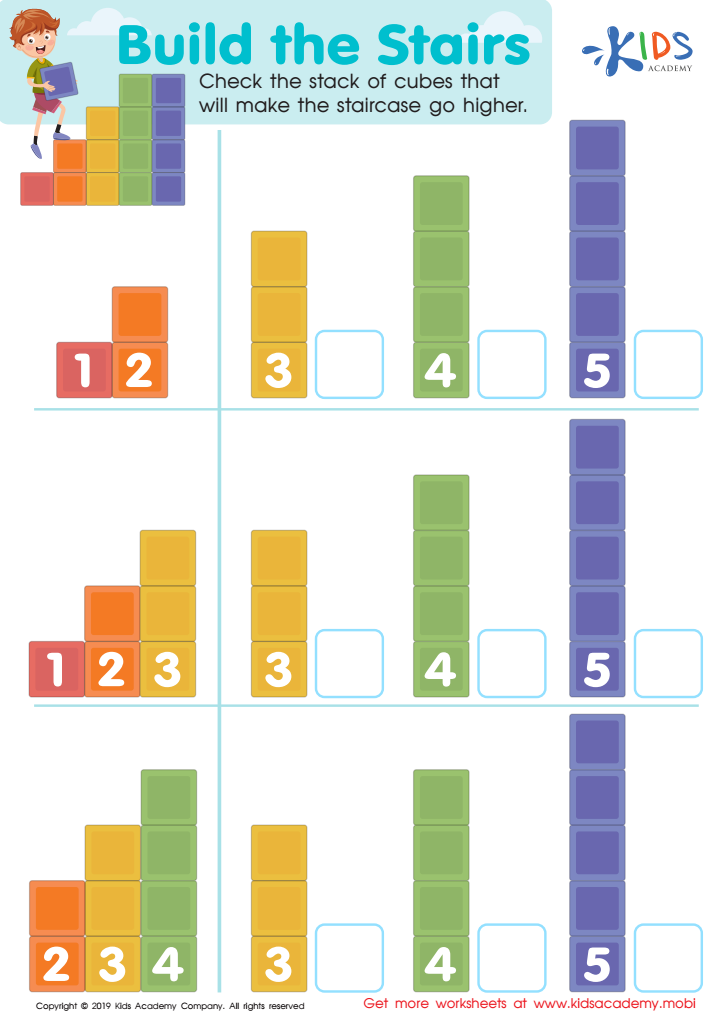
Build the Stairs Worksheet
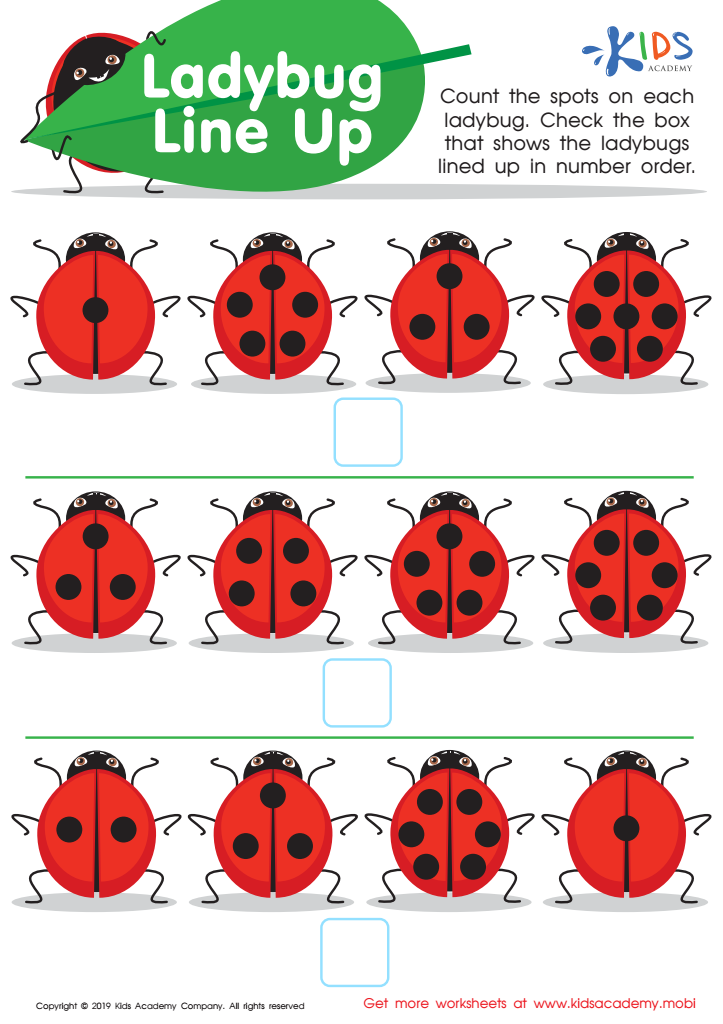
Ladybug Line Up Worksheet







Understanding sequencing in numbers is crucial for young children aged 6-9 because it lays the foundation for their overall mathematical proficiency. Sequencing—knowing which numbers come before and after others—is essential for developing number sense. Number sense enables children to grasp more complex mathematical concepts such as addition, subtraction, multiplication, and division.
For example, knowing that 2 comes before 3 helps children understand that adding one more moves you to the next number in sequence. This comprehension makes performing calculations logical and sets the stage for higher-order mathematical thinking.
Early competence in sequencing boosts children's confidence in math, ensuring they grasp school lessons better and stay engaged with learning. It also fosters critical thinking and problem-solving skills essential for day-to-day activities and future academic success.
Additionally, mastering number sequencing integrates other cognitive skills, like memory and attention to detail, enhancing overall cognitive development. For parents and teachers, focusing on this fundamental skill means giving children the tools they need for continued academic progress, avoiding gaps that could lead to struggles later in their educational journey.
Understanding sequencing transforms abstract numbers into a more understandable, approachable tool, making math less intimidating and more intuitive for young learners. Therefore, integrating sequencing in early education is integral for fostering a strong, enduring mathematical foundation.








