Sorting skills Easy Math Worksheets for Ages 6-9
6 filtered results
-
From - To
Boost your child's critical thinking and problem-solving abilities with our Easy Math Worksheets for Sorting Skills, tailored for ages 6-9. These printable activities gradually introduce young learners to essential sorting and categorizing skills, ensuring a solid foundation in mathematical concepts. Engaging, age-appropriate exercises help children distinguish between colors, shapes, sizes, and numbers, making learning fun and intuitive. Perfect for classroom or home practice, these worksheets foster a hands-on approach to mastering early math while promoting concentration, observation, and fine motor skills. Download now to give your child a head start in their mathematical journey with Kids Academy!
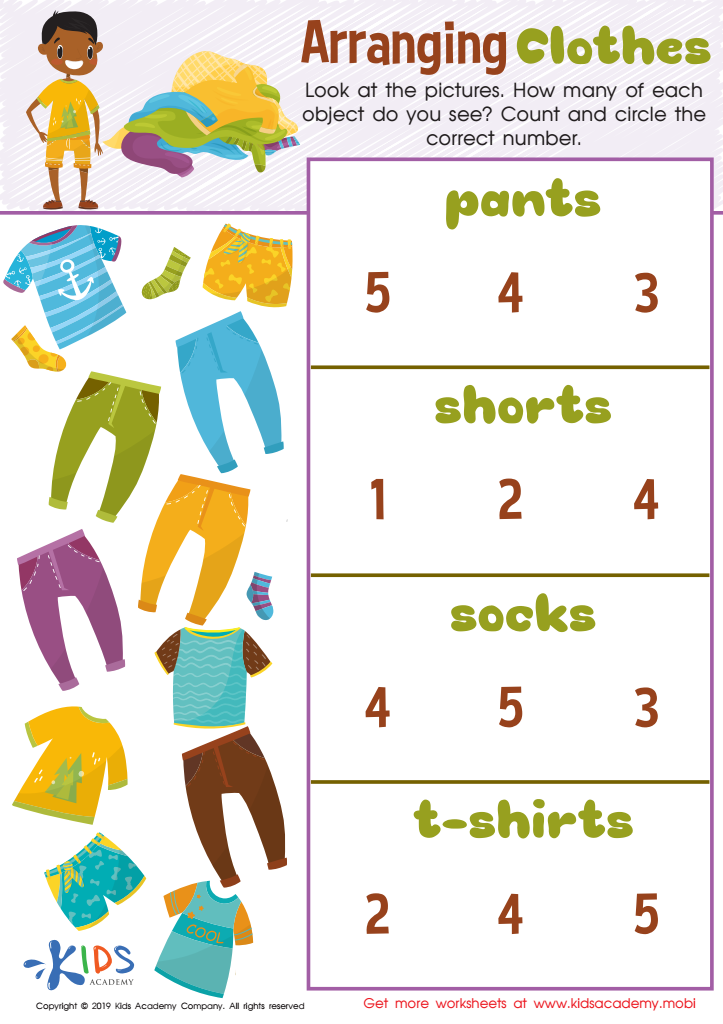
Arranging Clothes Worksheet
 Assign to My Students
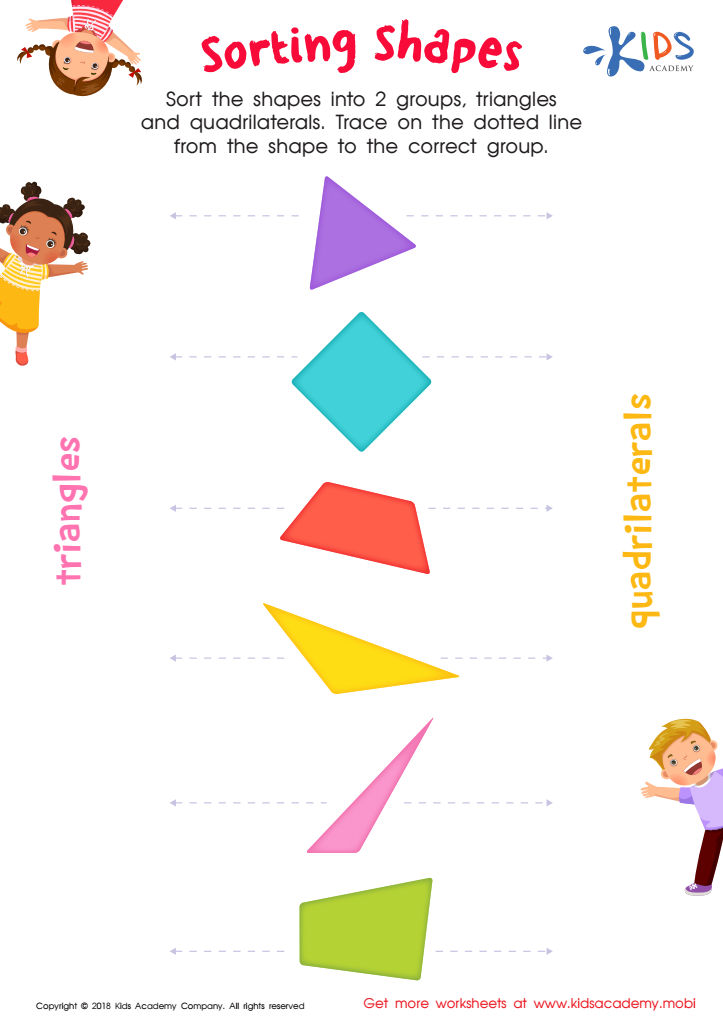
Sorting Shapes Worksheet
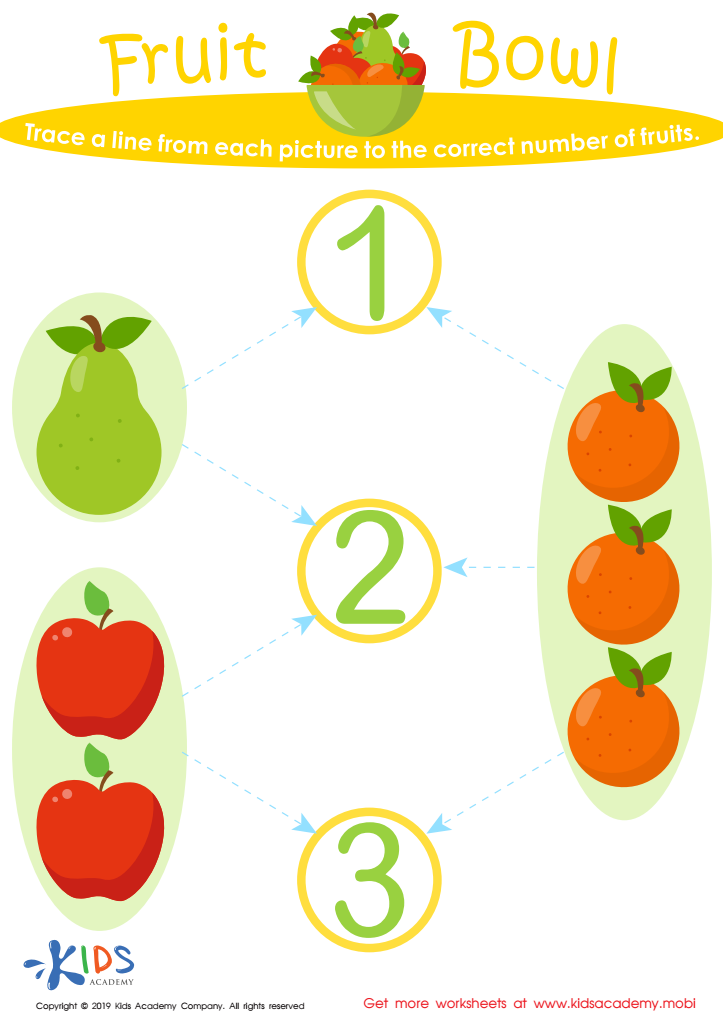
Fruit Bowl Worksheet
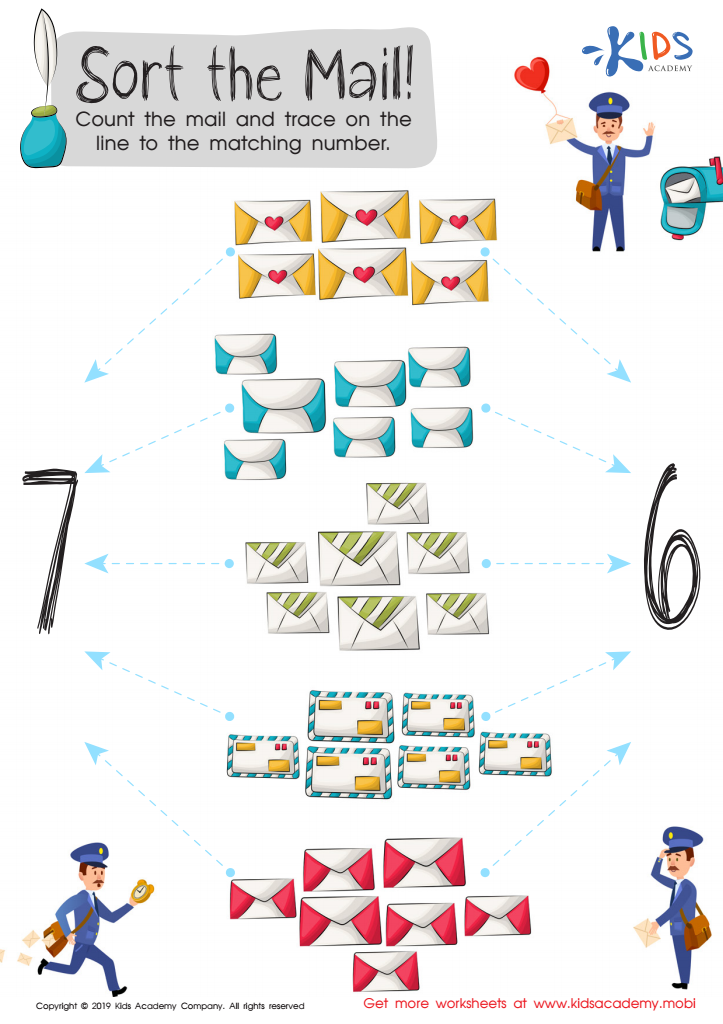
Sort the Mail Worksheet
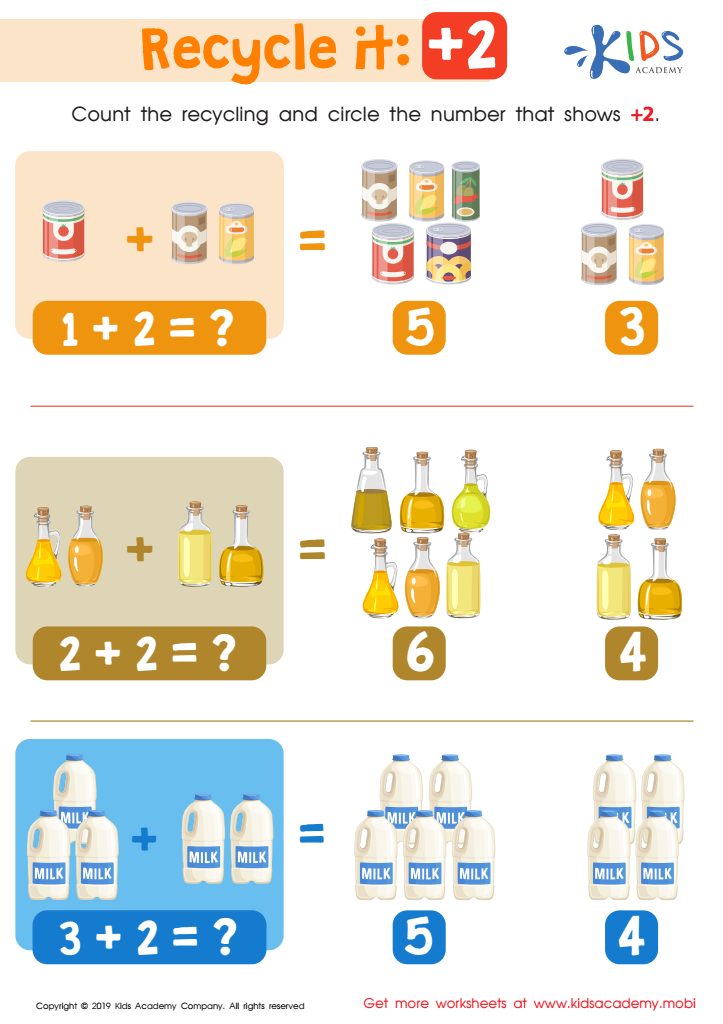
Recycle It: +2 Worksheet
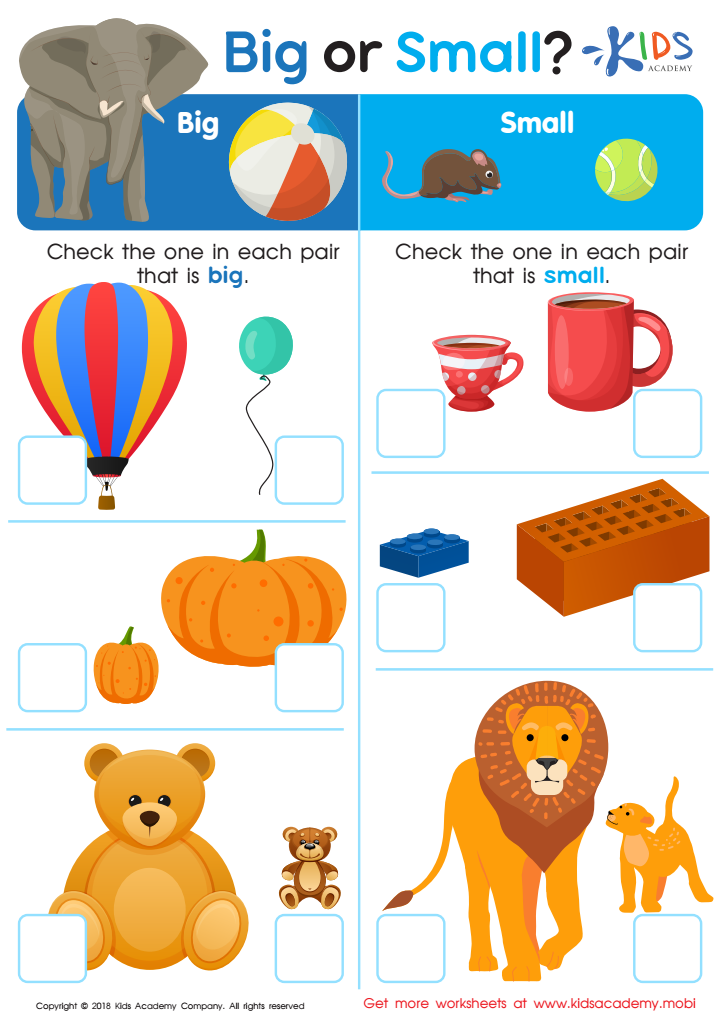
Big or Small? Worksheet







Sorting skills play a crucial role in the cognitive and mathematical development of children ages 6-9. These skills help young learners identify patterns, understand relationships among objects, and develop critical thinking abilities. By mastering sorting, children can categorize items based on various attributes such as shape, color, size, or quantity, which forms the foundation for more complex mathematical concepts, including multiplication, division, and the recognition of geometric properties.
Learning sorting also enhances problem-solving skills. When students sort objects, they practice paying attention to details, making decisions based on criteria, and organizing their thoughts systematically. This systematic thinking transfers to other academic areas and everyday life, helping them solve real-world problems efficiently.
Another essential aspect is that sorting boosts language development. As children discuss their sorting processes and criteria, they enhance their vocabulary and improve their ability to articulate thoughts clearly. This is especially beneficial for their overall communication skills.
Lastly, sorting activities are engaging and can be adapted into playful learning experiences both in class and at home, fostering a positive attitude towards learning math. Thus, integrating sorting exercises in early education not only builds foundational math skills but also fosters intellectual growth and curiosity.








