Understanding life cycles Easy Reading Worksheets for Ages 7-8
3 filtered results
-
From - To
Discover the fascinating world of life cycles with our "Understanding Life Cycles Easy Reading Worksheets for Ages 7-8." These educational worksheets simplify complex concepts, helping young learners grasp the different stages of life in various organisms. From plants to animals, your child will engage with captivating illustrations and easy-to-read content tailored to their reading level. Ideal for classroom use or at-home learning, these worksheets support cognitive development and nurture curiosity. Start exploring today and watch your child's understanding of the natural world blossom! Visit Kids Academy to enhance reading skills while discovering the wonders of life cycles.
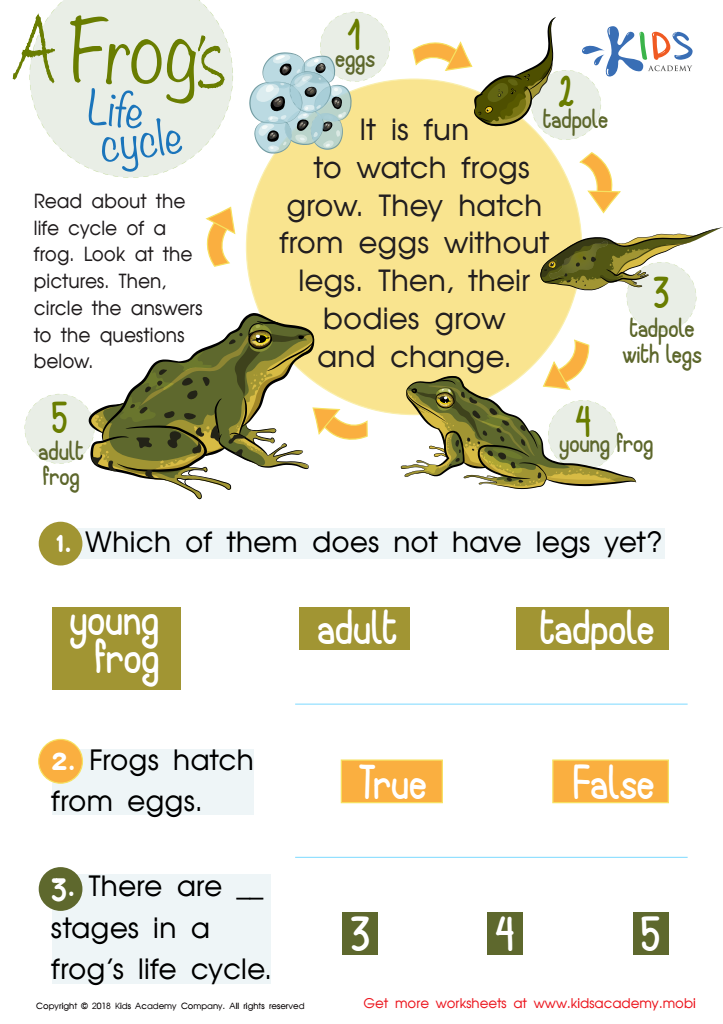
A Frog’s Life Cycle Worksheet
 Assign to My Students
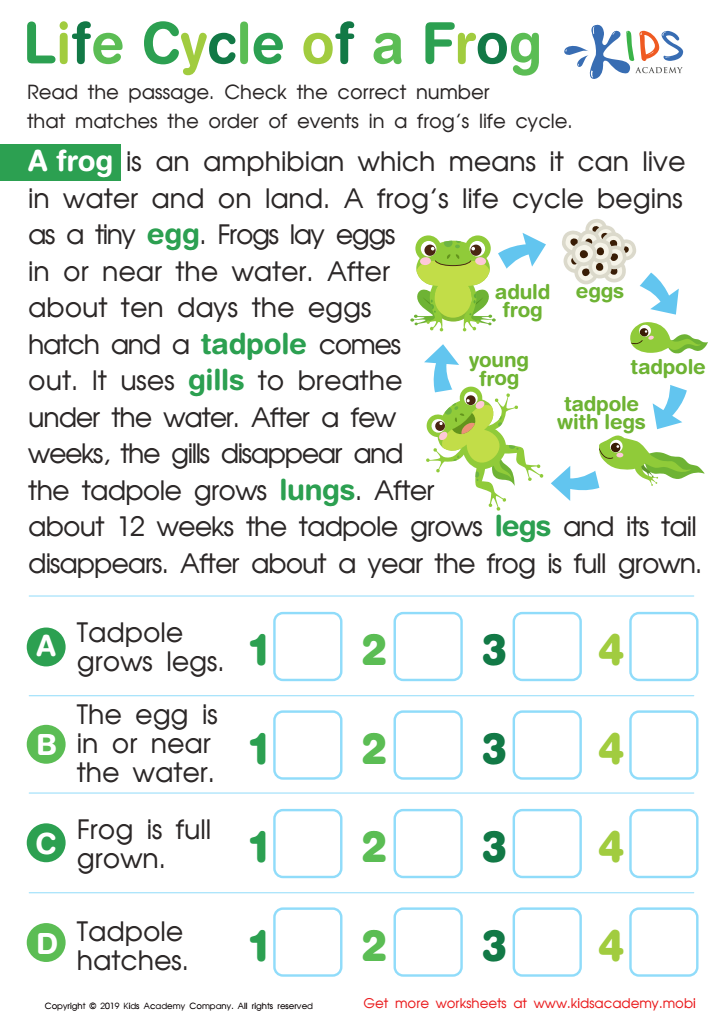
Life Cycle of a Frog Worksheet
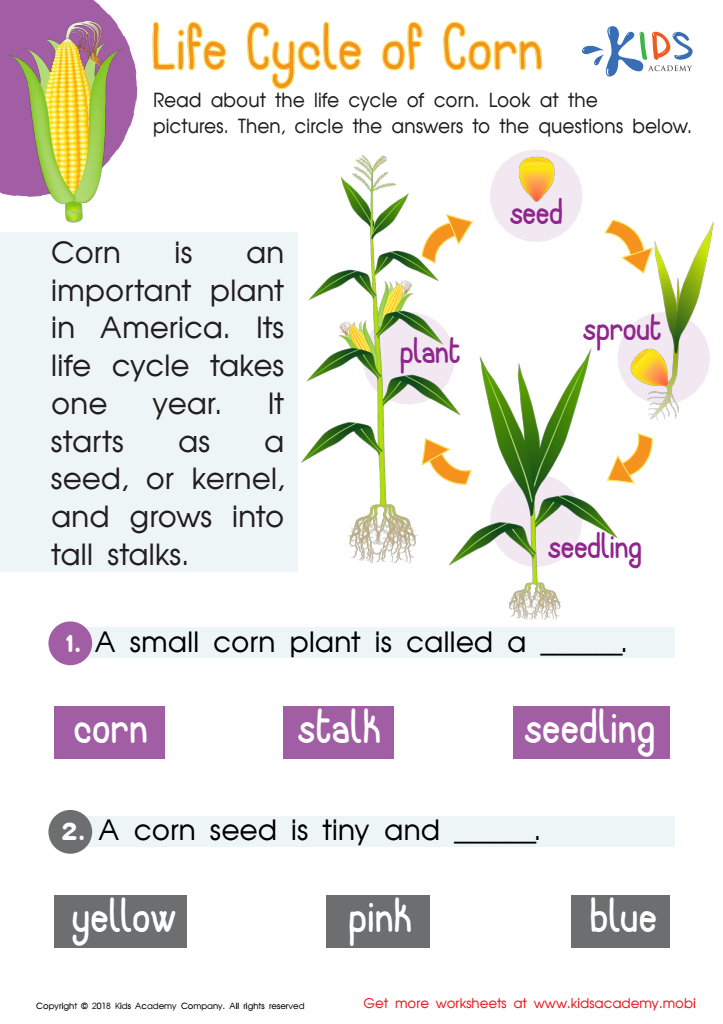
Life Cycle of Corn Worksheet







Understanding life cycles is a crucial part of early science education for children ages 7-8, and parents and teachers should highly value this area of learning. Life cycles offer a foundational understanding of the natural world, illustrating how plants, animals, and humans grow and change over time. Teaching young children about life cycles fosters observation skills and curiosity, encouraging them to ask questions and seek answers about the world around them.
For teachers, integrating life cycles into their curriculum can make learning more dynamic and interactive. Activities like watching a caterpillar metamorphose into a butterfly or planting seeds to grow into plants provide hands-on experiences that make scientific concepts tangible. These exercises help develop children’s critical thinking and enhance memory retention.
Parents benefit from discussing life cycles at home by connecting lessons to real-world experiences. Discussing the stages of a pet's life or pointing out flowering plants in a garden can make the topic relatable and reinforce classroom learning.
Additionally, understanding life cycles promotes sensitivity towards the environment. Children who grasp these concepts learn about the importance of each stage of life, which can lead to a lifelong appreciation for nature and responsible attitudes towards living beings. In summary, understanding life cycles builds a foundation for broader scientific literacy and environmental stewardship.