Visual Learning Easy Word Problems Worksheets for 7-Year-Olds
3 filtered results
-
From - To
Unlock the power of visual learning with our Easy Word Problems Worksheets tailored for 7-year-olds! Designed to engage young learners, these worksheets combine colorful illustrations and straightforward math scenarios to simplify problem-solving. Each activity encourages critical thinking while fostering a love for mathematics through visual aids, making learning enjoyable and effective. Our comprehensive approach ensures kids grasp essential concepts, enhancing their ability to tackle real-life math situations. Perfect for home or classroom use, these worksheets not only boost mathematical skills but also build confidence. Join us in creating a fun and supportive learning environment that ignites curiosity and sparks learning joy!
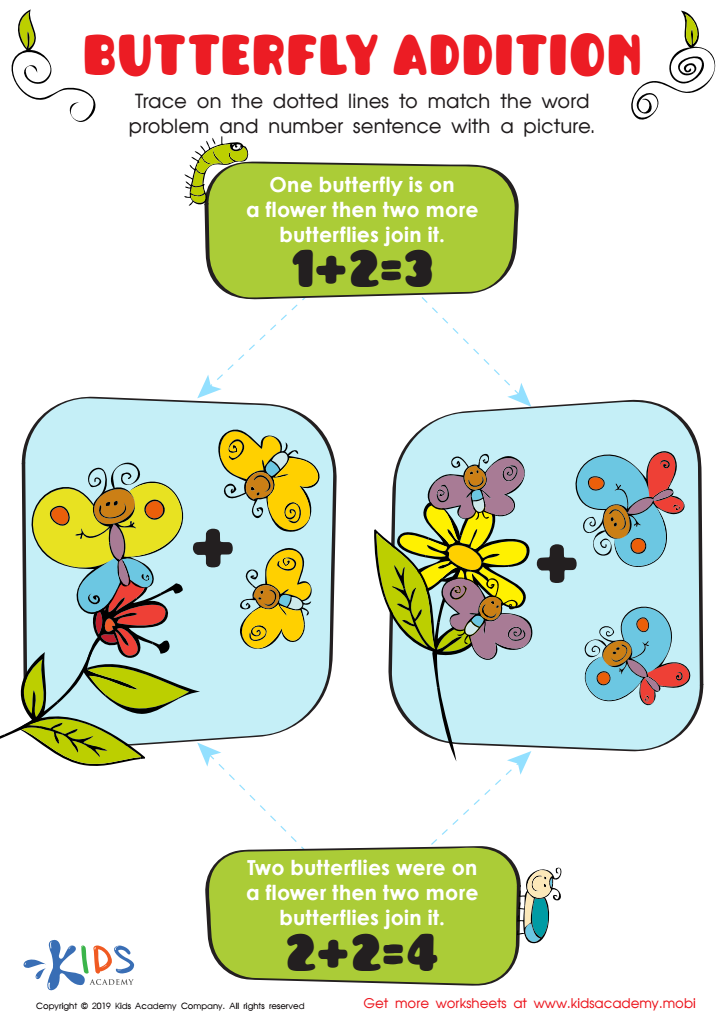
Butterfly Addition Worksheet
 Assign to My Students
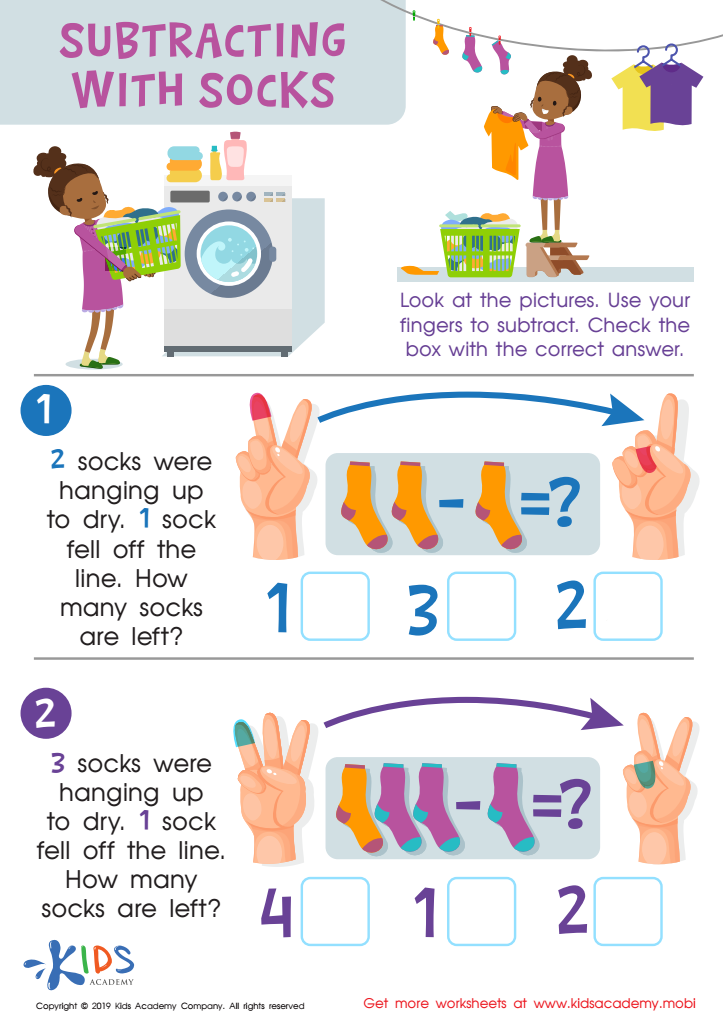
Subtracting Socks Worksheet
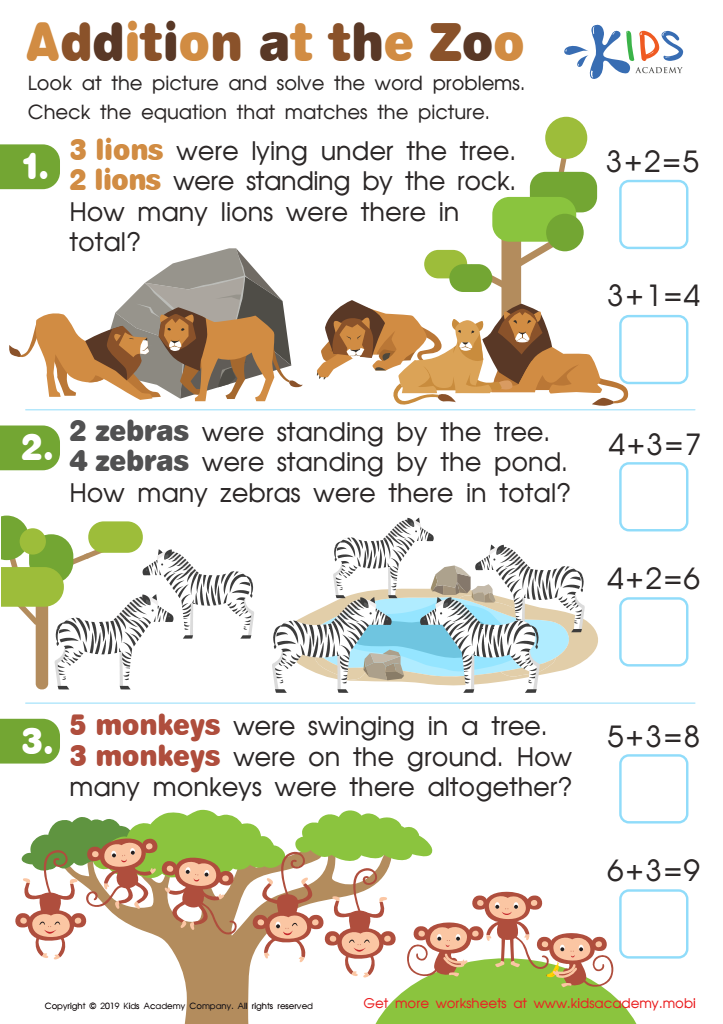
Addition at the Zoo Worksheet


.jpg)





Visual Learning Easy Word Problems are essential tools for fostering mathematical understanding in 7-year-olds. At this age, children are developing critical thinking and problem-solving skills, and engaging them through visual learning can significantly enhance their comprehension. Visual representations—like diagrams, pictures, or charts—make abstract concepts more tangible, allowing children to grasp the relationship between numbers and real-life scenarios.
Parents and teachers should care about this approach because visual learning caters to diverse learning styles. Not every child thrives through traditional verbal or written instruction; many benefit from seeing information represented visually. This technique boosts engagement, as children are more likely to participate in problem-solving activities that are fun and interactive.
Additionally, visual problem-solving can lay a strong foundation for future math skills. By mastering these simple word problems, children not only enhance their numeracy but also develop confidence in their abilities. The skills learned through visual learning can translate into improved performance across subjects, encouraging a positive attitude towards learning as a whole. Ultimately, fostering these skills can set children on a path for lifelong success in mathematics and beyond, making it crucial for educators and parents to prioritize such learning methods.








