
Animal recognition Easy Addition & Subtraction Worksheets for Ages 8-9
3 filtered results
Difficulty Level
Grade
Age
-
From - To
Subject
Activity
Standards
Introducing our engaging "Animal Recognition Easy Addition & Subtraction Worksheets" designed for ages 8-9! These exciting worksheets combine basic math skills with animal recognition to make learning fun and effective. Children will love solving simple addition and subtraction problems while identifying various animals, boosting both their arithmetic skills and zoological knowledge. Each worksheet features colorful illustrations and stimulating exercises tailored to young learners, ensuring they remain interested and motivated. Ideal for classroom use or additional practice at home, these worksheets provide a solid foundation in math and science. Make learning an enjoyable and educational adventure!
Favorites
With answer key
Interactive
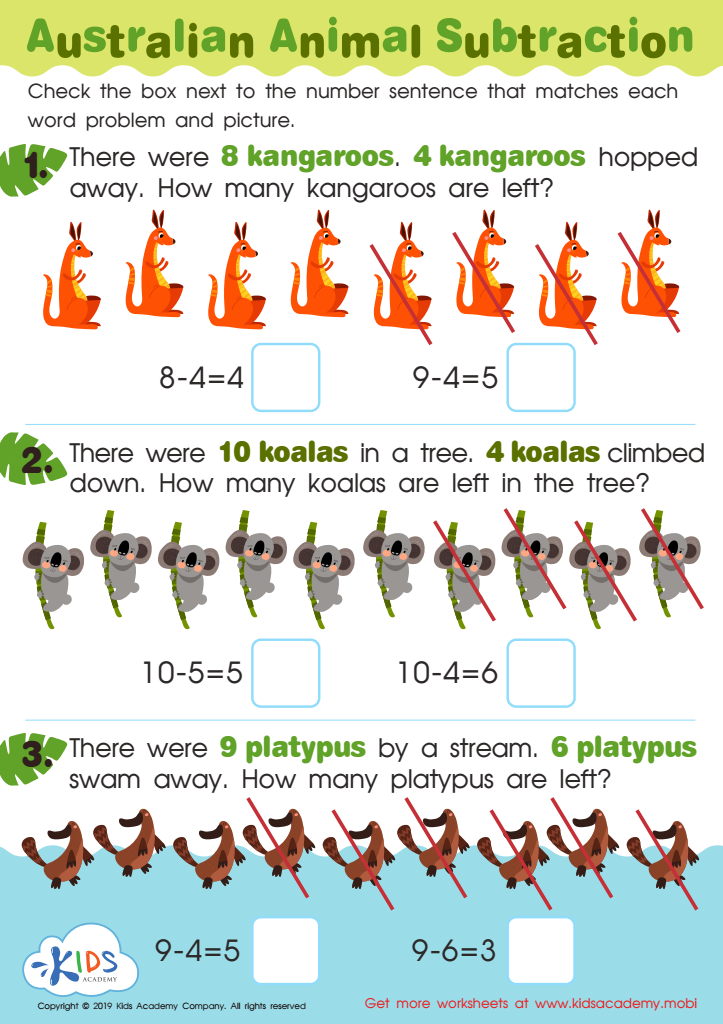
Australian Animal Subtraction Worksheet
Test your child's wildlife knowledge. Ask them to name animals indigenous to Australia or other countries. Show them the animals in this worksheet and have them match each word problem and picture with the correct number sentence.
 Assign to My Students
Australian Animal Subtraction Worksheet
Worksheet
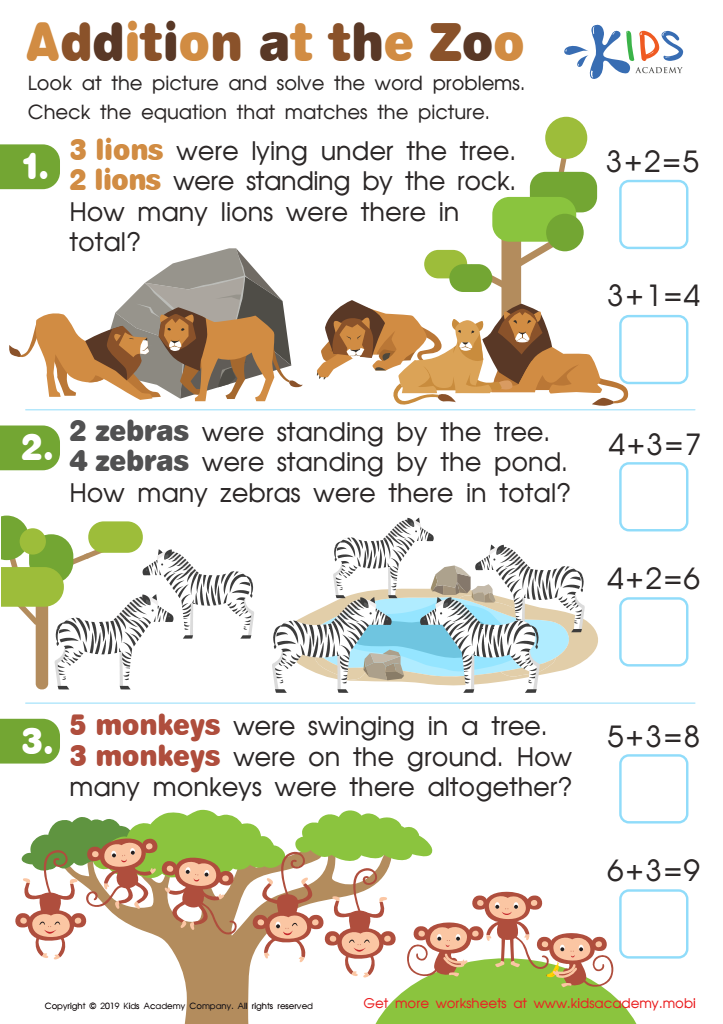
Addition at the Zoo Worksheet
Visit the zoo with your kids and point out all the different animals. Ask them to name their favorites and identify animals on a worksheet. Challenge them to solve word problems related to the pictures. Ask them for the equation that fits the picture and check the answer.
Addition at the Zoo Worksheet
Worksheet
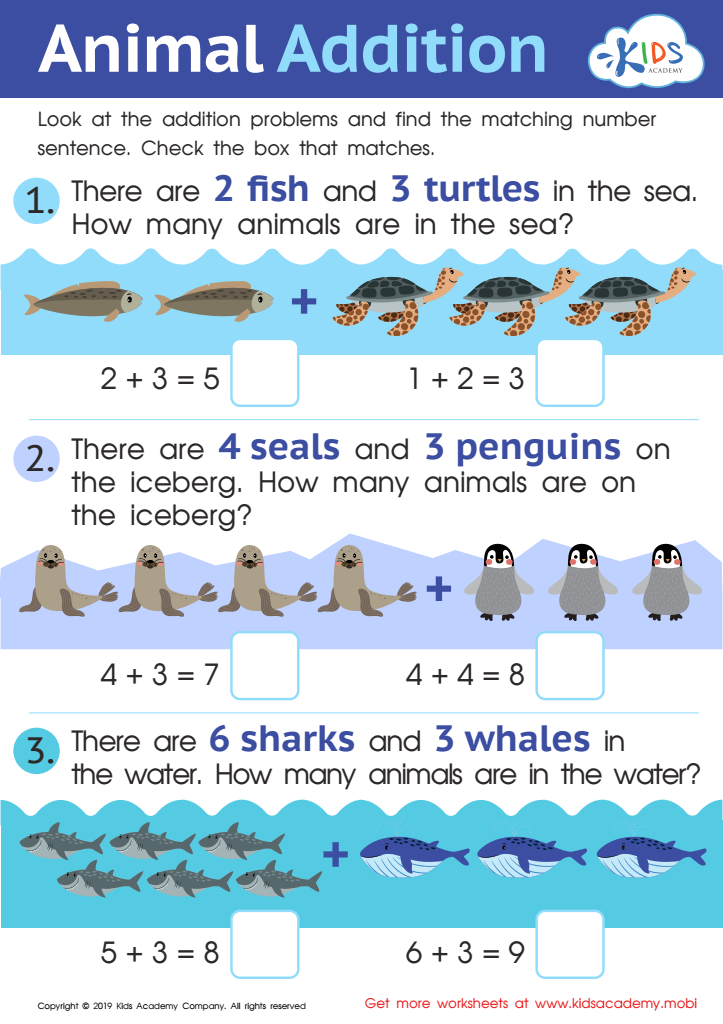
Animal Addition Worksheet
Get your kids learning addition and subtraction with this fun worksheet! Show them that solving equations can be enjoyable and help them match number sentences to the correct boxes. By doing this together, you'll create a positive learning experience that your kids won't forget.
Animal Addition Worksheet
Worksheet
Join Kids Academy for Free
Who is primarily going to use this learning content?








Animal recognition combined with easy addition and subtraction are key components of early childhood education, especially for children aged 8-9. Firstly, animal recognition enriches children's understanding of the natural world, fostering curiosity and cultivating a respect for biodiversity. Recognizing animals and their traits also enhances cognitive development by helping kids categorize and compare different species, which sharpens memory and analytical skills.
Meanwhile, early arithmetic skills such as addition and subtraction lay the groundwork for future mathematical proficiency. Introducing these concepts at an early stage encourages numerical literacy, critical thinking, and problem-solving capabilities. This age-appropriate math practice not only boosts confidence but also establishes a solid foundation for tackling more complex math concepts in later school years.
Integrating animal recognition with easy mathematical exercises makes learning engaging and relevant. For example, counting the number of legs on different animals to practice addition or sorting animals into groups to understand subtraction creates a playful and impactful learning experience. Parents and teachers should recognize that such multidisciplinary approaches keep children motivated and attentive, blending fun with essential educational skills. In essence, focusing on these areas supports holistic development, blending cognitive growth with interactive and relatable content, ensuring a well-rounded educational journey for young learners.








