Problem-solving abilities Easy Addition & Subtraction Worksheets for Ages 8-9
3 filtered results
-
From - To
Enhance your child’s problem-solving skills with our Easy Addition & Subtraction Worksheets designed specifically for ages 8-9. These engaging worksheets offer a variety of fun and interactive exercises that help young learners master fundamental math concepts through practical applications. By encouraging critical thinking and analytical reasoning, these resources foster confidence in solving numerical challenges. Parents and educators can easily incorporate these worksheets into daily lessons or homeschool activities, creating a comprehensive learning experience. Explore our collection to provide your child with the tools they need to excel in math while enjoying the process of learning! Join us in making math fun and effective!
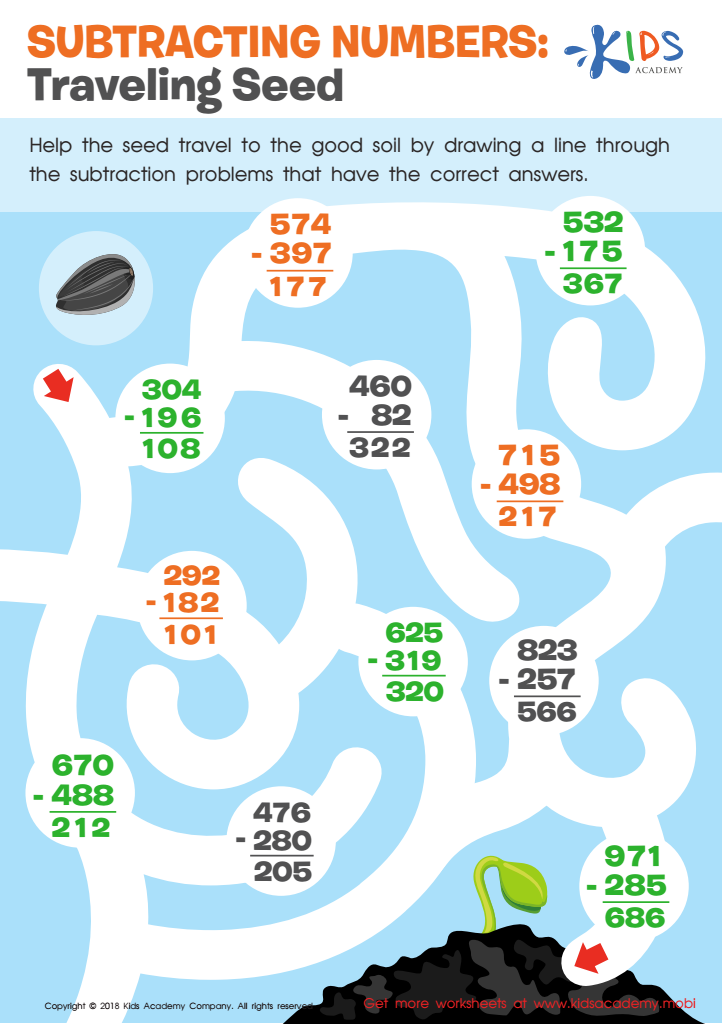
Subtracting Numbers: Traveling Seeds Worksheet
 Assign to My Students
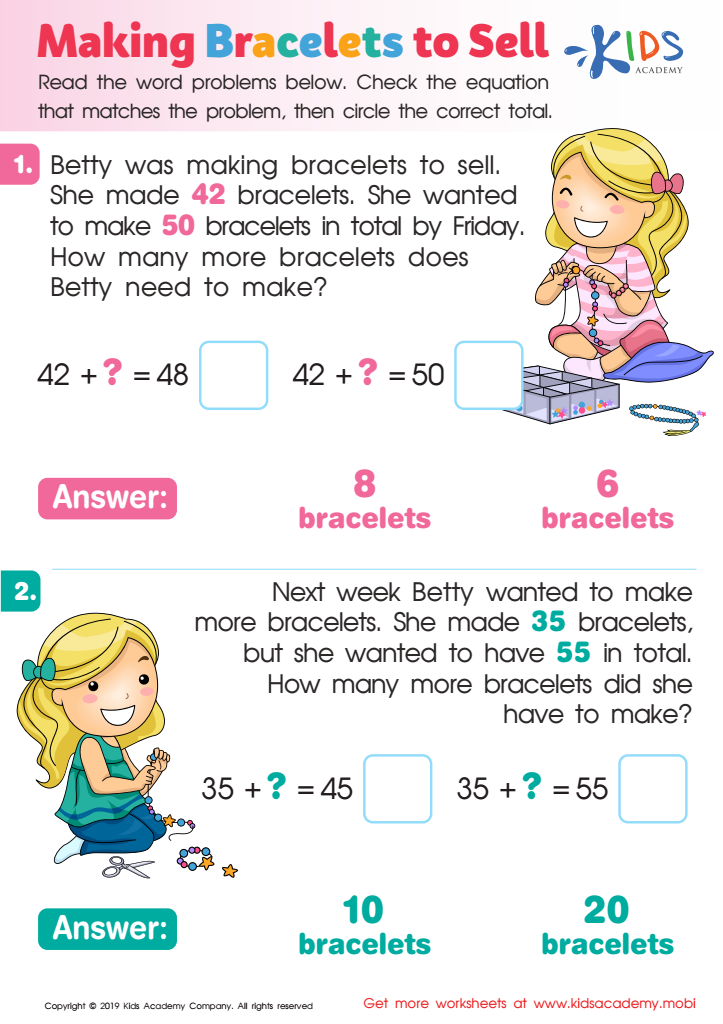
Making Bracelets to Sell Worksheet
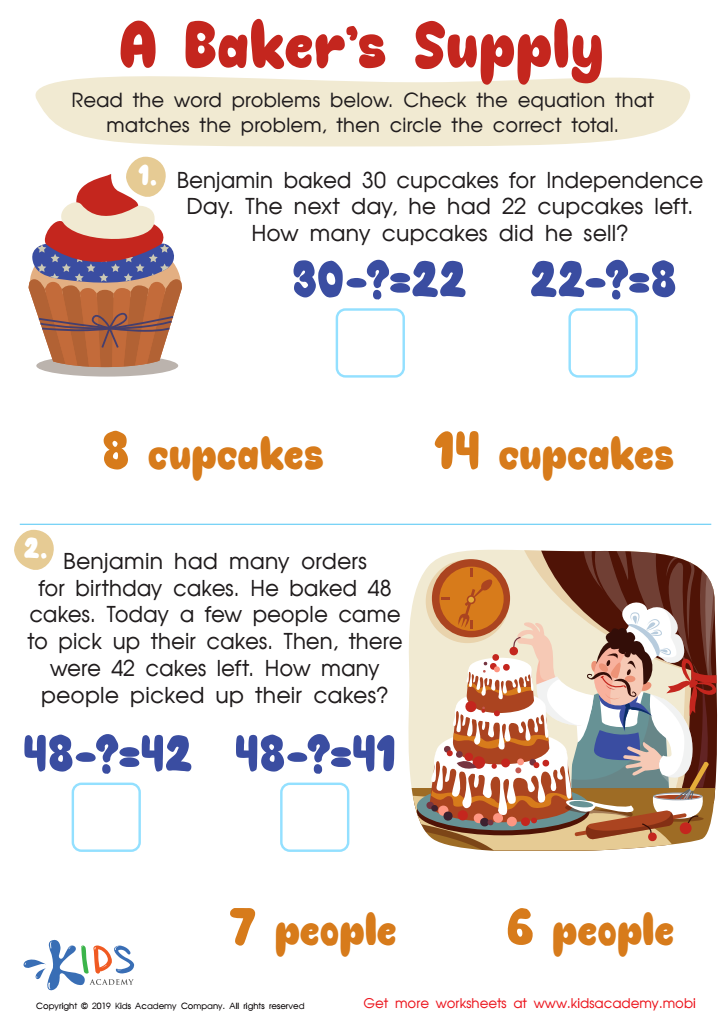
A Baker's Supply Worksheet








Parents and teachers should prioritize problem-solving abilities in easy addition and subtraction for children ages 8-9 as these skills are foundational to broader mathematical understanding and critical thinking. At this age, children begin to transition from concrete computations to more abstract reasoning, gaining confidence in their ability to tackle numerical challenges.
Problem-solving encourages students to apply their knowledge in various contexts, fostering a mindset that values inquiry and exploration. By developing these skills, children not only learn how to solve basic arithmetic problems but also enhance their ability to reason through bigger challenges. Effective problem-solving promotes perseverance, as students encounter and surmount obstacles, teaching them that mistakes are part of the learning process.
Furthermore, strong problem-solving abilities in mathematics extend beyond the subject itself; they equip children with essential life skills like decision-making and analytical thinking. In today's constantly evolving world, these skills are crucial for academic success and future employment opportunities. Therefore, fostering problem-solving capabilities in basic addition and subtraction sets the stage for children to become resilient learners and critical thinkers, prepared for more complex situations in both math and everyday life. Encouraging this essential cognitive skill should be a priority for both parents and educators.








