Understanding measurements Easy Measurement Worksheets for Ages 8-9
6 filtered results
-
From - To
Unlock the world of measurements with our "Understanding Measurements Easy Measurement Worksheets for Ages 8-9." Designed specifically for young learners, our engaging worksheets make measurement concepts accessible and enjoyable. From inches to centimeters, kids will explore various units while developing critical thinking and problem-solving skills. Our worksheets incorporate practical exercises and fun illustrations that help children relate to real-world scenarios. Perfect for classroom use or at-home practice, these materials aim to build strong foundational knowledge necessary for future success in math. Discover a seamless way to make learning measurements entertaining and effective with Kids Academy!
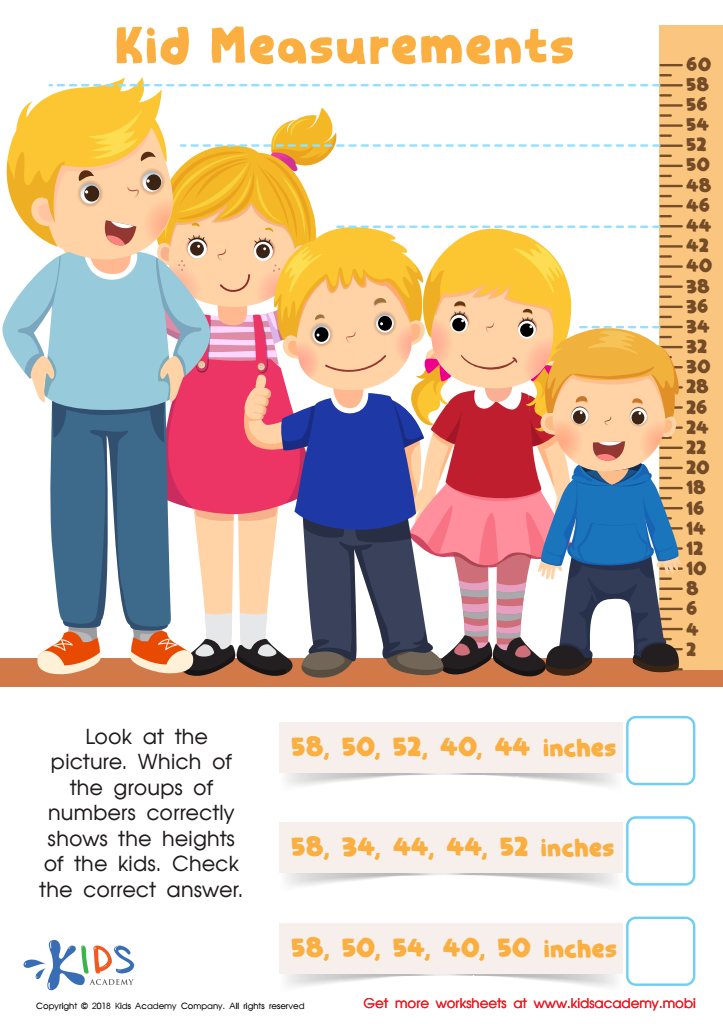
Kids Measurements Worksheet
 Assign to My Students
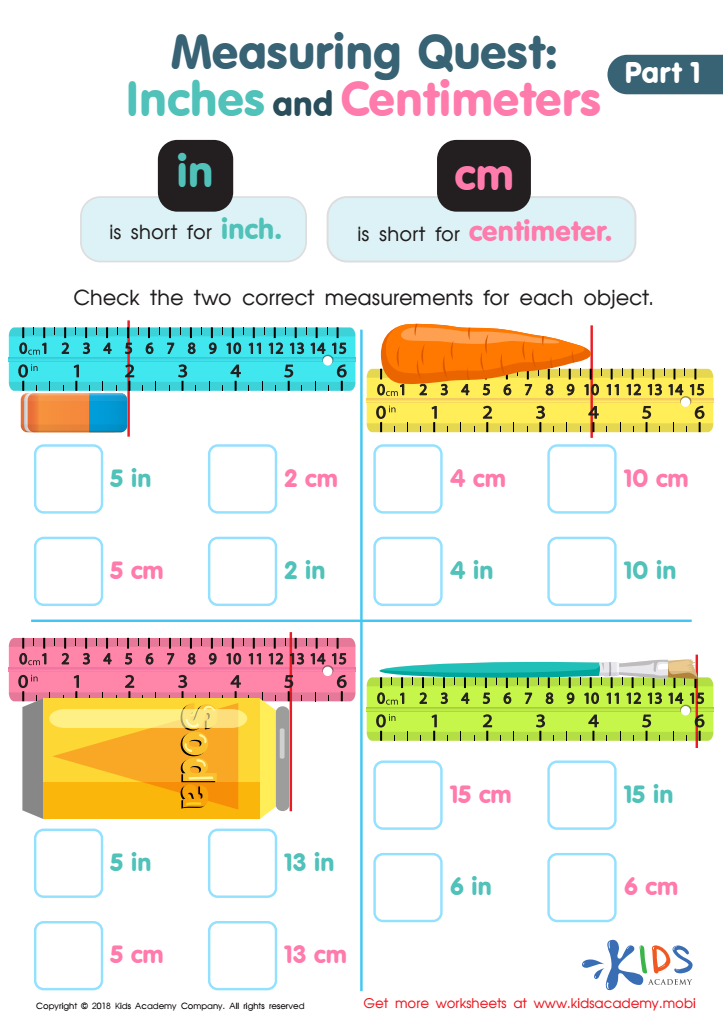
Measuring Quest: Inches and Centimeters Worksheet
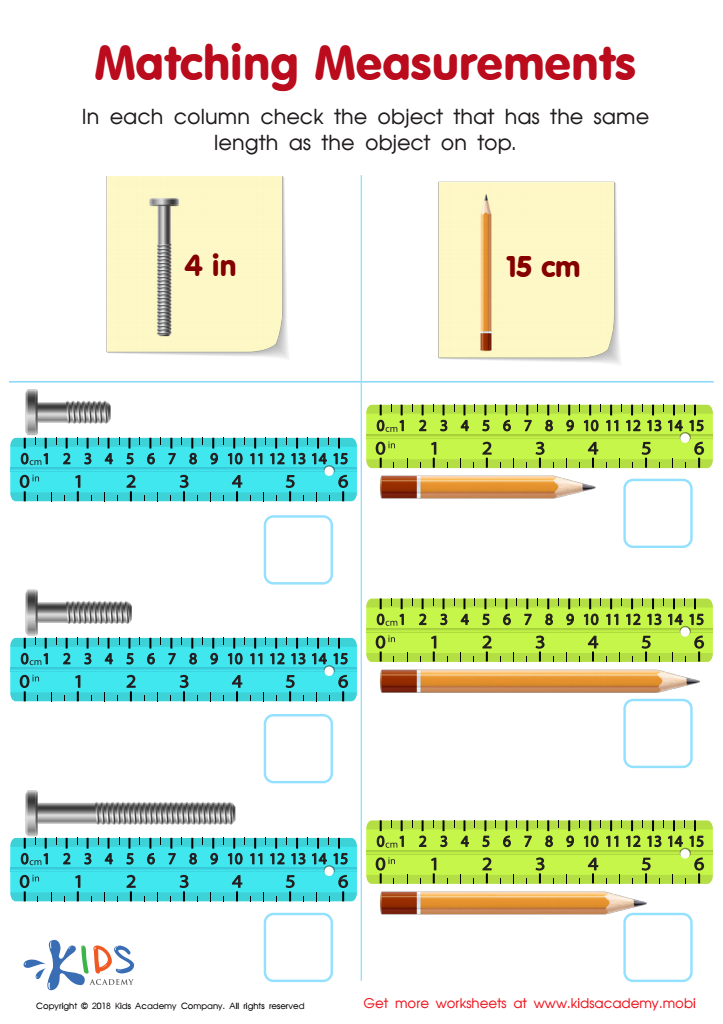
Matching Measurements Worksheet
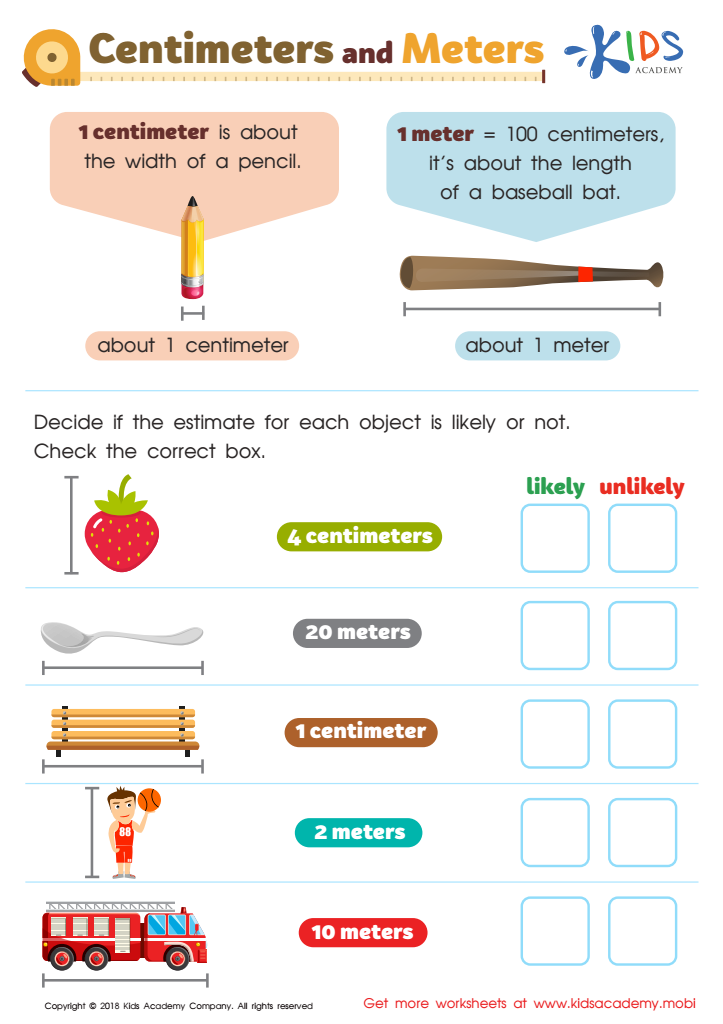
Centimeters and Meters Worksheet
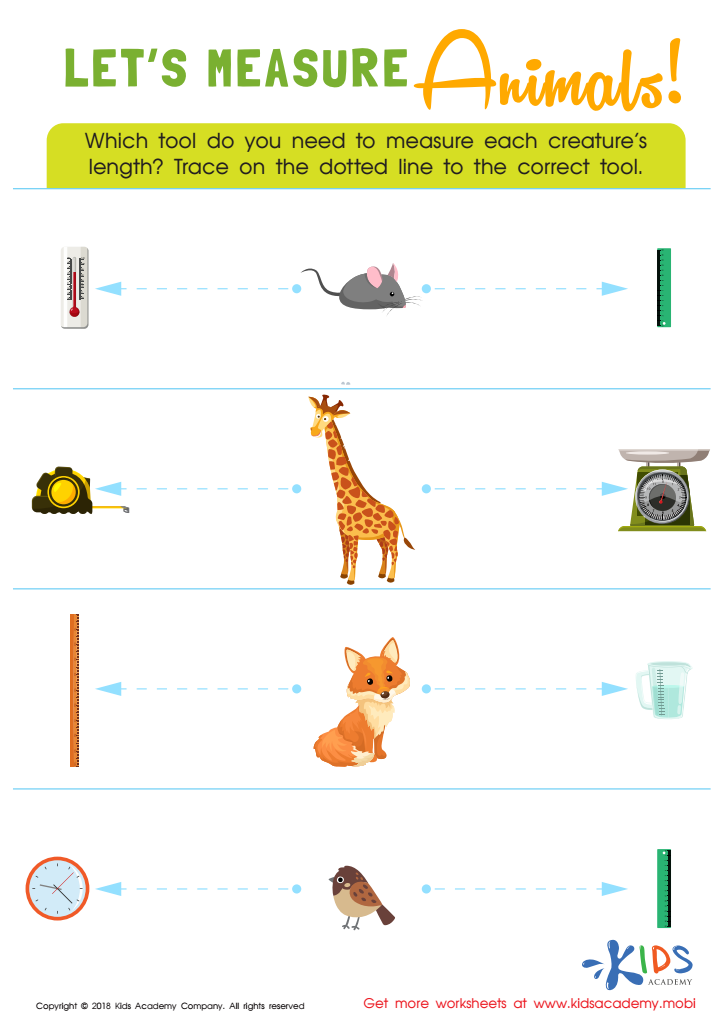
Let's Measure Animals! Worksheet
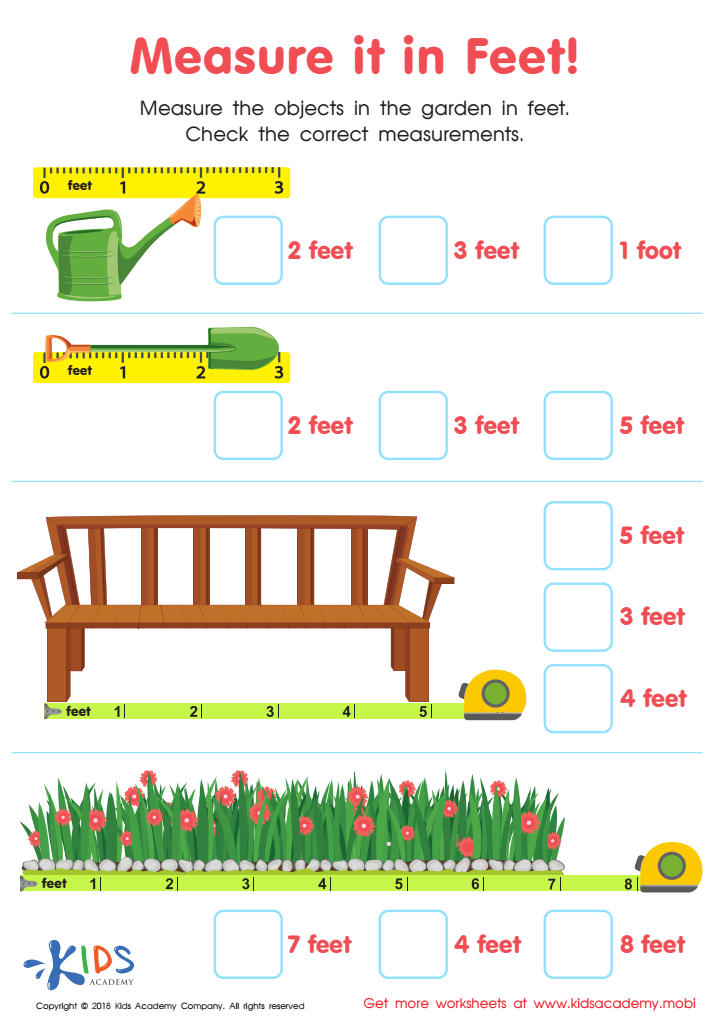
Measure it in Feet Worksheet








Understanding measurements is a foundational skill that is essential for children aged 8-9 and serves as a critical aspect of their overall development. For parents and teachers, ensuring that children grasp these concepts is important because it equips them with practical life skills they will use daily—such as cooking, shopping, and even playing sports. It also lays the groundwork for more advanced mathematical concepts and problem-solving abilities that they will encounter later in their education.
At this stage, children begin to understand the world around them in more concrete terms. By learning measurements, they can make sense of dimensions, quantities, time, and volume, thereby gaining a better understanding of their environment. Educators can make learning measurement fun and engaging by incorporating activities such as measuring ingredients for a recipe, comparing the lengths of objects, or using a stopwatch for timing races.
Measurement activities also promote skills like critical thinking, estimating, and spatial awareness. Moreover, understanding measurements is crucial for scientific inquiries where precision and comparison are required. By supporting children in grasping these concepts through simple yet engaging methods, parents and teachers foster academic growth and practical knowledge that children will carry forward into adulthood.








