Visual Learning Easy Word Problems Worksheets for Ages 8-9
3 filtered results
-
From - To
Discover our engaging Visual Learning Easy Word Problems Worksheets designed for children aged 8-9! These worksheets help young learners enhance their mathematical skills by utilizing visual aids, making problem-solving both fun and effective. Each worksheet features colorful graphics and relatable scenarios that bring math concepts to life, encouraging kids to think critically and apply their knowledge in real-world settings. Ideal for classroom or home use, these resources cater to diverse learning styles, ensuring every child can grasp essential math skills with ease. Unlock your child's potential with our carefully crafted worksheets that promote understanding and confidence in mathematics!
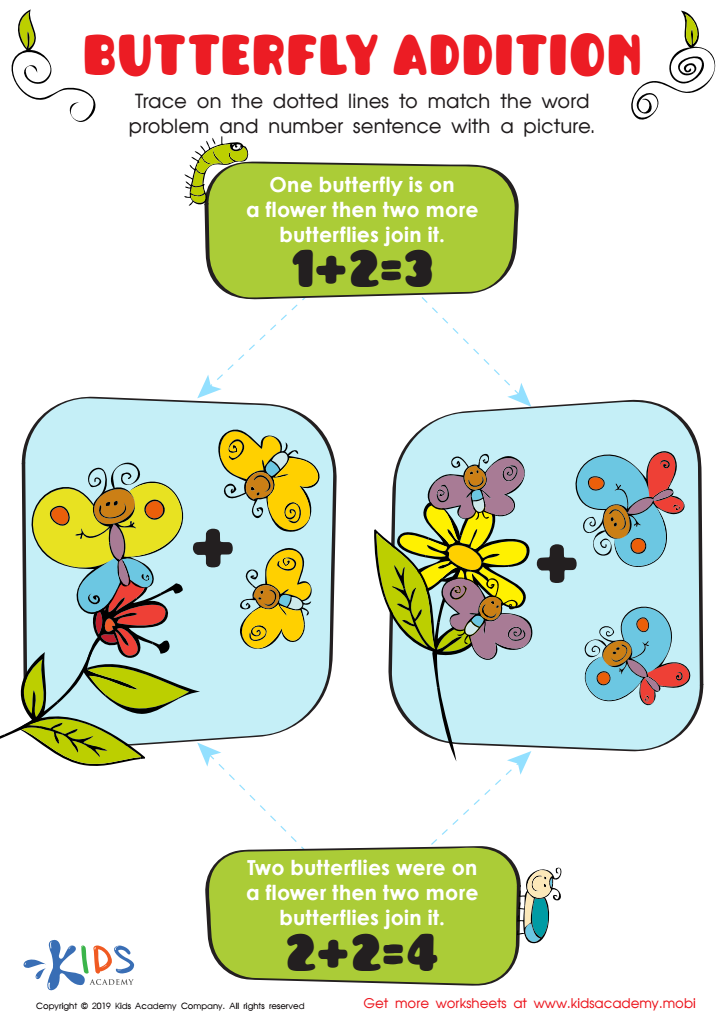
Butterfly Addition Worksheet
 Assign to My Students
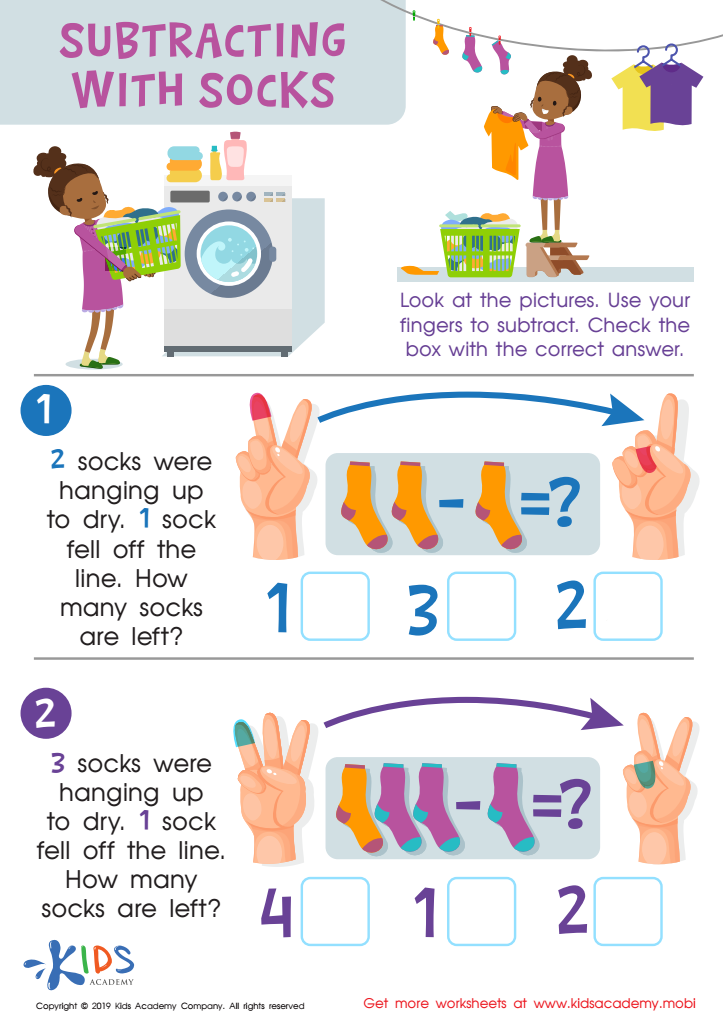
Subtracting Socks Worksheet
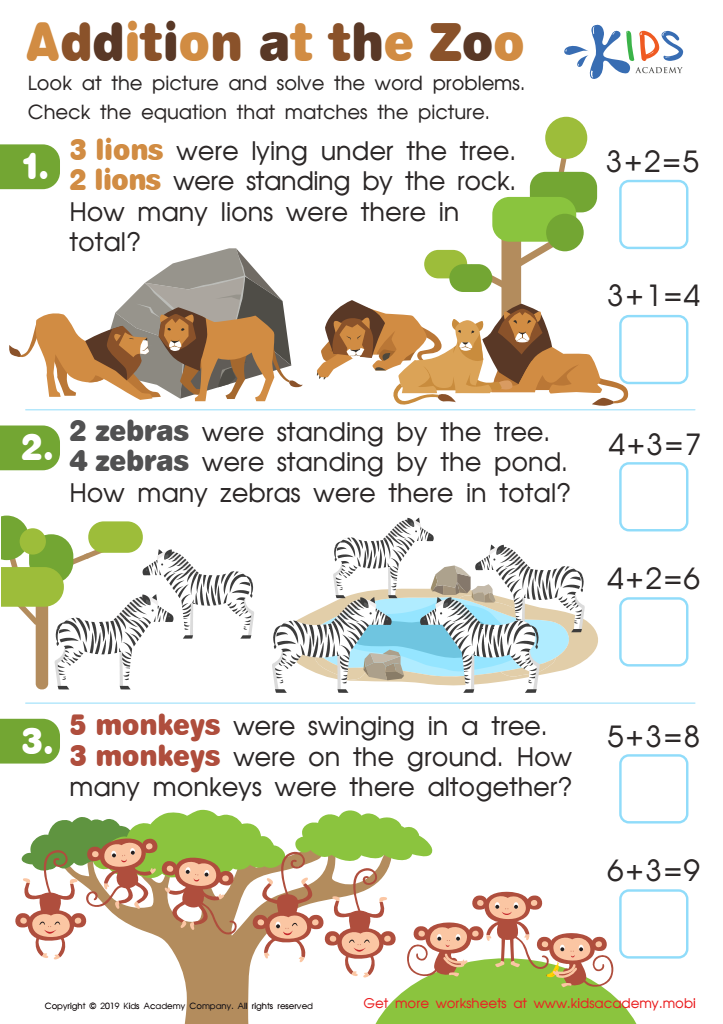
Addition at the Zoo Worksheet








Parents and teachers should care about Visual Learning Easy Word Problems for Ages 8-9 because this approach enhances comprehension and problem-solving skills in young learners. At this age, children are transitioning from concrete to more abstract thinking, and visual aids tap into their natural inclination to understand information through images, diagrams, and charts. By presenting math problems visually, students can better grasp concepts and see relationships between numbers and operations, making abstract ideas more accessible.
Furthermore, engaging visuals help maintain students' attention and motivation, reducing math anxiety and fostering a positive attitude toward learning. Visual learning caters to various learning styles; children who struggle with traditional word problems may thrive when concepts are illustrated visually. This inclusive strategy promotes confidence in young learners, encouraging them to express their thought processes clearly.
Additionally, visual learning supports cognitive development by reinforcing critical thinking and analytical skills. As students interpret and solve word problems using visual methods, they build a solid foundation for more advanced mathematical concepts. Ultimately, integrating visual learning techniques creates a holistic educational experience, allowing children to develop not only mathematical knowledge but also essential problem-solving abilities that will benefit them throughout their academic journey and beyond.








