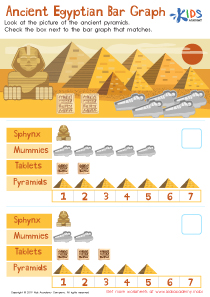
Improving counting skills Easy Math Worksheets for 8-Year-Olds
3 filtered results
-
From - To
Boost your child's counting abilities with our carefully designed Easy Math Worksheets for 8-Year-Olds! These engaging and fun worksheets provide a range of exercises to help children master counting, number sequences, and basic addition and subtraction. Each worksheet is tailored to align with educational standards, ensuring your child receives essential practice to build a strong mathematical foundation. Perfect for classroom use or at-home learning, our worksheets are an effective tool to enhance your child's confidence and competence in math. Explore our collection and watch your 8-year-old's counting skills flourish!
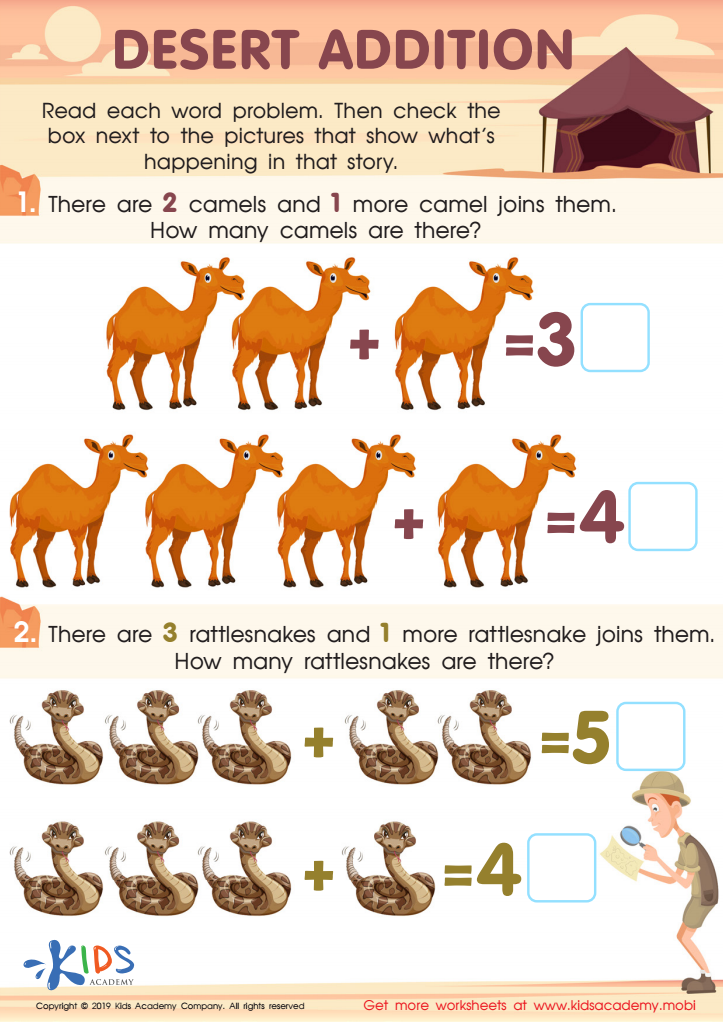
Desert Addition Worksheet
 Assign to My Students
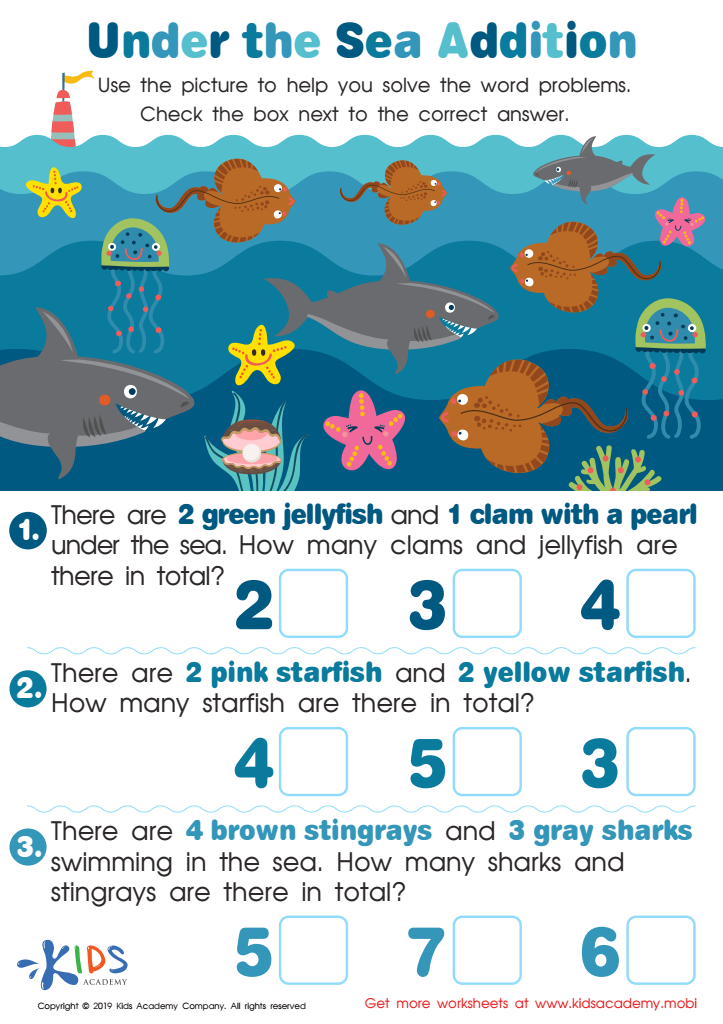
Under the Sea Addition Worksheet
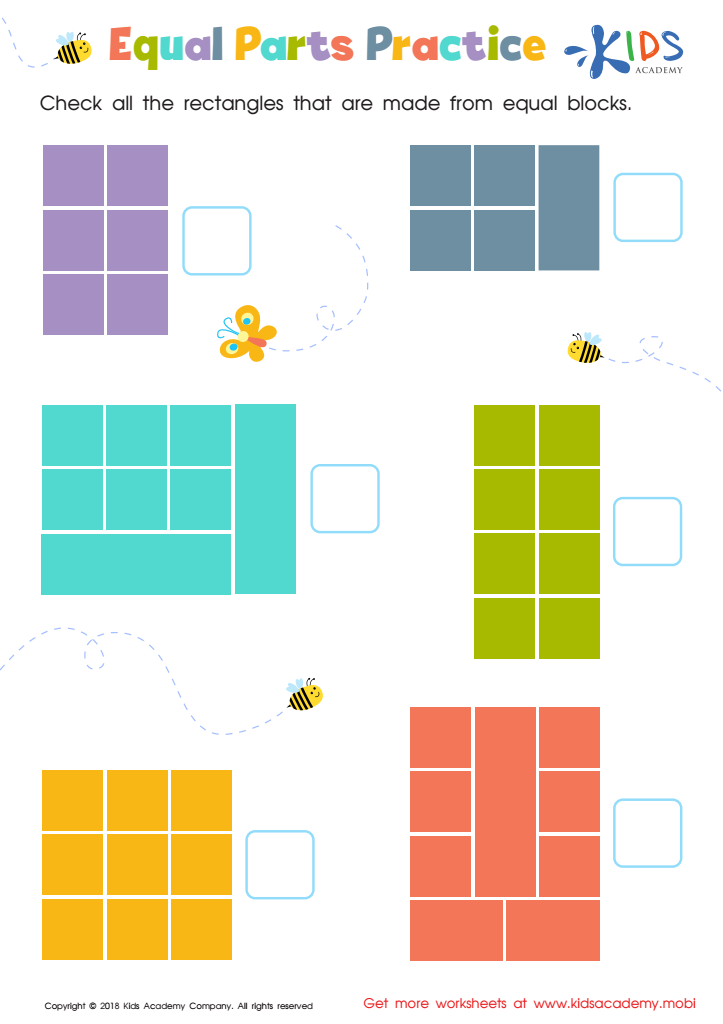
Equal Parts Practice Worksheet


.jpg)




Parents and teachers should care about improving counting skills in 8-year-olds as these skills are foundational to their overall mathematical development and academic success. Mastery of counting not only helps children understand numbers better but also serves as a critical stepping-stone towards more complex mathematical concepts like addition, subtraction, multiplication, and division. At this age, solid counting skills promote cognitive development by enhancing logical thinking and problem-solving abilities.
Children with strong counting skills are more confident and can tackle math problems with greater ease than their peers who struggle. This confidence often leads to a positive attitude towards math, which is essential for long-term academic success. Without a strong counting foundation, children may find themselves slipping behind, creating gaps in knowledge that can lead to frustration and a dislike for math.
Furthermore, counting is embedded in everyday activities such as buying goods, cooking, or playing games. Proficiency in counting ensures that children can engage in these activities more independently and accurately, promoting practical life skills. Hence, parents and teachers should actively encourage and support the development of counting skills through games, exercises, and daily activities, making the learning process enjoyable and effective.