
Number Sequencing Easy Math Worksheets for 8-Year-Olds
3 filtered results
Difficulty Level
Grade
Age
-
From - To
Subject
Activity
Standards
Ignite your child's numerical skills with our "Number Sequencing Easy Math Worksheets for 8-Year-Olds." These thoughtfully designed worksheets help young learners advance their understanding of number patterns, order, and sequences effortlessly. Each engaging activity encourages critical thinking and enhances fluency in basic math operations, providing a solid foundation for future mathematical success. Perfect for classroom use or at-home practice, these worksheets make learning enjoyable and effective. Watch your 8-year-old develop confidence and proficiency in number sequencing with every completed sheet. Download today and set your child on a path to math mastery!
Favorites
With answer key
Interactive
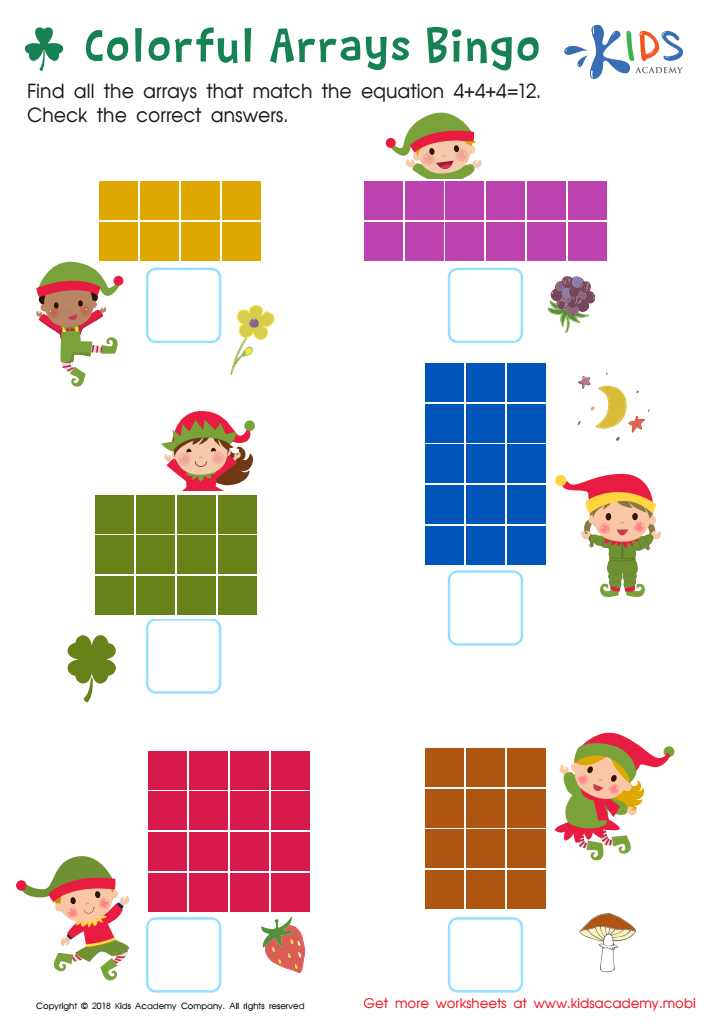
Colorful Arrays Bingo Worksheet
This worksheet stimulates thinking about arrays and how to represent them. Instruct students to count the 6 arrays and find which ones sum up to 12. Ask them to check the answers for accuracy.
 Assign to My Students
Colorful Arrays Bingo Worksheet
Worksheet
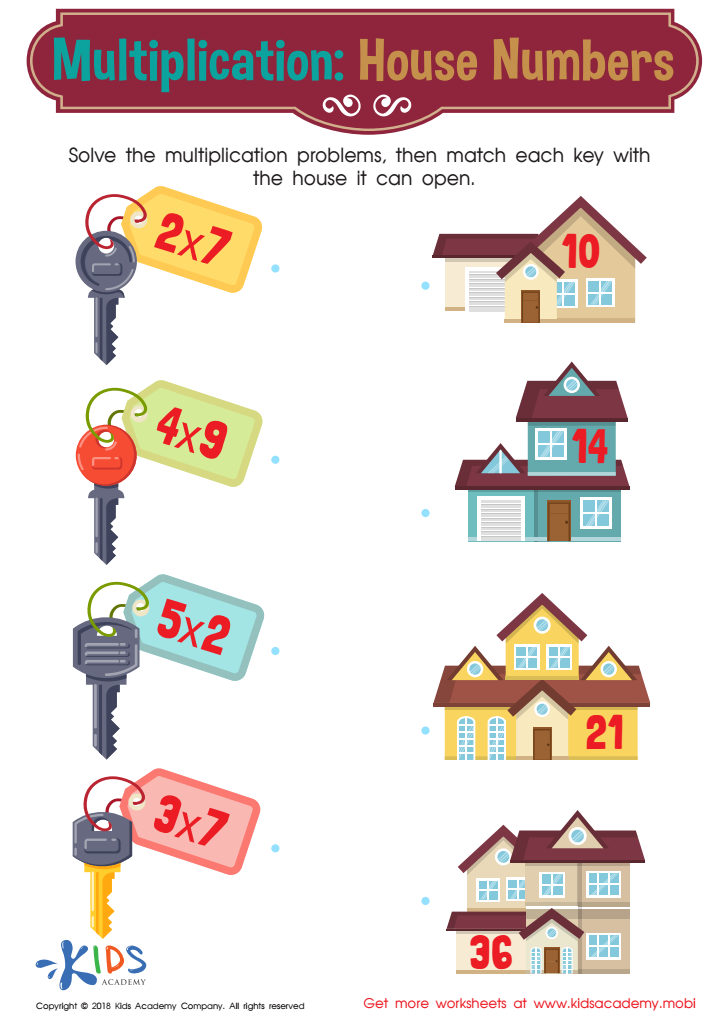
House Numbers Worksheet
This multiplication worksheet is perfect for grade 3 students to sharpen their math skills! Each problem unlocks the door to a house on the page - can they figure out which key fits which door? By solving each problem, they'll boost their multiplication skills and have fun along the way.
House Numbers Worksheet
Worksheet
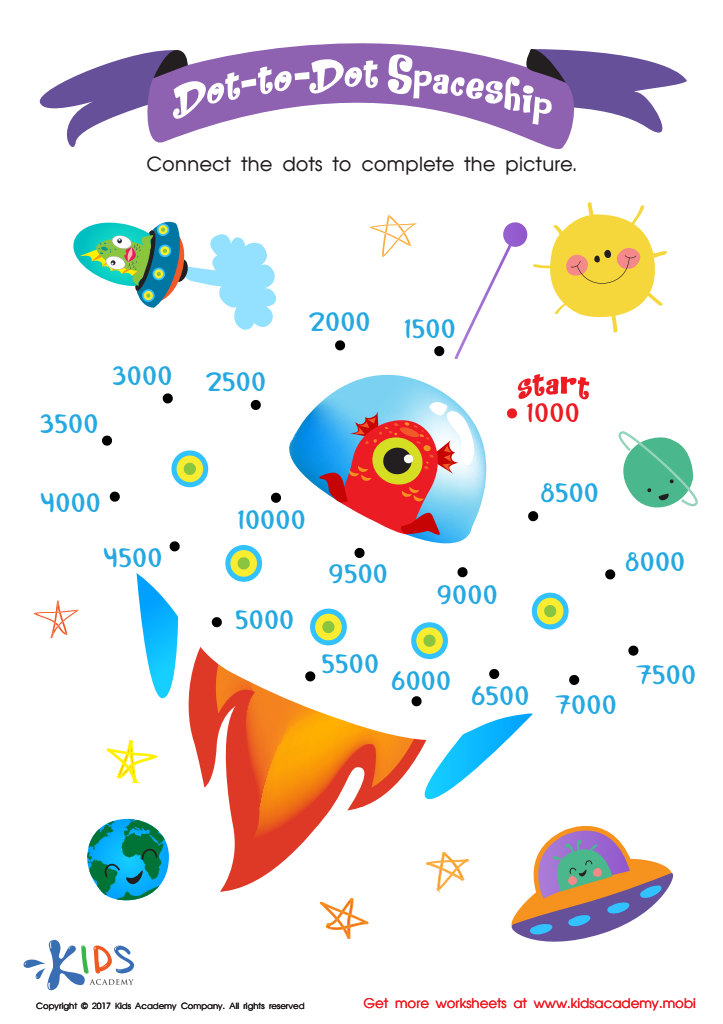
Dot to Dot Worksheet for 3rd Grade
Let your 3rd grader develop better number skills with this dot-to-dot worksheet! They can have fun outlining a spaceship as they skip count by 500 up to 10,000. It's a great way to boost their number sense and make learning more exciting.
Dot to Dot Worksheet for 3rd Grade
Worksheet
Join Kids Academy for Free
Who is primarily going to use this learning content?







Number sequencing is a fundamental aspect of early math education that plays a crucial role in the academic development of 8-year-olds. Understanding number sequences helps children recognize patterns, which is essential for grasping more advanced mathematical concepts in the future. For instance, when children learn to identify a sequence such as 2, 4, 6, 8, they are not just memorizing numbers; they are learning the underlying principle of addition by 2. This foundational skill paves the way for understanding operations like addition, subtraction, multiplication, and division.
Parents and teachers should prioritize number sequencing because it also enhances cognitive skills such as logical reasoning, problem-solving, and critical thinking. These skills are not only vital for math but are also transferable to other academic areas and real-life situations. Additionally, early success in math can boost a child's confidence and foster a positive attitude towards learning.
Number sequencing activities can be easily incorporated into everyday routines, such as counting steps while climbing or sorting household items, making it an accessible and practical tool for both parents and teachers. Investing time in number sequencing helps ensure that children build a strong mathematical foundation, setting them up for continued academic success and a lifelong love of learning.








