Understanding patterns Easy Multiplication Worksheets for 8-Year-Olds
4 filtered results
-
From - To
Unlock your child's mathematical potential with our "Understanding Patterns Easy Multiplication Worksheets" designed specifically for 8-year-olds. These engaging activities help children grasp multiplication concepts through visual aids and patterns, making math fun and accessible. Worksheets focus on recognizing and creating patterns, allowing students to enhance their problem-solving skills and boost confidence in their multiplication abilities. With colorful illustrations and diverse exercises, your child will stay motivated while mastering crucial math skills. Perfect for both home practice and classroom settings, these worksheets offer a comprehensive approach to learning multiplication effectively. Explore our resources today and watch your child excel in math!
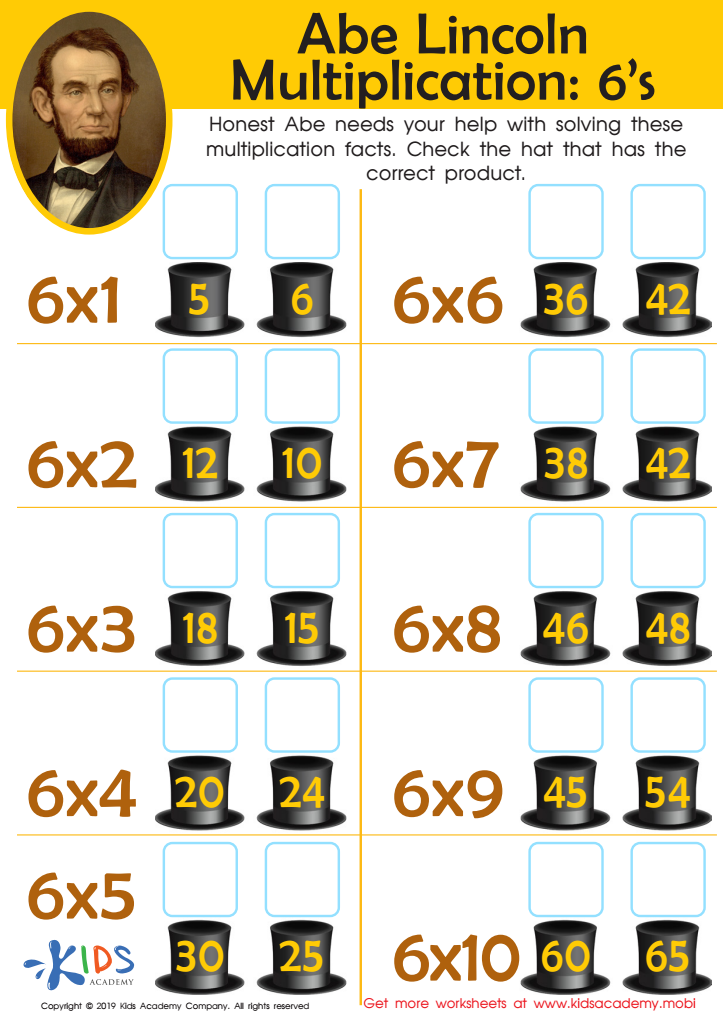
Abe Lincoln Multiplication: 6’s Worksheet
 Assign to My Students
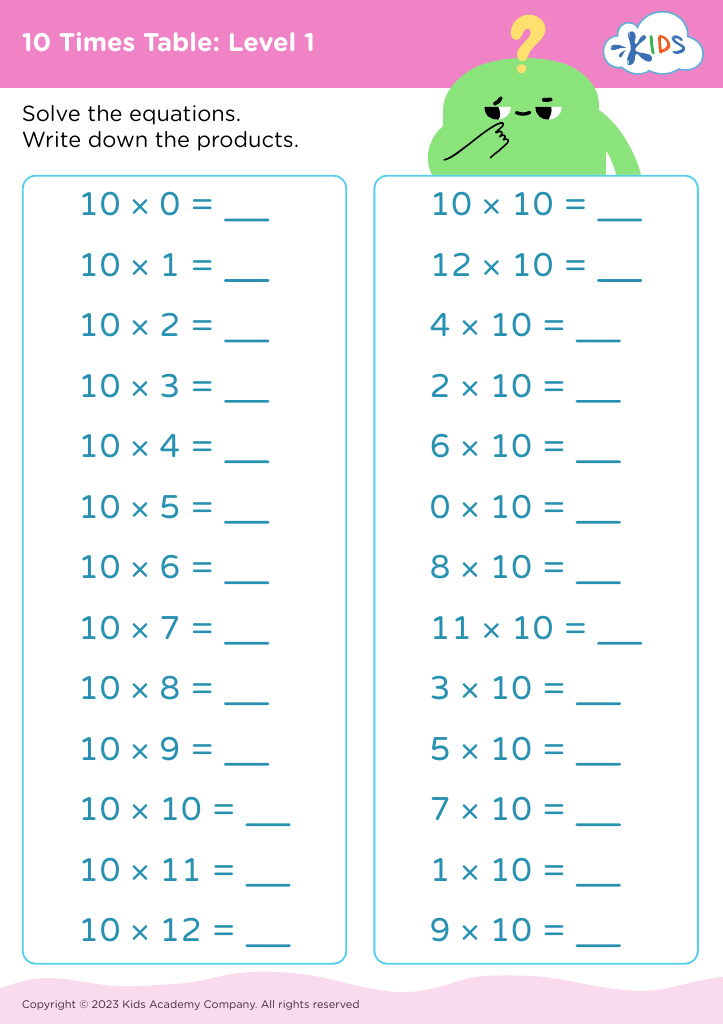
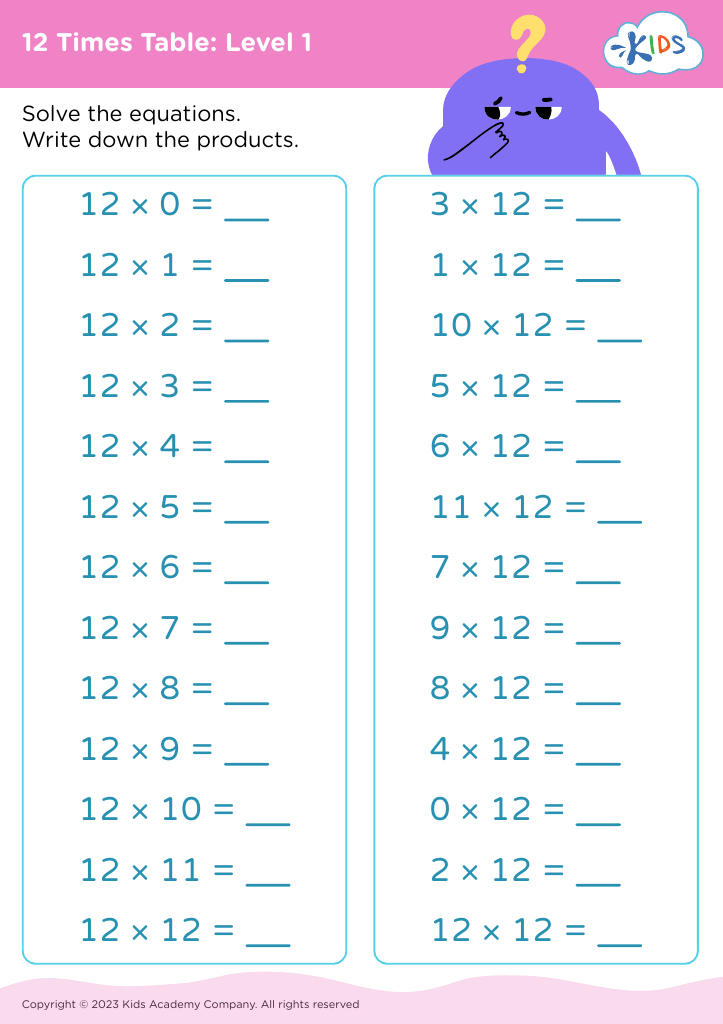
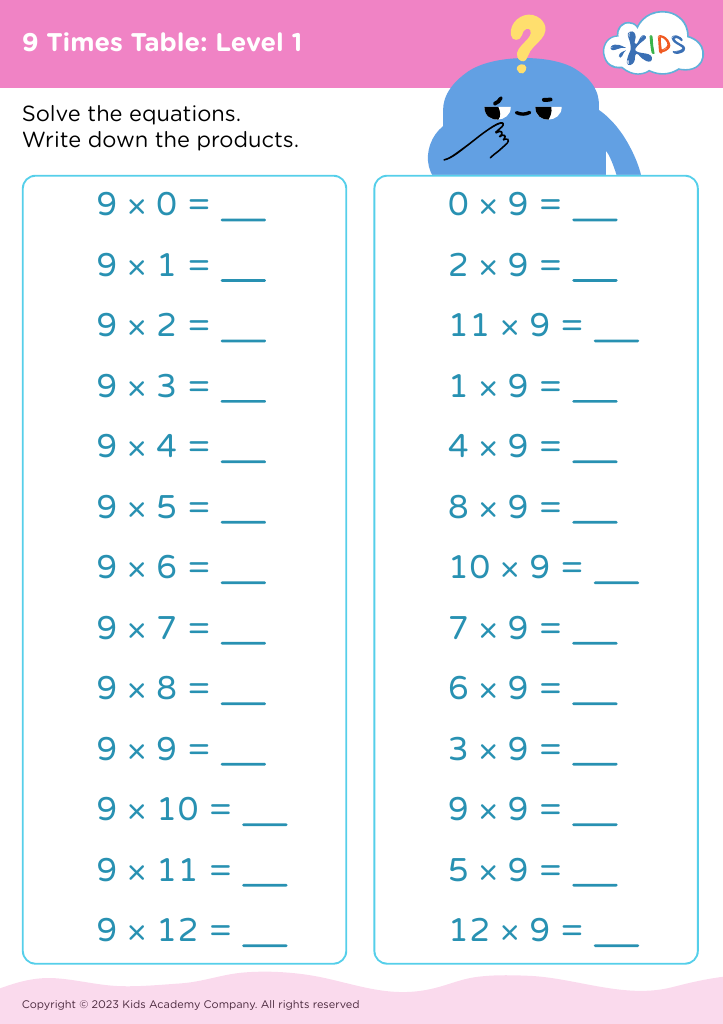




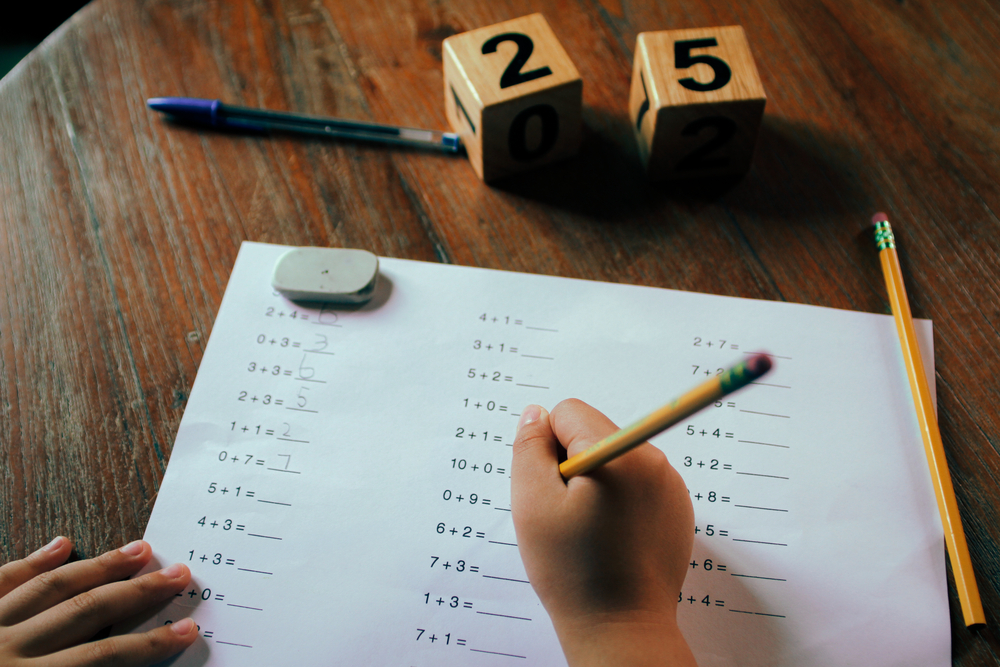



Understanding patterns in multiplication is crucial for 8-year-olds as it lays a strong foundation for their future mathematical skills. Multiplication is not just about memorizing facts; it involves recognizing relationships between numbers. When children identify patterns, such as how multiplying by 10 adds a zero or how products of 6 and 3 relate to products of 3 and 6, they develop deeper comprehension and number sense.
Patterns make learning more engaging and less intimidating, encouraging a growth mindset. By grasping these concepts, children become confident problem solvers who can tackle more complex tasks in math and other subjects. Moreover, recognizing patterns aids in the holistic understanding of related concepts, such as division and fractions, further enriching their mathematical toolkit.
Parents and teachers should prioritize help with pattern recognition because it makes math relevant and exciting in everyday life, enhancing students' motivation to learn. This foundational skill aligns with curriculum objectives, ultimately improving performance in assessments. Creating an environment where patterns in multiplication are explored fosters critical thinking, decision-making, and the ability to see connections in math, all essential skills for lifelong success. Engaging with multiplication patterns paves the way for a strong mathematical future for children.








