Phonics recognition Easy Kindergarten Alphabet Worksheets
3 filtered results
Difficulty Level
Grade
Age
-
From - To
Subject
Activity
Standards
Boost your child's literacy with our Phonics Recognition Easy Kindergarten Alphabet Worksheets! Designed for young learners, these engaging worksheets support the development of essential phonetic skills. Each worksheet focuses on letter sounds, helping kids connect letters with their corresponding sounds through fun activities. From tracing letters to interactive games, our resources are perfect for home and classroom use. Foster a love for reading and writing while reinforcing foundational skills in a playful way. Download now and watch your child's confidence grow as they master phonics with ease! Explore our variety of worksheets and make learning enjoyable today!
Favorites
With answer key
Interactive
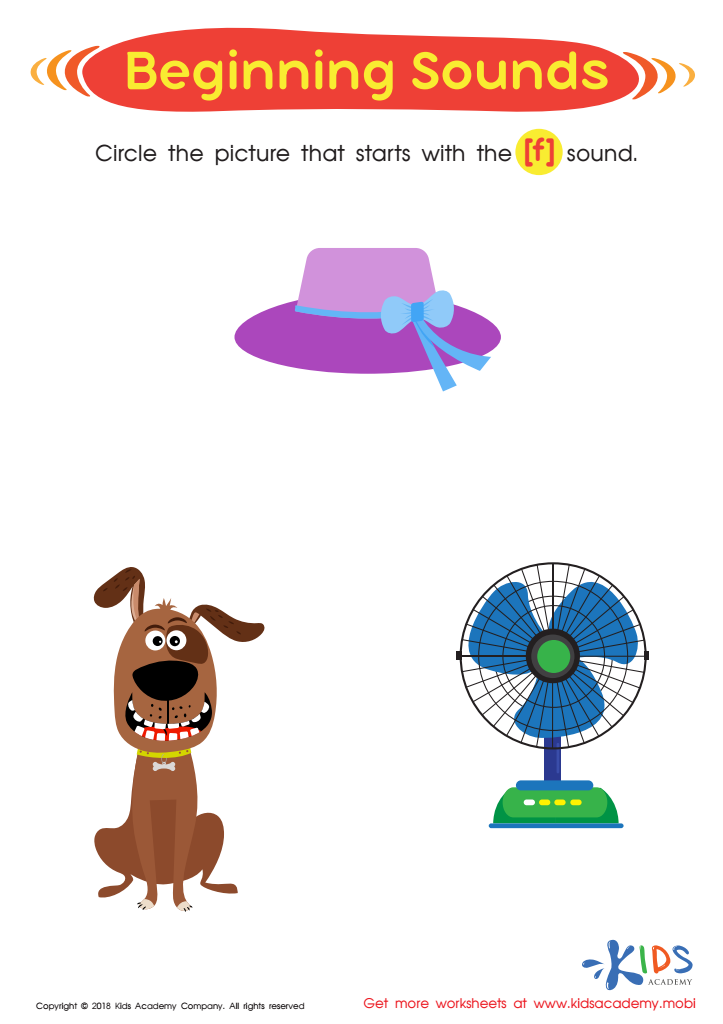
Beginning Sounds Assessment Printable
Test your child's knowledge of the alphabet. Ask them to recite the whole alphabet and the words for each letter. For example: A for apple, B for boy. Identify objects on this worksheet, then ask your child which one starts with the letter "f" and have them circle it.
 Assign to My Students
Beginning Sounds Assessment Printable
Worksheet
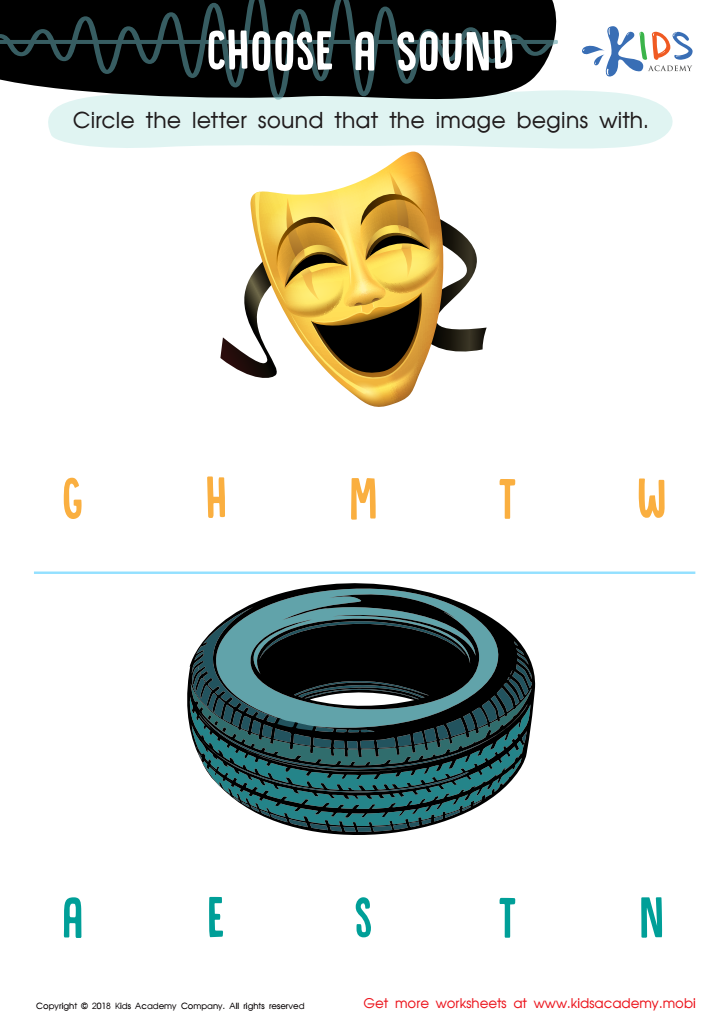
Choose a Sound Worksheet
Help your child hone pre-reading skills with this colorful worksheet! They'll practice tracing letter sounds, develop phoneme awareness, and gain confidence. Plus, it's a fun way to work on their fine motor skills.
Choose a Sound Worksheet
Worksheet
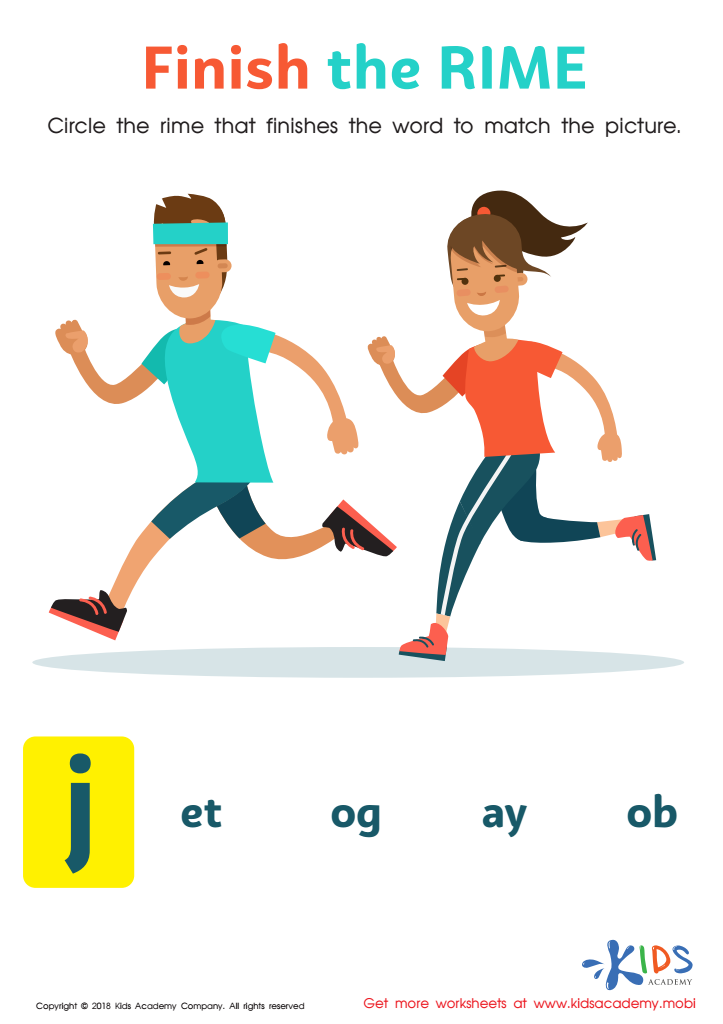
Finish the Rime Worksheet
Rimes help kids learn word families and spelling strategies. This PDF worksheet gives new readers practice with initial consonants, pictures, colors and motor skills. It's fun and cheery, and a great way to boost phonological awareness and rime identification.
Finish the Rime Worksheet
Worksheet
Join Kids Academy for Free
Who is primarily going to use this learning content?








Phonics recognition is essential in early childhood education, particularly for kindergarteners, as it forms the foundation for reading and language development. Teaching phonics — the relationship between letters and their Sounds — promotes successful decoding skills, enabling children to read fluently and comprehend meaning effectively. Parents and teachers should care about phonics recognition because it not only aids in literacy but also boosts a child's confidence and independence as learners.
When children grasp phonics, they can eventually tackle unfamiliar words, enriching their vocabulary and communication skills. This foundational skill lays the groundwork for future academic success in all subjects, as reading competence is crucial in navigating education.
Additionally, phonics recognition facilitates a love for reading and learning, fostering a growth mindset in young children. Engaging in phonics games and activities, like those included in Easy Kindergarten Alphabet resources, makes learning enjoyable and interactive, keeping students motivated.
Ultimately, by supporting phonics recognition, parents and teachers actively contribute to a child's cognitive and social development, ensuring they are equipped with the necessary tools to thrive in their educational journey and beyond.